MEIL is boring Mumbai's twin road tunnel under the national park
Megha Engineering & Infrastructures (MEIL) is building the Thane–Borivali Twin Tube Road Tunnel for the Mumbai Metropolitan Region Development Authority (MMRDA): an 11.84 km link under Sanjay Gandhi National Park that will cut a 60–90 minute road journey to about 15 minutes [1]. On the Thane side, MEIL launched its first 13.34 m hard-rock TBM, Nayak, in April 2026 and the second, Arjuna, in August 2026 [1][3].
In 2025, Sealinkers supported MEIL's Package 2 site at Manpada, Thane, with heavy rigging: 76 mm endless wire rope slings, multi-leg sling assemblies, forged master links rated to 98 tonnes, shackles up to 55 tonnes, turnbuckles, plate clamps and alloy chain slings up to 42 tonnes. This case study tells the story of the tunnel, how we supported the Thane-side site, and how to specify rigging for a tunnel launch site.
The project: twin 13 m-class tunnels in hard rock
- Length. 11.84 km in total — 10.25 km of tunnel and 1.59 km of connector [1].
- Two packages. Package 1 is the Borivali side, a 5.75 km twin-tube tunnel with approaches; Package 2 is the Thane side, a 6.09 km twin-tube tunnel with approaches [2].
- Each tube carries two traffic lanes, an emergency lane and a pedestrian walkway, with cross-passages every 300 m [1].
- Cost. MMRDA gives the current project cost as Rs 18,838 crore including interest during construction, with a 60-month completion period [1].
Two large hard-rock TBMs on the Thane side
The tunnels are being bored by single-shield hard-rock TBMs from Herrenknecht, with 13.34 m cutterheads [3]. The first, Nayak, was assembled on site from more than a thousand components [4]. It was lowered into the Thane launch shaft in late 2025 and launched on 7 April 2026; the second, Arjuna, was launched on 13 August 2026 [1][3]. Both machines are on Package 2, and the Package 2 casting yard is producing the precast lining segments [1]. MMRDA reported physical progress of 13.73% in August 2026 [1].
How Sealinkers supported MEIL on Package 2
Our supply to MEIL's Package 2 site at Manpada, Thane (West) ran through 2025:
| Equipment | Range supplied |
|---|---|
| Endless wire rope slings (6x36 steel core, 1960 grade) | 76 mm, 4 m circumference |
| Single-leg wire rope slings with master rings, thimbles or eye hooks | 8 mm to 44 mm; SWL up to 25 t |
| Four-leg wire rope sling bridles | 8 mm to 38 mm; SWL up to 37.8 t |
| Forged master links and master link assemblies | 38 mm (WLL 27.7 t) and 70 mm (WLL 98 t) |
| Screw-pin bow and dee shackles, hot-dip galvanised | 9.5 t to 55 t |
| Galvanised eye-and-eye turnbuckles | 7/8 inch and 1 inch |
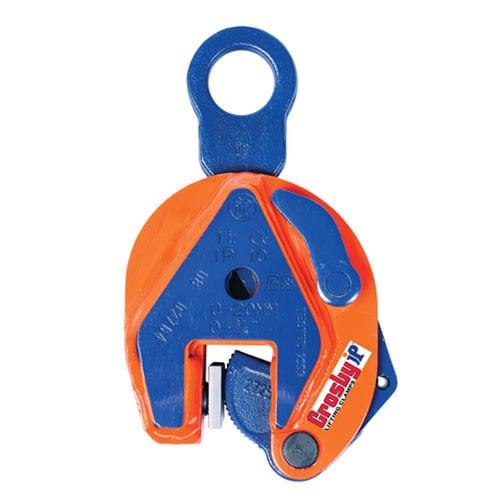
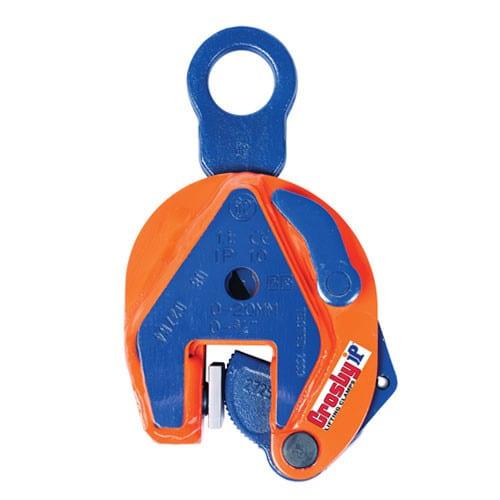
| Horizontal plate lifting clamps | 2.5 t and 5 t each |
| Four-leg alloy chain slings with clevis hooks | 18 mm (21 t) and 25 mm (42 t) |
| Fittings | Wire rope clamps, connecting links, single-sheave snatch blocks |
We supply against the contractor's list. Which lift each item served is set by MEIL's own lift plans, and we do not describe them here.
Endless slings: why a tunnel site orders them
An endless (grommet-style) wire rope sling is a continuous loop with no eyes. Because the load can sit anywhere on the loop, an endless sling can be rotated between lifts so that the bend under the hook or around the load moves to fresh rope, and it can be used in a choke or basket hitch around round or irregular shapes. A 76 mm endless sling is heavy rigging: it is the class of sling used for large, compact loads where headroom is short and a long eye-and-eye sling would not fit.
Like any heavy sling, an endless sling must be made to a known circumference, proof-load tested and tagged before use. Our slings are made at our own works and tested at our in-house test house on a 1,200 T proof-load test bed. See wire rope slings and proof-load testing.
Master links and multi-leg assemblies
A four-leg bridle hangs from a single master link, so the link must carry the combined leg loads at the bridle's working angle. A 70 mm forged master link rated at 98 tonnes is sized for exactly that kind of duty. Two points matter when ordering:
- The master link must fit the crane hook — a link that is too small will not seat properly in a large hook's bowl.
- The rating of a multi-leg sling depends on the leg angle. The same four legs carry less as the angle from vertical opens up. Our guide to sling angle and SWL explains the factors.
Chain slings, clamps and turnbuckles
Four-leg alloy chain slings with clevis hooks are the workhorse for repeated handling where the load is rough, hot or abrasive. Plate clamps handle steel plate and fabrications without welding on lugs. Galvanised turnbuckles tension guys, bracing and temporary restraints. They are small items next to a 76 mm sling, but a launch shaft or casting yard runs short of them first. See Grade 80 vs Grade 100 chain.
Lessons for tunnel buyers
- 1. Specify endless slings by circumference and rope construction, not just diameter.
- 2. Order master links with the hook in mind, and state the number of legs and the working angle.
- 3. Keep heavy slings rotated and inspected. Move the bend point between lifts on endless slings, and record inspections against the sling tag.
- 4. Galvanise for wet sites. Shafts and casting yards are wet; specify galvanised shackles and turnbuckles.
- 5. Ask for certificates with the dispatch, so the items can go into service when they arrive.
Frequently asked questions
What did Sealinkers supply to the Thane–Borivali twin tunnel project?
In 2025 we supplied MEIL's Package 2 site at Manpada, Thane, with 76 mm endless wire rope slings, single- and four-leg wire rope sling assemblies up to 44 mm, forged master links up to 70 mm (98 t), shackles from 9.5 to 55 tonnes, galvanised turnbuckles, plate clamps and four-leg alloy chain slings up to 42 tonnes.
What is an endless wire rope sling used for?
An endless sling is a continuous loop used in choke or basket hitches around compact, heavy or irregular loads. It can be rotated between lifts so that wear is spread around the loop.
Do you make heavy-diameter wire rope slings?
Yes. We make wire rope slings, including large-diameter and endless slings, at our own works and proof-load test them on our 1,200 T test bed before dispatch with certificates.
Can you supply tunnel projects outside Mumbai?
Yes. We deliver across India, and we have supplied tunnel and underground metro contractors in Mumbai, Pune, Indore and Surat.
Planning a tunnel launch?
Send us your rigging list or lift plan for the shaft, the casting yard or the portal. We will propose slings, master links, shackles and fittings, with certificates. Contact Sealinkers, or read our Indore Metro underground case study and our bullet train tunnel case study.
Sources
- [1] MMRDA, "Twin Tube Tunnel between Thane and Borivali", official project page (status to August 2026) — mmrda.maharashtra.gov.in
- [2] Indian Infrastructure, MEIL receives LoA for two packages of the Borivali–Thane twin tube road tunnel, 17 June 2023 — indianinfrastructure.com
- [3] MEIL, launch of second TBM Arjuna, 13 August 2026 — meil.in
- [4] Free Press Journal, first TBM Nayak begins excavation, 6 April 2026 — freepressjournal.in
Related Guides
Ready to put this into practice?
Every item ships certified, and our in-house test house backs it with the paperwork.
Sealinkers Engineering
Rigging & Lifting Engineering Team
Sealinkers has supplied and certified rigging, lifting and mooring equipment from Darukhana, Mumbai since 1977. These guides are written and checked by the engineers who specify this gear and proof-load it on our own test bed.
- in-house test house — proof-load bed from 1 to 1,200 tonnes
- Proof-load testing and certification in-house since 1977, Darukhana, Mumbai
- Class-society interfaces: IRS, ABS, LRS and BV