

Polyester Webbing & Round Slings
Flat webbing slings, also called web sling belts, made in Mumbai by our sister company Zebra Weblift, India's first manufacturer of polyester webbing slings. Round slings up to 500 t. A test certificate with every sling.
3 products
Showing 1–3 of 3
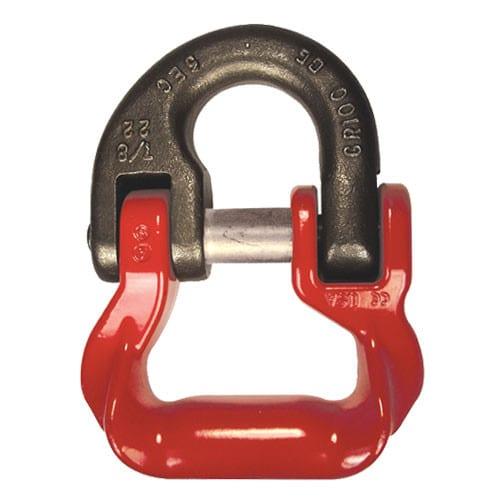
Crosby
Crosby S-237 Web Sling Connector
Sign in for pricing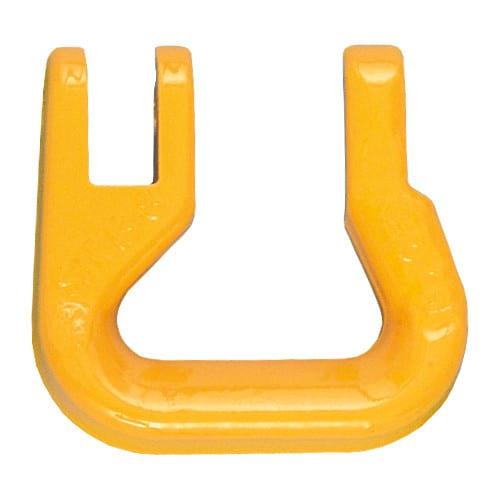
Slings
Gunnebo SKR Grade 80 Synthetic Sling Connector
Sign in for pricing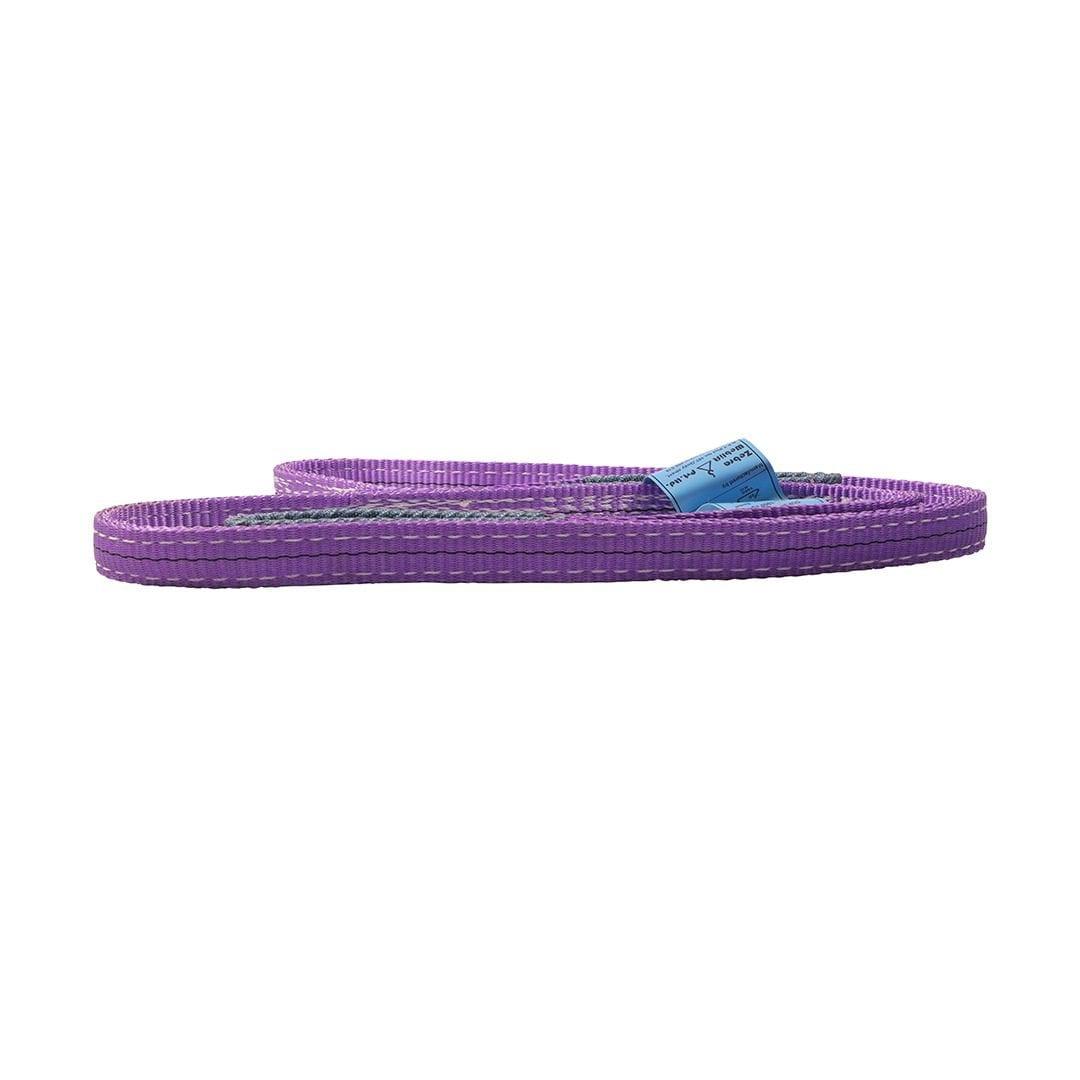
Zebra Weblift > Zebra Polyester Webbing Slings
Zebra Polyester Flat Webbing Sling (EN 1492-1)
Sign in for pricingWebbing slings made in Mumbai by Zebra Weblift
Zebra Weblift was the first company to introduce and manufacture polyester webbing slings in India, and still makes them in Mumbai. It has made slings since 1990, under a technical collaboration with Miller Weblift Ltd, UK, and is named in the published Indian Standard for webbing slings, IS 15041. The webbing is woven in-house, so slings are made to the length, width and construction a job needs. Every sling carries its rating on the label and leaves with a test certificate.
Buyers also call these web slings, web sling belts or polyester belt slings. They are the same product.
What we make
| Product | Construction and standard | Range |
|---|---|---|
| Flat webbing slings | Single, duplex, endless and multi-ply up to 5-ply. EN 1492-1 and IS 15041 | 1 t to 12 t in 40 listed sizes. Higher ratings made to order, up to 40 t |
| Round slings | Continuous polyester core in a woven cover. EN 1492-2 and IS 11928 | Up to 500 t, made to order |
| Ratchet lashing belts | Endless and J-hook | 25 to 100 mm wide, break load 0.8 t to 12 t, 3 to 15 m |
UHMWPE round slings are a separate product. See UHMWPE slings.
Flat webbing sling sizes
| Colour (EN 1492-1) | WLL, straight lift | Listed lengths |
|---|---|---|
| Violet | 1 t | 1, 2, 3, 4, 5, 6 m |
| Green | 2 t | 1, 2, 3, 4, 5, 6 m |
| Yellow | 3 t | 1, 2, 3, 4, 5, 6, 8, 12 m |
| Grey | 4 t | 4, 6 m |
| Red | 5 t | 1, 2, 3, 4, 5, 6, 8, 10, 12 m |
| Brown | 6 t | 4, 6 m |
| Blue | 8 t | 6, 8 m |
| Orange | 10 t | 3, 6, 10, 12 m |
| Orange | 12 t | 12 m |
Other lengths and higher ratings are made to order. The WLL on the sling's label governs. Orange covers every rating above 8 t, so always read the label.
How to order
- The load, and how it will be slung: straight, choke or basket
- The length you need, and any width limit
- Single, duplex, endless or multi-ply (up to 5-ply)
- Sleeves or corner protectors, if the load has edges
- The certificate you need for your lifting-gear register
Send these details and we send the quotation within 48 hours.
Webbing sling colour code and working load limits (EN 1492)
Under EN 1492-1 (flat webbing slings) and EN 1492-2 (round slings) the colour of the webbing or the cover shows the working load limit in a straight lift. The table gives that rating and the other hitches derived from it, in tonnes.
| Colour | Straight lift (colour rating) t× 1 | Choke (×0.8) t | Single leg, basket (parallel) t× 2 | 2-leg, β 0–45° t× 1.4 | 2-leg, β 45–60° t× 1 |
|---|---|---|---|---|---|
| Violet | 1.00 | 0.80 | 2.00 | 1.40 | 1.00 |
| Green | 2.00 | 1.60 | 4.00 | 2.80 | 2.00 |
| Yellow | 3.00 | 2.40 | 6.00 | 4.20 | 3.00 |
| Grey | 4.00 | 3.20 | 8.00 | 5.60 | 4.00 |
| Red | 5.00 | 4.00 | 10.00 | 7.00 | 5.00 |
| Brown | 6.00 | 4.80 | 12.00 | 8.40 | 6.00 |
| Blue | 8.00 | 6.40 | 16.00 | 11.20 | 8.00 |
| Orange (10 t shown) | 10.00 | 8.00 | 20.00 | 14.00 | 10.00 |
Flat webbing and round slings, colour code and straight-lift WLL as EN 1492-1 and EN 1492-2, safety factor 7:1; the WLL on the sling's label governs. Uniform-load method factors as EN 1492-1. Straight-lift ratings as published; other columns derived and rounded down to 0.05 t. Each derived figure is the unrounded straight-lift WLL times the mode factor, rounded down once; β is the leg angle from the vertical.
Your sling's label governs: a choke at a sharp angle rates lower.
Orange is used for every rating above 8 t; the 10 t row is one example — always read the label.
Round slings (EN 1492-2 and IS 11928)
Round slings use the same colour code under EN 1492-2, at the same 7:1 safety factor. The load is carried by a core of continuous polyester yarn; the woven cover protects that load-bearing core from abrasion and carries the colour. A cut or worn-through cover means the core is exposed: take the sling out of service.
The Indian standard for round slings is IS 11928:2023. EN 1492-2 covers ratings up to 40 t. Zebra also makes round slings above 40 t, following the same EN practice, up to 500 t to order, each with its own test certificate.
IS 15041 (2001 edition) uses a 6:1 factor for webbing, and the standard was revised in 2025 as IS 15041:2025 — check which standard and edition your inspector works to.
What the label shows
The marking clause of IS 15041 (2001 edition) asks for these on every sling's label:
- Working load limit
- Material
- Length
- Maker's name or mark
- Date of manufacture
When to take a sling out of service
- Cuts, tears or snags in the webbing or the cover
- Heat damage: glazed, hardened or fused fibres
- Chemical damage: discoloured, brittle or softened areas
- A missing or unreadable label: a sling whose rating cannot be read is not used
Zebra Weblift webbing slings
Zebra Weblift is our own brand of flat polyester webbing slings, built for Indian port, shipping and project conditions and backed by the same test house that certifies everything else we sell. Webbing is the right sling wherever the load’s surface matters: machined components, painted and coated fabrications, pipes, timber and anything a wire or chain sling would mark. It is also the lightest sling family to handle, which riggers appreciate by the end of a shift.
Selection comes down to three choices. Capacity first: flat webbing slings follow the EN 1492-1 scheme in which colour indicates working load limit, so a mixed sling store stays readable at a glance. Length and configuration second: eye-and-eye flat slings are the general-purpose pattern, used straight, choked or in basket hitch, each hitch changing the rated capacity. Protection third — and this is the one buyers skip: polyester is vulnerable to cutting at edges, so order sleeves or corner protectors with the sling, not after the first near-miss. Our webbing sling selection guide works through all three.
Polyester tolerates most common industrial chemicals well but must be kept clear of concentrated alkalis, prolonged UV storage and any hot-work spatter. Slings here are supplied against the scope of IS 15041 and EN 1492-1, each with its identification label and certificate; unlabelled webbing is unusable webbing, because the label carries the rating.
How we make them
Specification
You give us the load, the hitch and the headroom; we size the legs, the fittings and the working load limit against the standard that applies.
Make
Cut from certified stock rope or webbing and terminated in-house — swaged, spliced, socketed or sewn — with every component traceable to its own certificate.
Proof-load
The finished assembly goes on our own test bed (our beds run from 1 to 1,200 T) and is loaded to the multiple its standard requires.
Certificate
It leaves tagged, with a test and examination certificate in our own name on its serial number — class-witnessed (IRS, ABS, LRS, BV) where the job needs it.
Related
Buying questions
Do you manufacture webbing slings in India?
Yes. Our sister company Zebra Weblift makes them in Mumbai and weaves its own webbing. It was the first company to introduce and manufacture polyester webbing slings in India.
Is a web sling belt the same as a webbing sling?
Yes. Web sling, webbing sling, web sling belt and polyester belt sling all describe a flat polyester lifting sling. The colour and the label show its rating.
What is the highest capacity you make?
Flat webbing slings up to 40 t, in up to 5-ply, and polyester round slings up to 500 t. Both are made to order.
Which Indian standards cover these slings?
IS 15041 covers flat woven webbing slings, last revised in 2025, and IS 11928:2023 covers round slings. Their European counterparts are EN 1492-1 and EN 1492-2.
Can I order a length that is not listed?
Yes. Because the webbing is woven in-house, slings are made to the length, width and construction a job needs.
Is the colour rating the same in a choke or a basket hitch?
No. The colour gives the straight-lift rating. In the table a choke is 0.8 times that and a basket with parallel legs twice that. The working load limit on the label governs.
What is the difference between a flat webbing sling and a round sling?
A flat sling is woven webbing with a wide bearing surface, usually with an eye at each end. A round sling is an endless core of polyester yarn inside a woven cover; it is soft, flexible and moulds to the load.
Do round slings use the same colour code as webbing slings?
Yes. EN 1492-2 uses the same colours for round slings as EN 1492-1 does for flat slings, at the same 7:1 safety factor.
What does an orange sling's colour tell me?
Only that its rating is above 8 t. Orange is used for every rating above 8 t, so the working load limit has to be read from the label.
What must a webbing sling label show?
At least the working load limit, the material, the length, the maker's name or mark and the date of manufacture. A sling with a missing or unreadable label is taken out of service.
When must a webbing sling be discarded?
Discard on any cut, tear or fraying of the load-bearing webbing, damaged or illegible label, heat glazing or weld spatter damage, chemical attack (stiff, discoloured or powdery webbing), or damaged stitching in the eye areas. Surface fuzzing from normal use is acceptable; exposed core yarns are not. There is no repairing a webbing sling — the price of a replacement is trivial against a dropped load.
How should Zebra slings be stored and cared for?
Store them clean, dry and out of direct sunlight, hung on racks rather than heaped on the floor, away from chemicals, battery acid and hot work. Wash soiled slings with plain water and let them dry naturally — never force-dry with heat. A few minutes of care roughly translates into seasons of extra service life; our maintenance guide covers the full routine.
Are Zebra webbing slings certified for port use?
Yes. Each sling is supplied with its identification label and test certificate against the scope of IS 15041 and EN 1492-1, and because we operate an in-house test house, we also carry out periodic re-examination and re-certification. Many Mumbai port and shipyard users bring their sling stock to us for exactly this re-certification cycle.