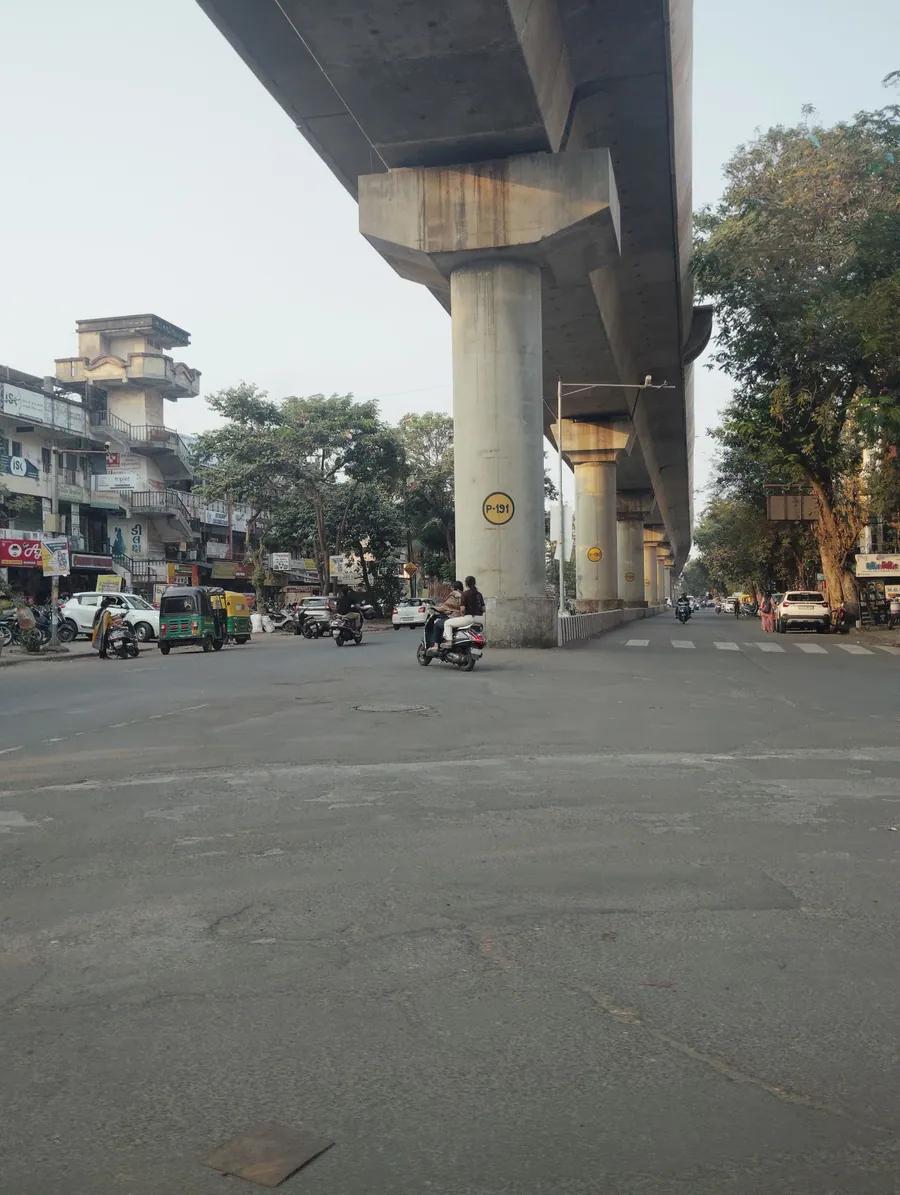
Surat Metro goes underground: Gulermak–SAM India's Package 1
Surat's first metro line has to pass beneath one of the densest parts of the city, between the textile markets of Kapodra and Surat Railway Station. The Gulermak–Sam India Builtwell joint venture was chosen by Gujarat Metro Rail Corporation (GMRC) to build that stretch, underground package CS2/UG1, and in August and September 2024 both of its tunnel boring machines completed their final breakthroughs at Surat Railway Station [1][2]. Boring all six tunnels within about three and a half years of the award was a milestone for the city's first underground railway.
From late 2024 to early 2026, as the package moved from tunnelling to station and finishing works, Sealinkers supplied the joint venture with non-rotating wire rope, wire rope, chain and webbing slings, chain blocks, shackles and connecting links. This case study sets out the project, what we supplied, and what underground station work asks of lifting gear.
The project: 3.46 km under Surat's old city
- Owner. GMRC awarded package CS2/UG1 to the Gulermak–Sam India joint venture in March 2021 [2].
- Scope. A 3.46 km underground section from Kapodra to Surat Railway Station: six tunnels, built as three twin pairs, and three underground stations at Kapodra, Labheshwar Chowk and Central Warehouse [1][2].
- Machines. Two Terratec earth pressure balance TBMs, S78 Narmada and S94 Tapi [2].
- The line. Package 1 is part of Line 1, the 22.77 km Sarthana–Dream City corridor, of which 7.02 km runs underground between the Kapodra ramp and Chowk Bazar [3].
Two TBMs, six drives
Narmada completed its three up-line tunnels in August 2024, and Tapi made the package's final breakthrough at the eastern shaft of Surat Railway Station in September 2024 [1][2]. Tapi alone bored 2,484 m of tunnel in three drives — 1.45 km from Kapodra to Labheshwar Chowk, 655 m to Central Warehouse and 389 m to the railway station — plus a 208 m length through the Labheshwar Chowk station footprint, a section the JV planned to dismantle once the station box was excavated [2]. Boring through a station site before the station is dug lets the machine keep moving instead of waiting for the box.
The neighbouring package, UG-02, made Phase 1's last tunnelling breakthrough at Chowk Bazar in February 2026, leaving cross-passage works as the main underground task outstanding [3]. GMRC is implementing the Rs 12,020 crore project; its first elevated stretch, the 8.5 km Dream City–Althan section, was on trials in 2026 with opening targeted for the end of November, while the underground section is still being completed [4].
How Sealinkers supported the Gulermak–SAM India joint venture
Our supply ran from late 2024 to early 2026, after the TBMs had broken through, and was placed against the joint venture's UG Package 1 orders for delivery to its stores in Surat. In terms of scale, it covered:
| Equipment | Scale supplied |
|---|---|
| Non-rotating wire rope (Usha Martin, 35x7 construction) | 20 mm |
| Two-leg wire rope slings, 6x36 construction | Up to about 25 t SWL |
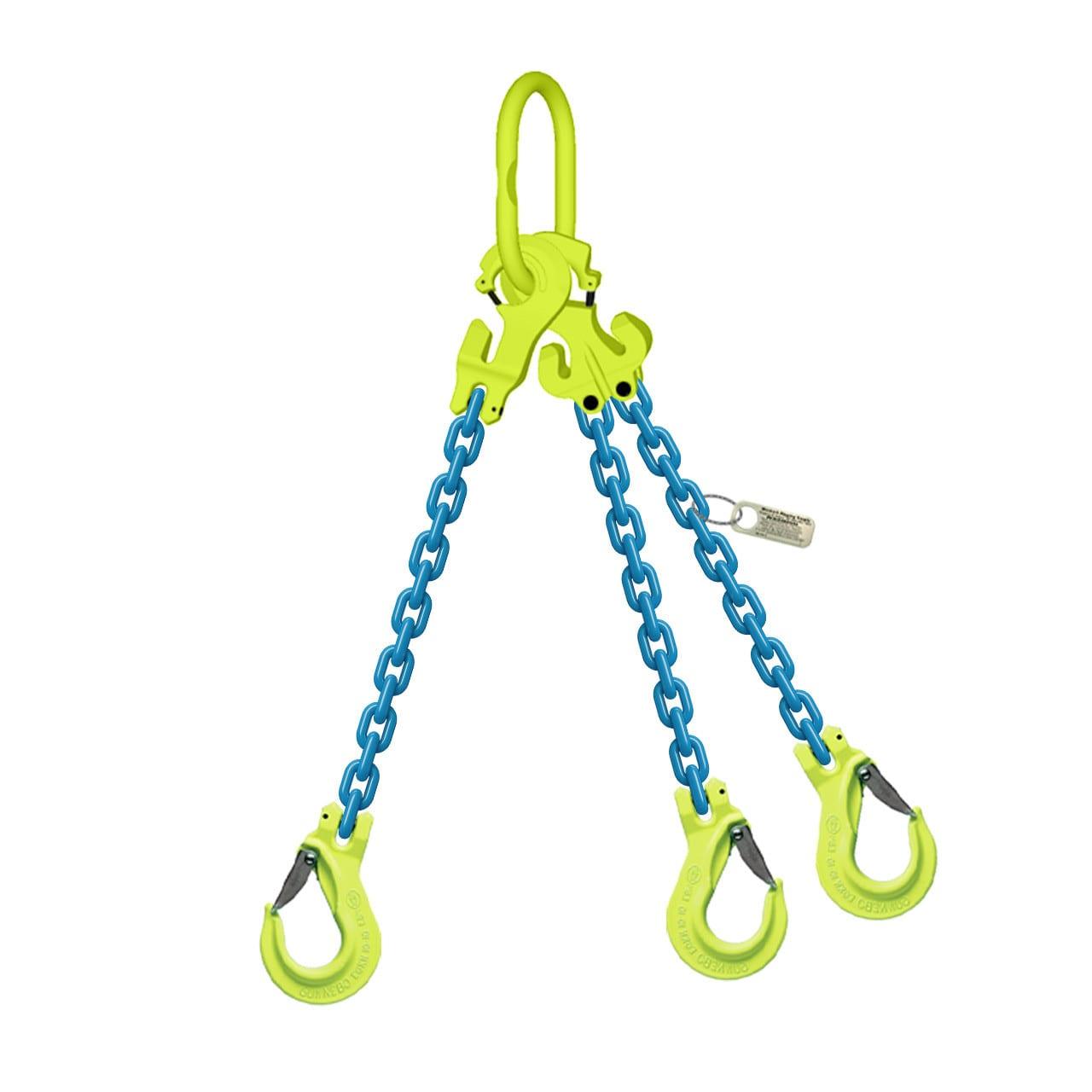
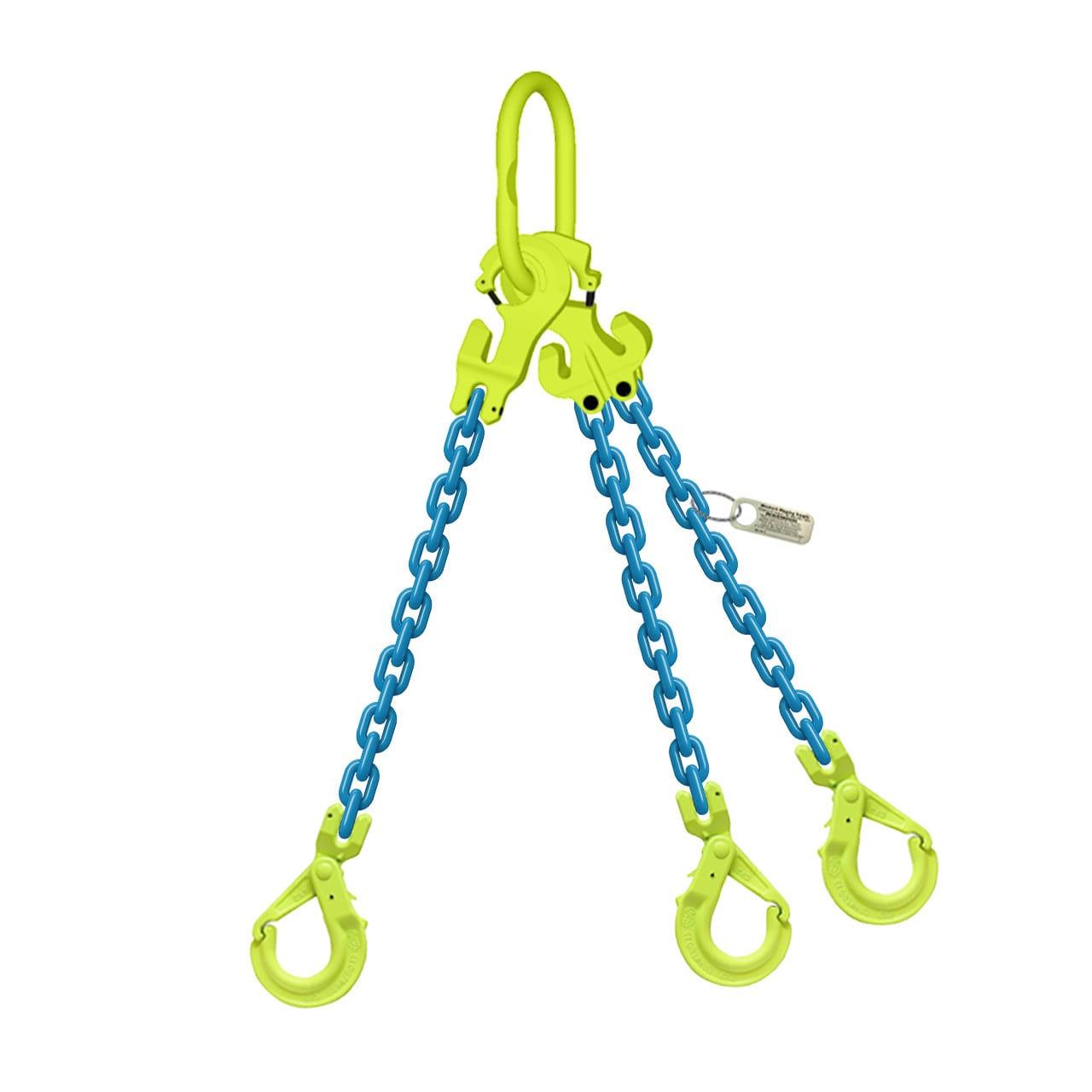
| Two- and four-leg alloy chain slings | Up to 7 t |
| Polyester webbing slings (Zebra Weblift) | 3 t to 10 t |
| Chain pulley blocks | 5 t |
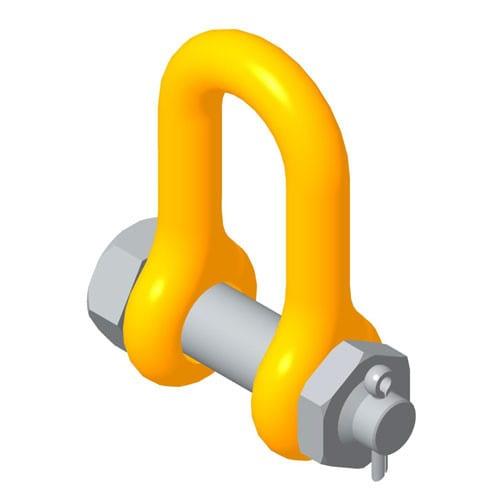
| Shackles and connecting links | Shackles up to 9.5 t; links for chain sling assembly |
This was steady, modest-scale supply for station and general works rather than heavy-lift rigging. Which item went on which lift is set by the JV's own lift plans; we do not describe end uses here. The engineering notes below describe how this class of equipment is typically used on an underground station package.
What an underground station package asks of rigging
Non-rotating rope for single-fall hoisting
Once the tunnels are bored, much of a package's lifting happens through shafts and station openings: materials, formwork and plant go down and come back up on a crane or hoist line that can run a long way without a guide. An ordinary six-strand rope under load tries to unlay and spin, which turns a suspended load in a confined shaft. A non-rotating construction such as 35x7 has inner and outer strands laid in opposite directions, so their torques largely cancel and the load hangs steady.
The trade-off is care in handling. Rotation-resistant ropes are more easily damaged by kinking, crushing on the drum and incorrect termination, and they should be inspected against their own discard criteria rather than those for six-strand rope. See our guides to wire rope construction and discard criteria.
Chain slings that can be rebuilt on site
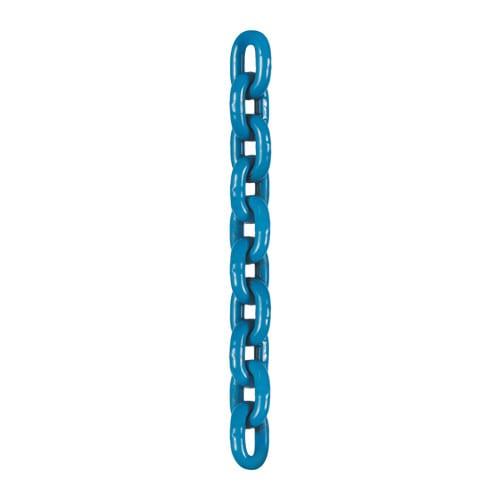
Alloy chain slings in two- and four-leg form are the general workhorse in a station box: they tolerate rough concrete edges and rebar better than wire rope and can be shortened for awkward loads. Connecting links let a chain sling be assembled or a damaged component replaced without welding. The rule is that every link, hook and master link in the assembly must be of the same grade and size as the chain, and a rebuilt sling must be re-tagged with its rating before it goes back into service. Our note on Grade 80 and Grade 100 chain explains why mixing grades is a problem.
Webbing slings for finishes and services
As a station moves into architectural finishing and building services, more of the loads are painted, coated or easily dented: ducts, panels, escalator parts, pipe spools. Polyester webbing slings from 3 t to 10 t are the usual choice for that work, because they spread the load and will not mark a finished surface. They do need protection from sharp edges and should be withdrawn if the outer cover is cut through to the load-bearing core. Our webbing sling selection guide covers widths, ratings and colour coding.
Lessons for buyers on underground packages
- 1. Specify rope construction, not just diameter. "20 mm wire rope" is not enough for a shaft hoist; state rotation-resistant or non-rotating construction, grade and lay.
- 2. Keep traceability through the store. When gear goes to a central store before the site, keep each test certificate with the item's tag number so the safety officer at the shaft can match them.
- 3. Use matching components on chain slings. Order connecting links and hooks of the same grade and size as the chain, and re-tag any rebuilt sling.
- 4. Change the sling mix as the work changes. Tunnelling, station structure and finishing each need different gear; plan webbing slings and edge protection before fit-out starts.
- 5. Inspect non-rotating rope more often. It is less forgiving of kinks and drum crushing, so check it at every reeving change.
Frequently asked questions
What did Sealinkers supply for Surat Metro's underground Package 1?
From late 2024 to early 2026 we supplied the Gulermak–SAM India joint venture with Usha Martin non-rotating wire rope, two-leg wire rope slings up to about 25 t, alloy chain slings, Zebra polyester webbing slings up to 10 t, 5 t chain pulley blocks, shackles and connecting links.
Why use non-rotating wire rope on a metro site?
Wherever a load hangs on a single fall over a long drop, such as through a shaft or station opening, a non-rotating construction resists spinning the load. It needs careful spooling and its own inspection regime.
Can a damaged chain sling be repaired on site?
Components such as hooks can be replaced with connecting links of the correct grade and size, but the sling should then be inspected, re-tagged and, where required, proof-load tested before use. We test slings at our in-house test house on a 1,200 T proof-load test bed; see proof-load testing.
Do you deliver to project sites outside Mumbai?
Yes. We are based at Darukhana, Mumbai, and deliver across India, including to Gujarat and other metro cities.
Working on an underground metro package?
Send us your rigging list for the shafts, station boxes or fit-out stage. We will propose rope, slings, chain and fittings with test certificates. Contact Sealinkers.
Sources
- [1] Indian Infrastructure, TBM Narmada accomplishes its final breakthrough at Surat Metro Phase 1 project, 3 September 2024 — indianinfrastructure.com
- [2] The Metro Rail Guy, Surat Metro's TBM Tapi records final breakthrough at Railway Station, 26 September 2024 — themetrorailguy.com
- [3] The Metro Rail Guy, J Kumar's TBM Diya records Surat Metro Phase 1's final breakthrough, 1 March 2026 — themetrorailguy.com
- [4] DeshGujarat, Surat Metro likely to begin operations on Dream City–Althan stretch by November end, 2026 — deshgujarat.com
Cover photo: Surat Metro elevated piers under construction, January 2026, by Nizil Shah, Wikimedia Commons, CC BY-SA 4.0. Photos are resized and are not endorsed by their authors.
Related Guides
Ready to put this into practice?
Every item ships certified, and our in-house test house backs it with the paperwork.
Sealinkers Engineering
Rigging & Lifting Engineering Team
Sealinkers has supplied and certified rigging, lifting and mooring equipment from Darukhana, Mumbai since 1977. These guides are written and checked by the engineers who specify this gear and proof-load it on our own test bed.
- in-house test house — proof-load bed from 1 to 1,200 tonnes
- Proof-load testing and certification in-house since 1977, Darukhana, Mumbai
- Class-society interfaces: IRS, ABS, LRS and BV