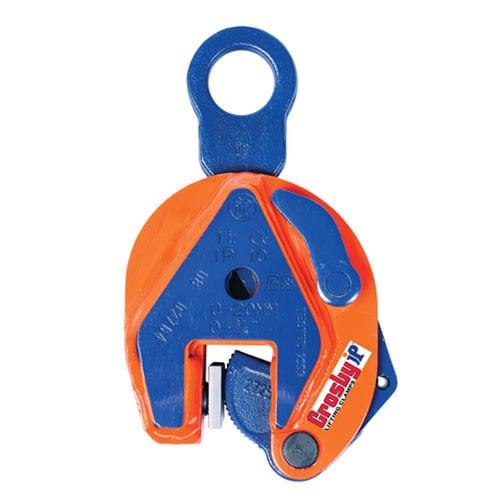
Crosby IP IP10 Lifting Clamp
In Stock 10 sizes available
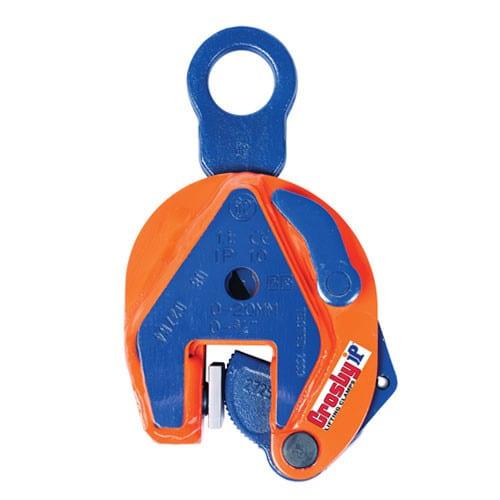
Crosby IP IP10 1/2 Ton Lifting Clamp - #2701674
SKU: CR-2701674
Reply within 24 hours. Formal quotation within 48 hours. Supplying since 1977.
Call +91 93729 19606(Mon to Sat, 9 am to 6 pm IST)
All sizes (10)
All sizes as a PDF| WLL | SKU | |
|---|---|---|
| 0.5 t | CR-2701674 | |
| 1 t | IP101T | |
| 2 t | IP102T | |
| 3 t | IP103T | |
| 4.5 t | IP104.5T | |
| 6 t | IP106T | |
| 9 t | IP109T | |
| 12 t | CR-2701678 | |
| 16 t | CR-2701682 | |
| 22.5 t | CR-2701686 |
Pricing for registered businesses
Sign in to view live prices, or register free — approval usually within 1 business day.
Test certificate with every supply
In-house 1,200 T test bed
Genuine Products
Guides & resources
Bullet Train Tunnel (MAHSR C2): Heavy Slings and 200 t Shackles for Afcons
The heavy slings, Crosby shackles and chain slings we supplied to Afcons' Mumbai tunnel package of the bullet train, and how to specify heavy rigging sets.
Read the guideThane–Borivali Twin Tunnel: Endless Slings and Heavy Rigging for MEIL
The heavy endless slings, master links and multi-leg assemblies we supplied to MEIL's Thane-side package of Mumbai's twin road tunnel, and how to specify them.
Read the guideRequest a Quote for this Product
Get a formal quotation within 48 hours.
Overview
Crosby IP IP10 Lifting Clamp, working load limit 0.5 t to 22.5 t, 10 sizes.
Full Description
The Crosby IP10 and IP10J vertical lifting clamps are designed for the safe lifting, turning, and vertical transfer of steel plate, sheet, and fabricated materials. These heavy-duty plate clamps feature a fixed lifting eye design that makes them ideal for single-point lifting or use with spreader beams and vertical sling assemblies.
Unlike the Crosby IPU10 series with a hinged hoisting eye, the IP10 uses a rigid lifting eye configuration for straight vertical lifting applications where side loading is not required. Both the standard IP10 and larger jaw opening IP10J models provide full 180-degree turning capability for plate handling and fabrication work.
Available in capacities from 0.5 ton through 30 ton, Crosby IP10 clamps are individually proof tested to 2 times Working Load Limit and include serialized traceability and certification documentation.
IP10 vs. IP10J:
IP10: Standard jaw openings from 0" to 3.13"
IP10J: Larger jaw openings from 0.63" to 6.13"
Key Features
For vertical lifting, turning, and transfer of steel plate and fabrications
Fixed lifting eye for straight vertical lifting applications
Full 180° turning range
Available in capacities from 0.5 to 30 tons
Jaw openings up to 6.13"
Lock open / lock closed latch mechanism
Welded alloy steel body with forged alloy components
Individually proof tested to 2x WLL with certificate included
Serialized for traceability
Meets EN 13155 and ASME B30.20 standards
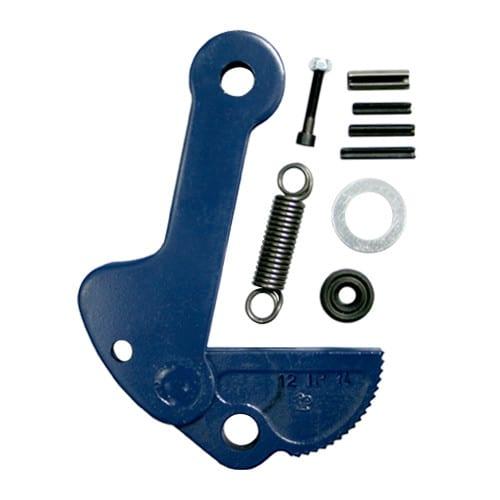
Maintenance and repair kits available
Important: IP10 and IP10J clamps are designed for vertical lifting only and should not be side loaded. Always verify plate hardness, minimum load requirements, and jaw capacity before use.
Crosby IP10 clamps are commonly used in steel fabrication shops, shipyards, structural steel handling, plate processing, and industrial manufacturing environments where reliable vertical plate lifting is required.
Frequently Asked Questions
What is the difference between the Crosby IP10 and IPU10 lifting clamps?
The Crosby IP10 uses a fixed lifting eye designed for straight vertical lifting applications, typically with a single vertical sling or spreader beam. The Crosby IPU10 features an articulating hinged hoisting eye that allows the clamp to align under load and accommodate multi-leg sling angles without side loading the clamp.
When should I choose an IP10 instead of an IPU10?
The IP10 is ideal when using a straight vertical connection and side loading is not required. Many fabrication shops and steel handling applications prefer the simpler fixed-eye design when using spreader beams or direct overhead lifting.
What material hardness can Crosby IP10 clamps handle?
Standard Crosby IP10 and IP10J clamps are rated for materials up to 363 HV10 (approximately 345 HB). For harder materials up to 472 HV10 (450 HB), Crosby offers the IP10H series designed specifically for higher hardness applications.
What is the Rockwell hardness equivalent for Crosby IP10 clamps?
The standard IP10 hardness limit of 363 HV10 is approximately equivalent to 36-37 HRC, while the IP10H series rating of 472 HV10 is approximately equivalent to 45 HRC. Always verify actual material hardness before lifting.
What is the minimum weight an IP10 clamp can safely lift?
Most Crosby IP10 and IP10J clamps require a minimum load equal to 10% of the clamp's rated Working Load Limit (WLL). The 0.5 ton model may be used down to 5% of rated capacity. Softer materials up to 279 HV10 may also allow 5% minimum loading depending on the model.
Can Crosby IP10 clamps rotate or turn plate?
Yes. Crosby IP10 clamps provide full 180-degree turning capability, allowing materials to be lifted from horizontal to vertical and back down as needed during fabrication or handling operations.
Can IP10 clamps be used in pairs?
Yes. IP10 clamps are commonly used in pairs with a spreader beam for lifting longer plates or balancing loads. Ensure each clamp shares the load equally and follows Crosby lifting angle recommendations.
Are Crosby IP10 clamps proof tested?
Yes. Every Crosby IP10 and IP10J clamp is individually proof tested to 2 times the Working Load Limit and includes certification documentation and serialized traceability.
Can these clamps lift stainless steel?
For stainless steel applications, Crosby recommends the IP10S series. Stainless-specific clamps help reduce the risk of surface contamination and contact corrosion.
Do Crosby IP10 clamps require maintenance?
Yes. The gripping teeth, pivot points, springs, and moving components should be inspected regularly for wear and proper function. Crosby maintenance and repair kits are available to help extend clamp service life.
Prices, stock and lead times on request. Every item can be supplied with a test certificate; proof-load testing in our own test house on request.
Lifting with plate clamps
Plate clamps grip steel plate, sections and fabrications by the jaw, so the grip depends on the plate as much as on the clamp.
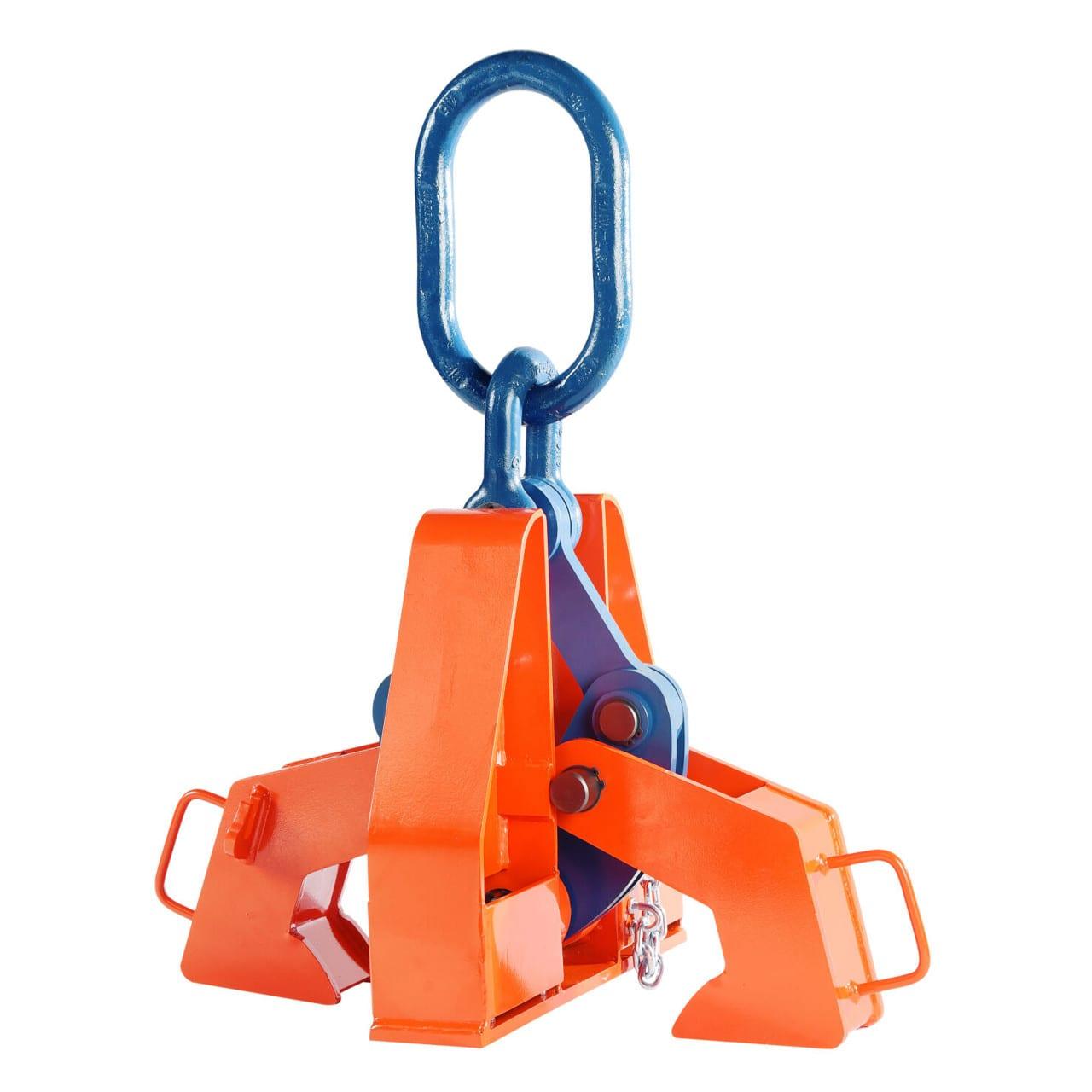
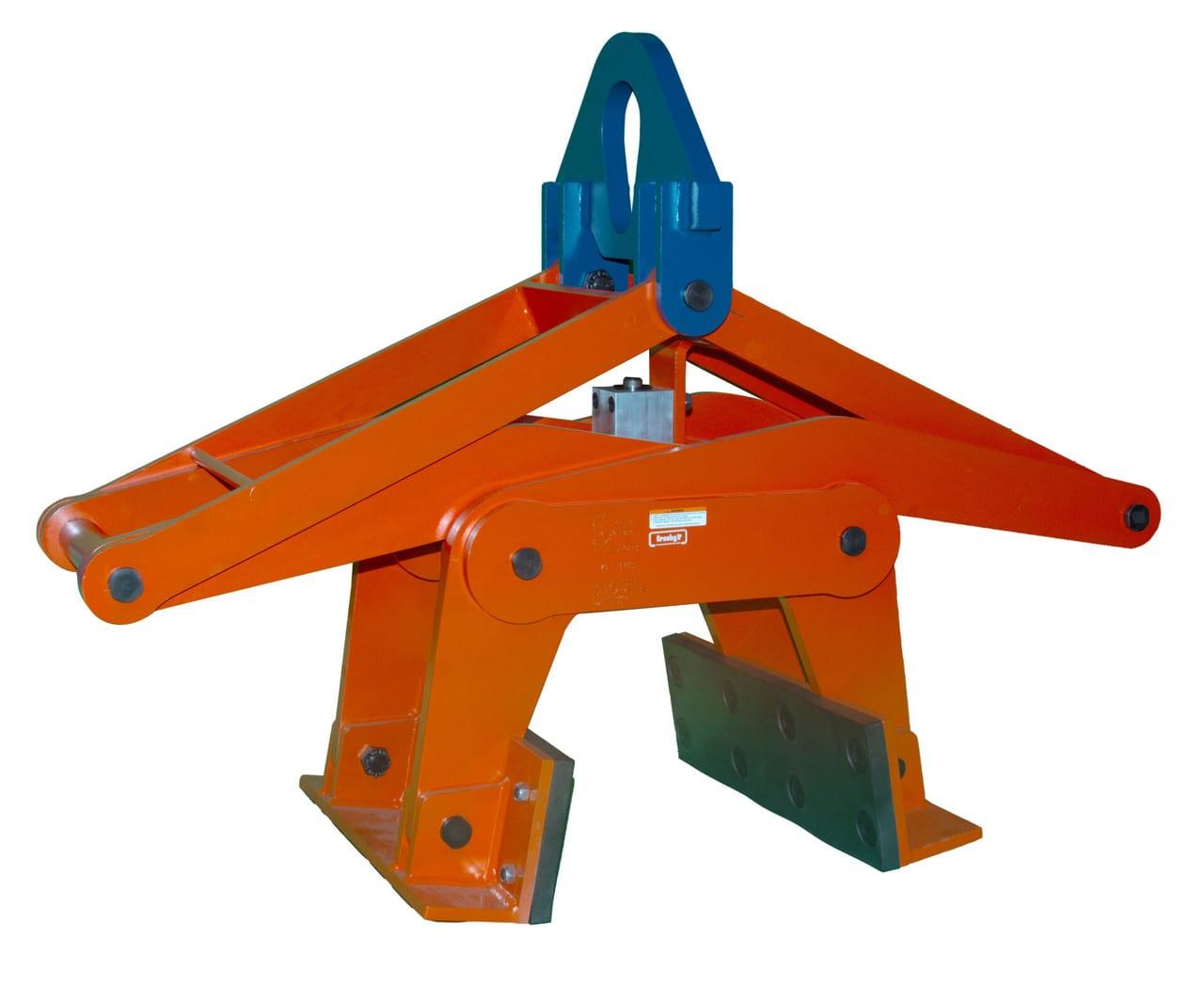
Vertical clamps lift and turn plate on edge. Horizontal clamps work in pairs or sets to lift plate lying flat. Non-marring clamps use pads instead of a toothed jaw, for stainless steel, aluminium and painted work. Beam clamps make a temporary hanging point on a steel beam flange.
Choosing the right one
- Plate thickness inside the clamp’s jaw range.
- A clamp made for the plate: very hard plate needs a clamp rated for that hardness, and stainless or finished surfaces need one that will not mark them.
- Vertical, horizontal or turning duty to match the lift. Horizontal clamps are always used two or more at a time.
- One plate at a time, unless the clamp is rated for more.
Check before every use
- Jaw teeth or pads clean and undamaged; worn segments replaced with the maker’s repair kit.
- Locking lever holds the clamp closed, and the spring works.
- Body not cracked, bent or opened; hoisting eye free.
- Plate surface free of oil, grease, loose paint and scale where the jaw bites.
Ratings, dimensions and limits for this exact item come from the maker’s data shown on this page.