The HCC–Tata Projects joint venture takes Indore Metro underground
In September 2026 Indore Metro reached a milestone the city had not seen before. The tunnel boring machine Narmada, about 410 tonnes, was assembled at ground level and then lifted, shifted and lowered into the launch shaft near the airport using a Megalift system with a strand-jack assembly rated for more than 1,000 tonnes [2]. On 22 September it began boring from Airport Station, about 20 m below ground, towards Bada Ganpati: the first underground tunnelling in Indore Metro's history [3].
The underground section is being built by a joint venture of Hindustan Construction Company (HCC) and Tata Projects Ltd, which won package IN-05R from Madhya Pradesh Metro Rail Corporation Ltd (MPMRCL) in March 2025 for Rs 2,191 crore [1]. In mid-2026, Sealinkers supplied the JV's airport-section site with one order of chain pulley blocks, heavy wire rope slings and bow shackles. This case study describes the project, that order, and what TBM and shaft work asks of rigging.
The project: Indore Metro's only underground section
- Network. Indore Metro Phase 1 is 31.32 km long, and IN-05R is its first and only underground package [1].
- Route. The section runs about 8.65 km from a ramp east of Indore Railway Station to a ramp west of Airport Station, bored by TBM [1].
- Stations. Seven underground stations: Indore Railway Station, Rajwada, Chota Ganpati, Bada Ganpati, Ramchandra Nagar, BSF/Kalani Nagar and Airport [1].
- Partners. HCC holds 55% of the joint venture and Tata Projects the balance [1].
Launching the first machine within about eighteen months of the contract award, and starting the drive from the airport end, is a strong start for the joint venture [1][2][3]. With the first machine boring, the work now moves along the alignment towards the stations under the city centre [1][3].
How Sealinkers supported the HCC–TPL joint venture
In mid-2026, Sealinkers supplied a single order to the JV's Indore Metro IN-05 site at the airport section:
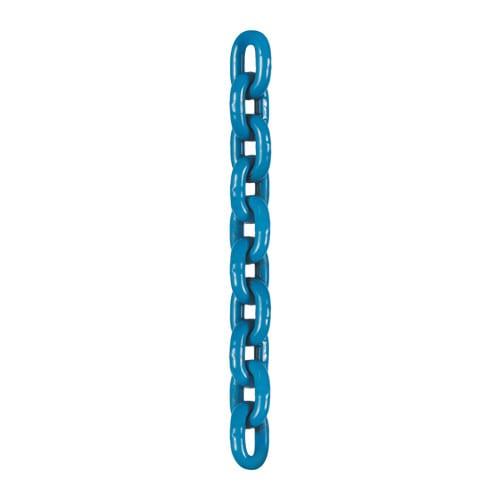
- Titan chain pulley blocks from 1 tonne up to 20 tonnes.
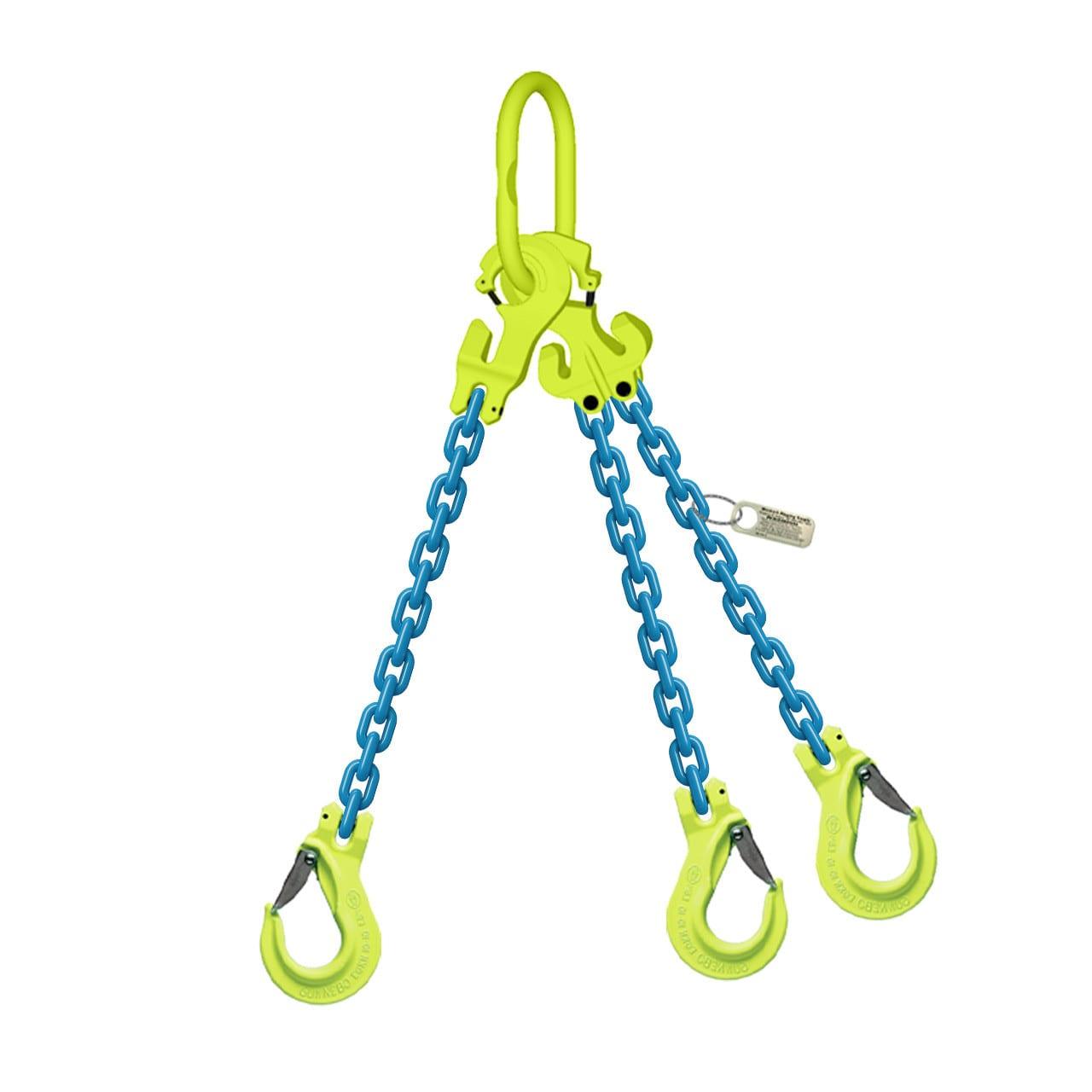
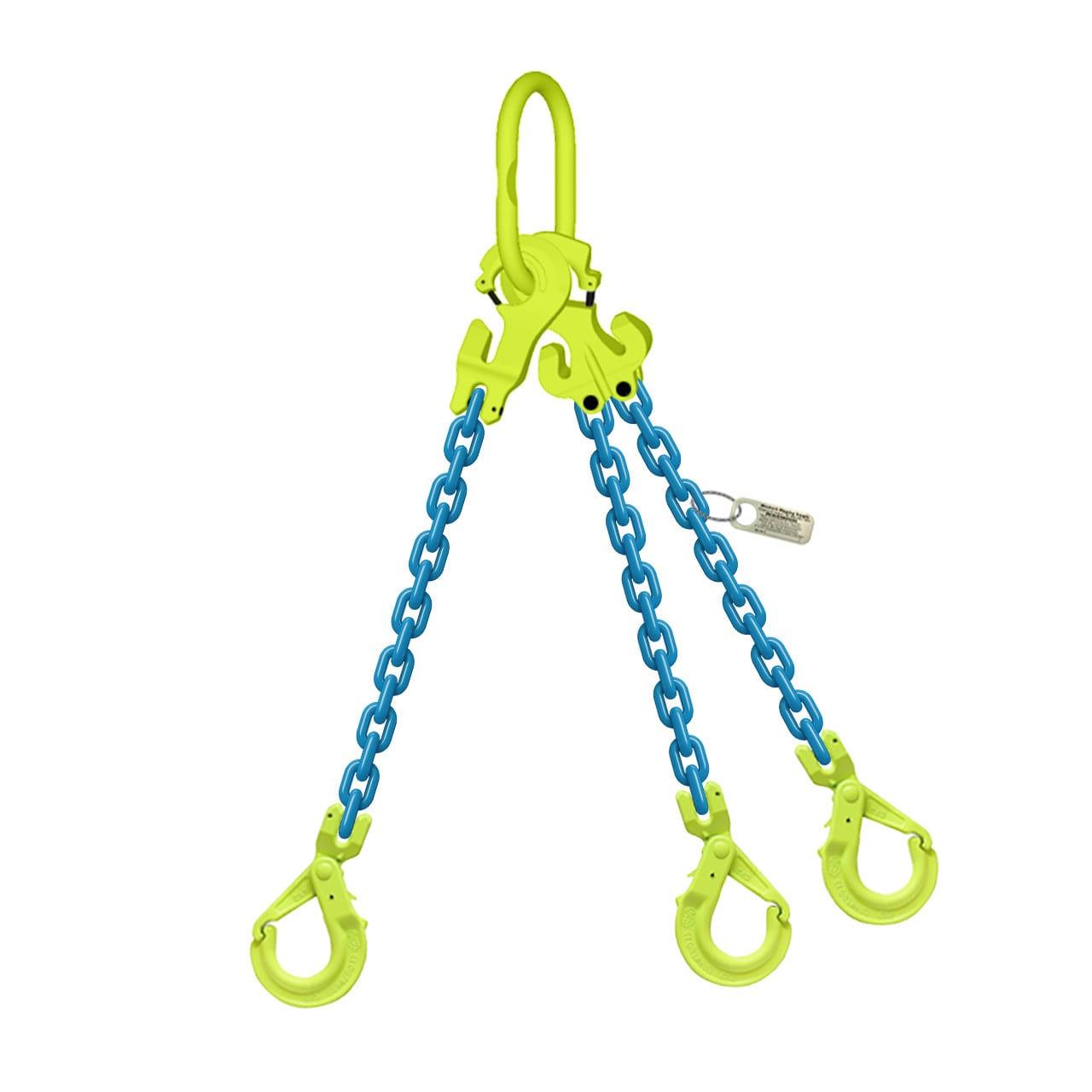
- Heavy Usha Martin wire rope slings of 6x36 construction with double ferrules: 40 mm (20 tonnes SWL) and 64 mm (50 tonnes SWL).
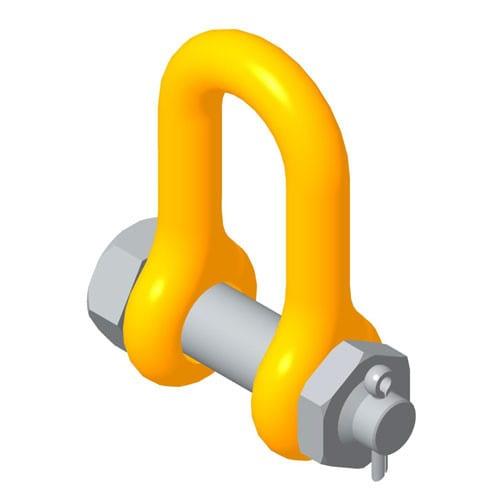
- Alloy bow shackles from 4.75 tonnes up to 55 tonnes.
This was one order, not an ongoing supply. Which lift each item served is set by the JV's own lift plans, and we do not describe them here. The TBM lowering described above was carried out with a strand-jack system [2].
What TBM and shaft work asks of rigging
Strand jacks for the main lift, conventional rigging around it
A TBM shield of several hundred tonnes is too heavy for most site cranes to lower into a shaft at a useful radius. A strand-jack system does it differently: hydraulic jacks grip bundles of steel strand and pull or lower them in short strokes, so a very heavy load can be lowered slowly and precisely from a frame or gantry over the shaft. Indore's system combined a Megalift frame with strand jacks [2]. The main lift is then a jacking operation, but everything around it is conventional rigging: assembling the machine at ground level, turning and fitting components, connecting lifting lugs, and handling the back-up gantries, segment erector and conveyor sections that follow the shield down. That is where large slings, heavy shackles and chain blocks earn their place.
Assembling a machine at ground level, as was done with Narmada [2], moves much of the heavy fitting work out of the shaft and onto open ground, where cranes can reach and crews have room to work. It also means the assembly rigging, the slings, shackles and blocks that bring the cutterhead, shield sections and drive units together, is in use for weeks before the machine goes down. That tackle must be inspected and kept in certificate throughout. Planning it against the full assembly sequence, not only the final lowering, avoids a last-minute shortage on site.
Chain blocks for positioning in tight space
Inside a launch shaft and a freshly started tunnel, there is little room for a crane to make the last few millimetres of a fit. Chain pulley blocks hung from a beam or an anchor point give controlled, hand-operated movement for aligning flanges, hydraulic cylinders, segment erector parts and services. A range from 1 to 20 tonnes lets the crew use a light block for small parts and keep the heavy blocks for heavy ones, rather than rigging a 20-tonne block for a 1-tonne job. See our hoists and blocks.
Heavy slings and shackles below ground
Slings of 40 mm and 64 mm are heavy rigging, sized for component lifts in the tens of tonnes. At that weight the sling, the shackle and the lifting lug have to be chosen as a set. The shackle's pin must suit the lug hole, its jaw must take the sling eye without pinching it, and the bow shackle's rounded body lets a two-leg sling sit at an angle without side-loading the pin. Our guide to bow shackles and D shackles covers when each shape applies, and sling angle and SWL covers leg tension at an angle.
A shaft some 20 m deep [3] is wet, muddy and enclosed. Slings and shackles that go down it come back with grit, slurry and grout on them, which hides damage and works into wire rope. Rigging used below ground should be cleaned and inspected after each heavy lift and before reuse, and wire rope should be checked against discard criteria.
Lessons for buyers
- 1. Order the TBM-assembly tackle as one package. A single, planned order of blocks, slings and shackles, sized from the assembly lift plan, arrives together and is certified together.
- 2. Start the enquiry early. Heavy slings are made to order. Send enquiries months before the machine arrives on site.
- 3. Select sling, shackle and lug as a set. Check pin diameter, jaw width and sling eye size, not only the SWL.
- 4. Spread the chain block range. A range of capacities is safer and quicker on site than one oversized size.
- 5. Inspect after every shaft lift. Clean, inspect and tag rigging that has been underground before it is used again.
Frequently asked questions
What did Sealinkers supply to Indore Metro?
In mid-2026 we supplied one order to the HCC–TPL joint venture's site at the airport section of Indore Metro's underground package: chain pulley blocks from 1 to 20 tonnes, 40 mm and 64 mm wire rope slings, and bow shackles up to 55 tonnes.
Why use strand jacks rather than a crane to lower a TBM?
Strand jacks lift or lower very heavy loads in short, controlled strokes from a fixed frame, without needing a crane large enough to carry the load at the required radius. They suit shaft work, where precise, slow lowering matters more than speed.
Do your slings and shackles come with certificates?
Yes. Slings are made at our own works and proof-load tested at our in-house test house on a 1,200 T proof-load test bed, and each item ships with its test certificate. Class-society inspection by IRS, ABS, LRS or BV can be arranged. See proof-load testing.
Do you supply projects outside Maharashtra?
Yes. Sealinkers has been based at Darukhana, Mumbai, since 1977 and delivers across India, including to project sites in Madhya Pradesh.
Preparing for a TBM launch?
Send us the assembly and launch lift plan, or your tackle list, and we will propose chain blocks, slings and shackles to suit, with certificates. Contact Sealinkers.
Sources
- [1] HCC, "HCC-TPL JV wins ₹2,191 Cr contract for Indore Metro", 17 March 2025 — hccindia.com
- [2] Free Press Journal, "Metro Milestone: First TBM Launched For Underground Construction In Indore", 3 September 2026 — freepressjournal.in
- [3] Swarajya, "Indore Metro Begins First Underground Tunnel From Airport To Bada Ganpati", 23 September 2026 — swarajyamag.com
Related Guides
Ready to put this into practice?
Every item ships certified, and our in-house test house backs it with the paperwork.
Sealinkers Engineering
Rigging & Lifting Engineering Team
Sealinkers has supplied and certified rigging, lifting and mooring equipment from Darukhana, Mumbai since 1977. These guides are written and checked by the engineers who specify this gear and proof-load it on our own test bed.
- in-house test house — proof-load bed from 1 to 1,200 tonnes
- Proof-load testing and certification in-house since 1977, Darukhana, Mumbai
- Class-society interfaces: IRS, ABS, LRS and BV