

Services · In-house test house
Proof-load testing
Slings, shackles, hooks, chain and assemblies proof-loaded on our own machines from 1 to 1,200 T, and certified in our own name against the item's serial number.
- Four machines: 100, 200, 300 and 1,200 T
- Witnessed to IRS · ABS · LRS · BV rules on request
- Certificate on the item's serial number
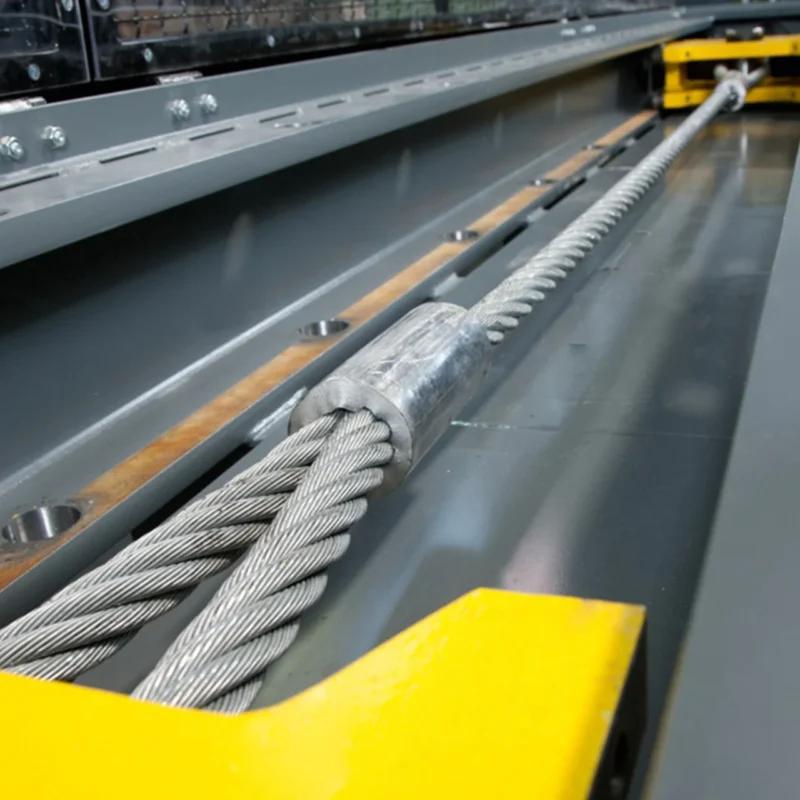
Our test machines
The machine is chosen by the proof load, not the working load limit: proof load is a multiple of the WLL set by the item's standard.
| Machine | Proof load | Typical work |
|---|---|---|
| 100 T machine | Up to 100 T | Single-leg slings, webbing slings, shackles, hooks and chain components |
| 200 T machine | Up to 200 T | Multi-leg slings, larger shackles and fittings |
| 300 T machine | Up to 300 T | Heavy slings and assemblies |
| 1,200 T test bed | Up to 1,200 T | Heavy-lift slings and grommets, large shackles and complete assemblies |
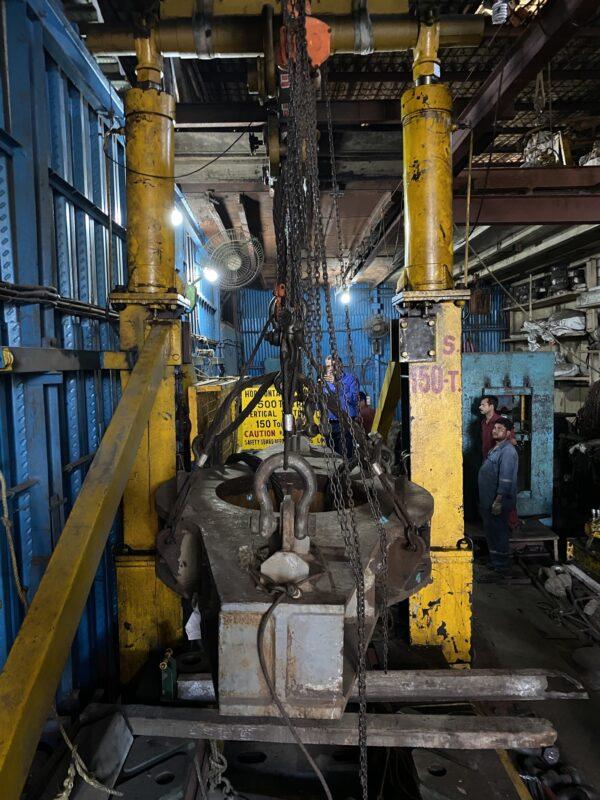
Your gear and ours
What we test
Every sling and assembly we make is proof-load tested before despatch. We test your equipment too, whether you bought it from us or elsewhere.
- Wire rope slings, grommets and multi-leg assemblies
- Webbing and round slings
- Chain slings and chain components
- Shackles, hooks, links, swivels and eye bolts
- Gear due for re-test and re-certification
Five steps
How a test works
Send us the details
The item, quantity, working load limit, standard and any class requirement.
We book the machine
And, where the job is surveyed, the class surveyor to witness the test.
Proof load applied
The item is loaded to the multiple its standard requires, then examined once the load is off.
Certificate issued
In our own name, on the item's serial number, with the proof load applied and the working load limit.
Back to you
Collected from us or despatched with the certificate travelling with the goods.
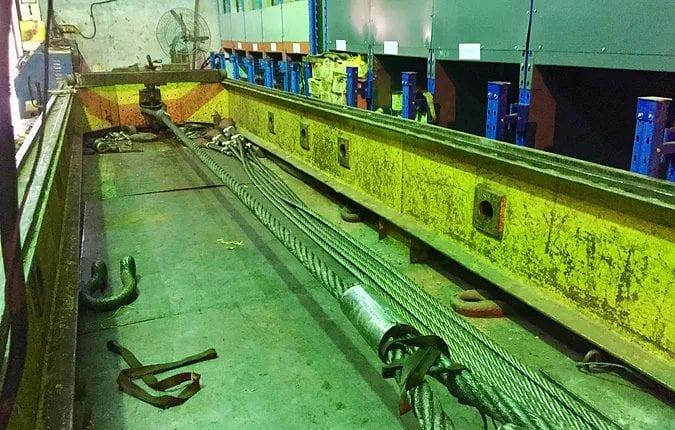
Our test house
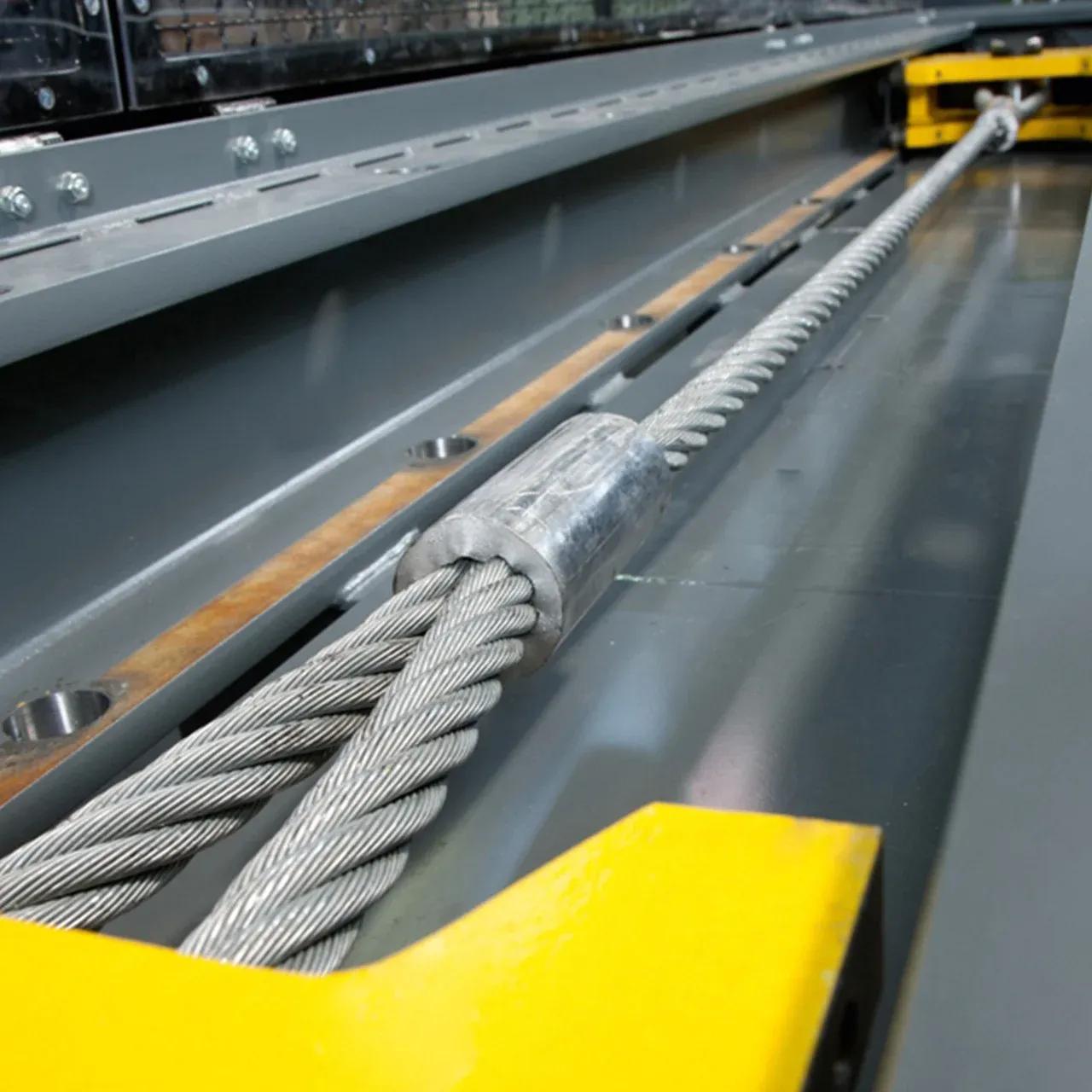
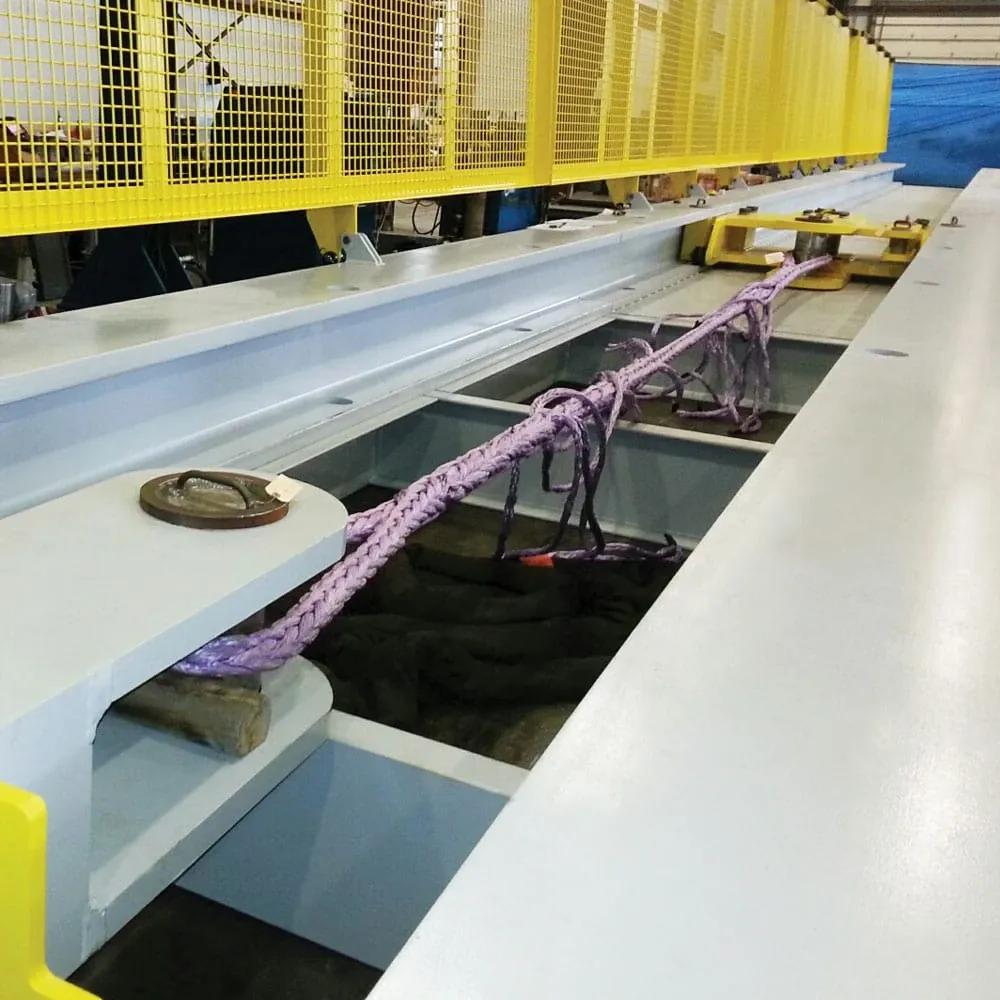
Inside our test house
The machines and the floor where your gear is proof-loaded, in Mumbai.

Re-test reminders
Know what is due before it is due
List your slings, shackles and lifting gear with the date each was last tested. We email you 30 days before it is next due, at the interval you work to.
Documentation
What you receive
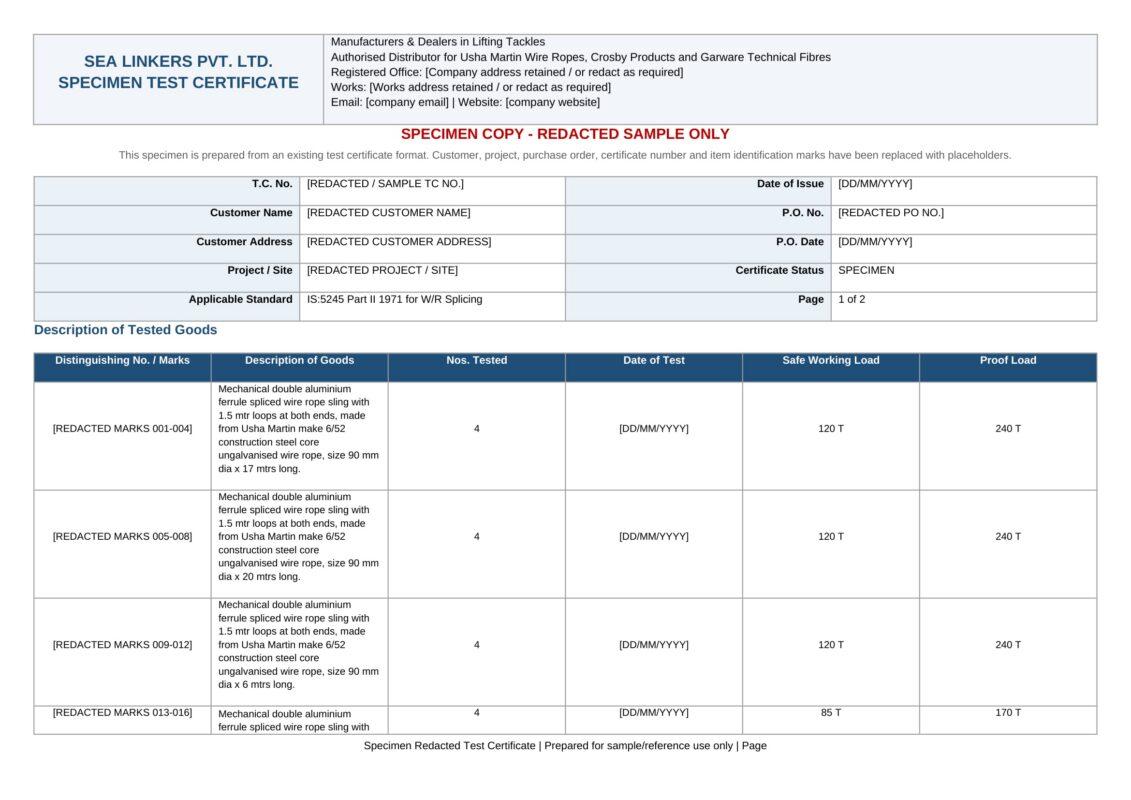
Certificates issued in our own name by our competent person, traceable to the serial number on the item, with the proof load applied and the working load limit.
- Test and thorough-examination certificate, issued against the serial number
- Proof-load certificate
- Certificate of conformity
- DGFASLI testing, with Form 5 and Form 11 certificates, on request — tell us the form your inspector asks for
Testing witnessed to class-society rules



Free tool
Sling load calculator
See how the angle of lift multiplies the load in each leg, and the smallest wire rope, chain or webbing sling that covers it.
All 2 legs assumed to share the load.
Reference only — always verify against the sling’s own rated tag / test certificate. Not a substitute for a competent person.
See the sling size that covers this lift
The recommended wire rope, chain or round sling for your load, legs and angle — free with an account.
- Recommended size for every sling type
- Full size ladders in every calculator
- Catalogues and data sheets
- Your enquiries in one place
What this assumes
- Angle is measured from the horizontal, the way Indian rigging charts publish it. Tension per leg = load ÷ load-bearing legs × 1 ÷ sin(angle) — what each leg physically carries. A four-leg sling is counted on three legs, because a rigid load with unequal leg lengths rarely shares across all four.
- The recommended size is chosen so the sling’s RATED capacity covers the load: required single-leg WLL = load ÷ the EN uniform-load mode factor (2 legs ×1.4 at 0–45° from vertical, ×1.0 at 45–60°; 3 and 4 legs ×2.1 and ×1.5), the method EN 818-4, EN 13414-1 and EN 1492 use for the tag. That is never less than the tension per leg, so it is the figure that governs.
- Recommended sizes are single-leg VERTICAL working load limits: wire rope from 6×36 IWRC 1960 N/mm² minimum breaking loads divided by the safety factor you pick, alloy chain to EN 818-2, polyester round slings to the EN 1492-2 colour code.
- The load is assumed static, evenly distributed and lifted without shock, snatch or side pull. Dynamic loading, wind, edge contact and out-of-plane pull are not modelled here.
Advisory only. Before the lift, verify every figure against the sling’s own rated tag and its test certificate, and have a competent person sign off the rigging plan. Where this page and the certificate disagree, the certificate governs.
Why the angle matters
As a sling is angled away from vertical, the tension in each leg rises by the angle factor 1 ÷ sin(angle from horizontal). Flatten the angle and the sine shrinks, so the factor climbs and each leg carries far more than its share of the vertical load.
Never sling below 30°
At 30° from horizontal the angle factor is already 2.0 — each leg carries double the vertical share. Go lower and it climbs fast, quickly exceeding the sling’s WLL. Never sling below 30°.
Frequently asked questions
Can you test equipment that was not bought from Sealinkers?
Yes. Send us the item, its working load limit and the standard it must meet. We proof-load it on our own machines and certify it in our own name against its serial number.
What is the maximum proof load you can apply?
1,200 T on our test bed. Smaller items go on our 100, 200 and 300 T machines, so the machine always suits the load.
Can a class surveyor witness the test?
Yes. Tests can be witnessed to IRS, ABS, LRS or BV rules where the job is surveyed. Tell us when you enquire so we can arrange it with the society.
Which certificate will I receive?
A test and thorough-examination certificate issued against the serial number. Proof-load certificates and certificates of conformity are issued where the job calls for them.
What if the item cannot be brought to Mumbai?
We test on site with water bags and load cells. See on-site load testing.
What should I send with the enquiry?
What the item is, how many, the working load limit, the standard it must meet, any serial numbers, any class requirement and where it is now. A photo of the item and its tag helps.
Our other services
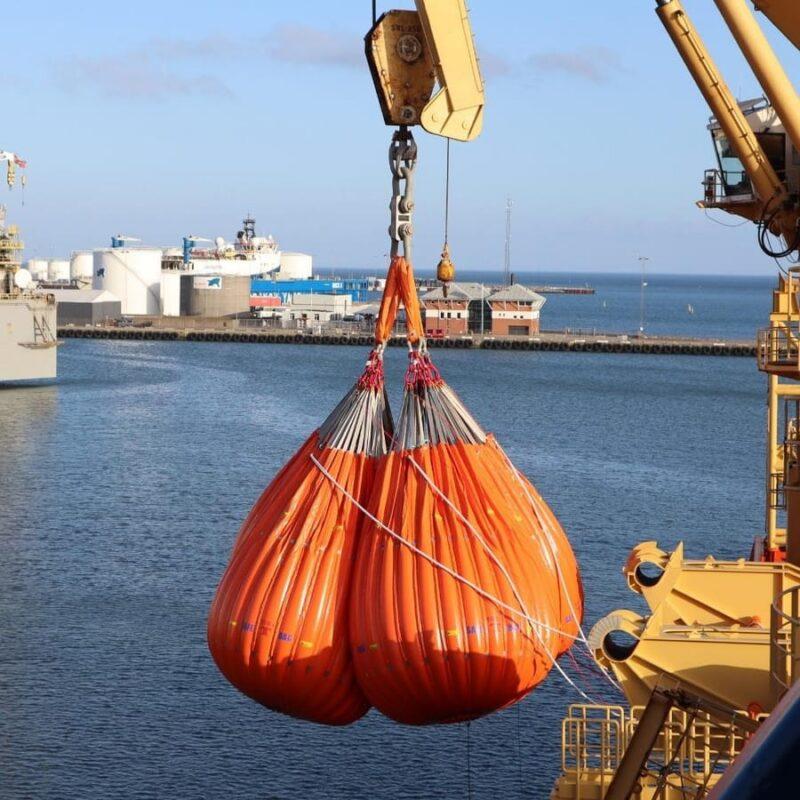 Load cells to 3,000 t
On-site load testing
Water bags and load cells brought to gear that cannot come to us.
Read more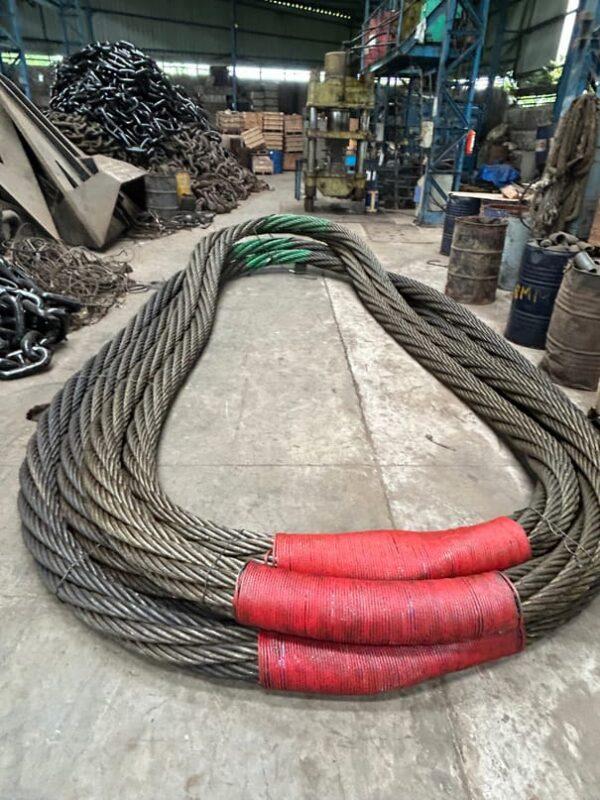 3,000 t swaging machine
Sling manufacturing & swaging
Wire rope, chain and webbing slings made to your load in our own works.
Read moreIRS · ABS · LRS · BVInspection & certification
Certificates in our own name, and help reading the paperwork you are offered.
Read more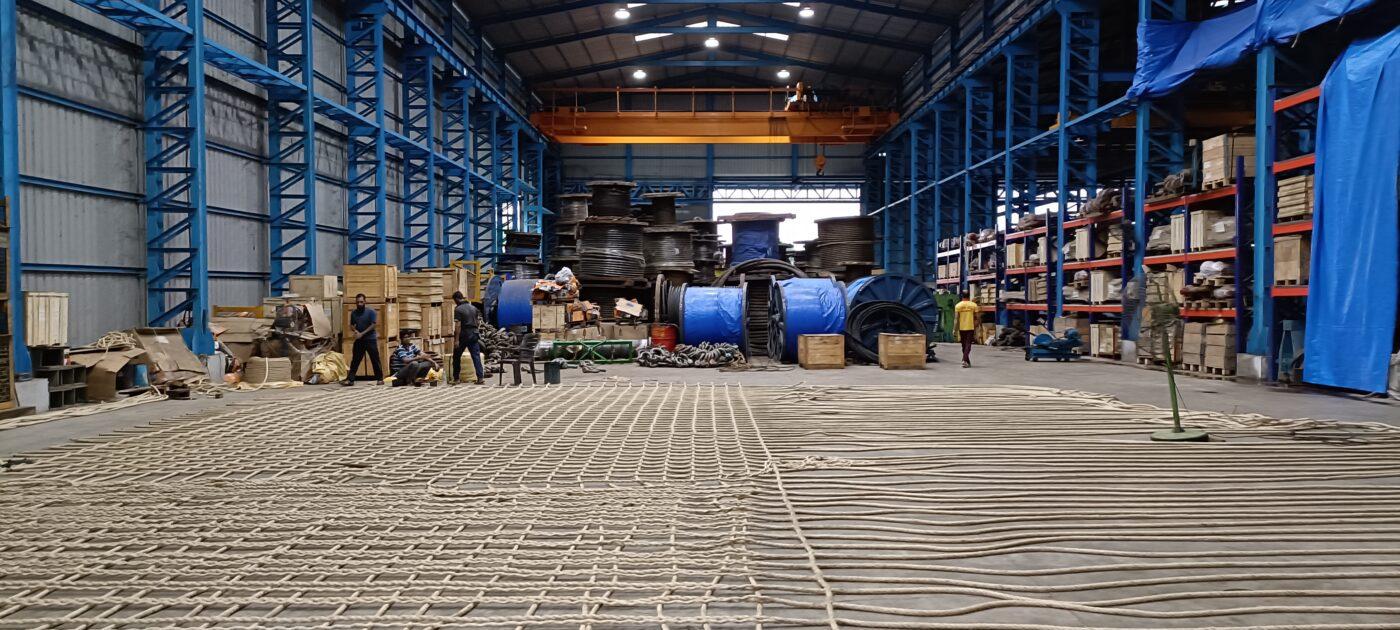 23,500+ items
Stock & despatch
Five warehouses around Mumbai; ex-stock orders leave within 72 hours.
Read moreBook a proof-load test
Tell us the item, its working load limit and where it is — we reply with a date and a price.