Afcons is boring India's first undersea rail tunnel
At the Mumbai end of the Mumbai–Ahmedabad High Speed Rail corridor, Afcons Infrastructure is building the bullet train's underground gateway to Mumbai: package MAHSR C2, a 20.4 km double-line tunnel from the underground station at Bandra-Kurla Complex to the Shilphata ramp, including about 7 km under Thane Creek — India's first undersea rail tunnel [1][2]. In 2026 Afcons lowered two 350-tonne, 13.6 m TBM cutterheads into shafts up to 56 m deep and set both machines boring [4][5][6].
Since 2024, Sealinkers has supported Afcons' C2 sites at Vikhroli and Mahape and the package's casting yard at Pawane with heavy-lift rigging: wire rope slings up to 120 tonnes SWL, Crosby alloy shackles up to 200 tonnes, alloy chain slings, wire rope, lifting clamps and hoists. This case study tells the story of the C2 works, how we have supported them, and what buyers on tunnel and shaft projects should think about when specifying heavy rigging.
The project: a 13 m tunnel under Mumbai and Thane Creek
- A single large tube. The tunnel is one tube 13.1 m in diameter that carries both tracks. Its TBM cutterheads are 13.6 m across [2].
- Two methods. About 16 km is bored by tunnel boring machine and about 5 km is mined by the New Austrian Tunnelling Method (NATM) from the Shilphata end [2].
- Deep shafts. The TBMs were launched from shafts 56 m deep at Vikhroli and 39 m deep at Sawli, with a 36 m retrieval shaft at BKC [1][3].
- A segment factory. The tunnel lining is about 77,000 precast segments forming some 7,700 rings, cast at a dedicated yard at Mahape. Each ring is nine curved segments and a key, each 2 m wide and 0.5 m thick [3].
Lowering a TBM into a 56 m shaft
The two Herrenknecht slurry TBMs each weigh over 3,000 tonnes and are about 95 m long [4]. They cannot go down a shaft in one piece. At Vikhroli, assembly began on 9 April 2026 when the first of six main-shield segments — about 170 tonnes — was lowered 56 m below ground [3]. On 17 May 2026 the 350-tonne, 13.6 m cutterhead followed; it had arrived in five shipments and was welded together on site [5]. The second cutterhead was lowered at Sawli on 23 May 2026 [6]. TBM-1 began boring towards BKC on 5 July 2026, and TBM-2 set off from Sawli towards Vikhroli — a drive that includes the undersea section — later that month [4]. By October 2026 about 5 km of the NATM tunnel at the Shilphata end was complete [7].
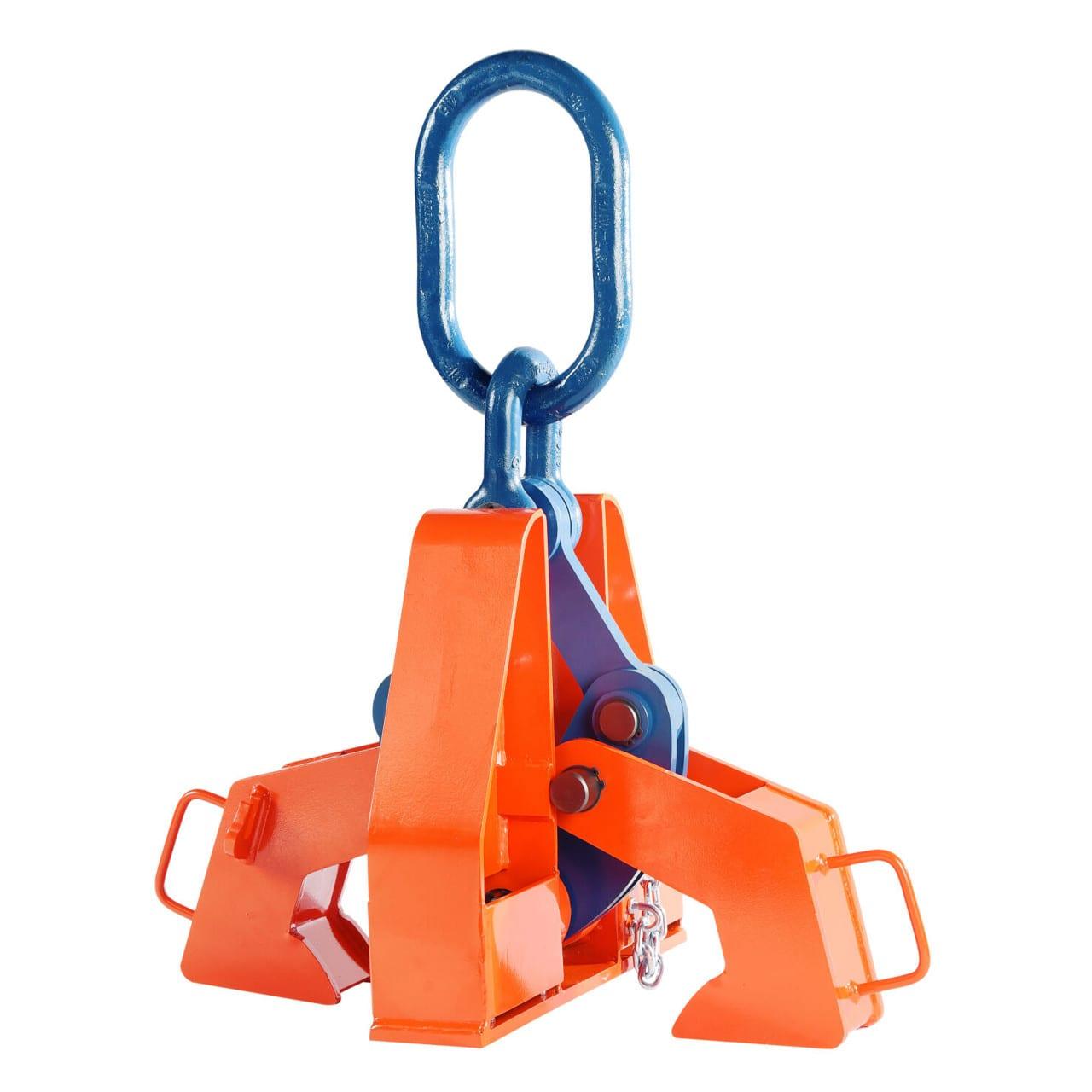
Lifts like these are engineered in detail before anyone touches the crane. Every component in the rigging — slings, shackles, master links, lifting beams — has to be rated, certified and traceable before the lift plan is signed off.
How Sealinkers supported Afcons on C2
Our role has been to keep Afcons' C2 sites supplied with certified heavy rigging, delivered to the Vikhroli site on the Ghatkopar–Andheri Link Road, the Mahape site in TTC Industrial Area (Navi Mumbai) and the C2 casting yard at Pawane. The supply covers the full range a heavy civil package draws on:
- Heavy-lift wire rope slings — Usha Martin ferrule-secured slings up to 90 mm diameter and 120 tonnes SWL, plus two- and four-leg bridles.
- Alloy shackles — Crosby screw-pin and bolt-type shackles from 12 tonnes up to 200 tonnes.
- Alloy chain slings — one-, two- and four-leg, up to about 50 tonnes.
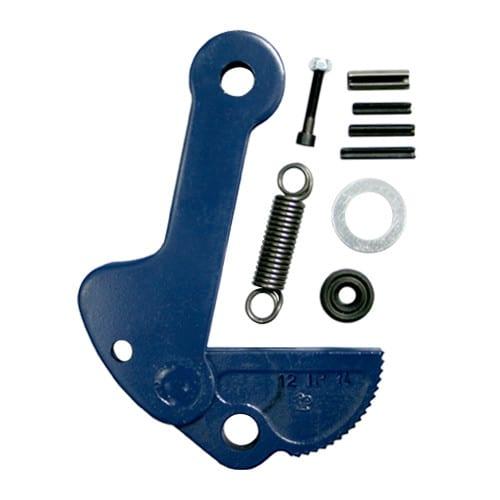
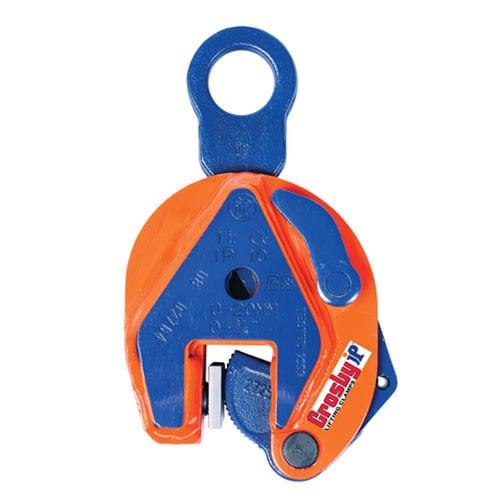
- Steel wire rope, lifting clamps, chain pulley blocks, lever hoists, snatch blocks and forged fittings.
We supply equipment against the contractor's specification. The lift plans — which sling went on which lift — are Afcons' own, and we do not describe them here.
What heavy rigging on a tunnel project asks for
Large-diameter slings made and tested as one item
An 83 mm or 90 mm wire rope sling is not a stock item cut to length. It is made to order: the rope is formed into eyes, the ferrules are pressed on a heavy swaging press, and the finished sling is proof-load tested before it is tagged and certified. Our slings are made at our own works and tested at our in-house test house on a 1,200 T proof-load test bed. See wire rope slings and proof-load testing.
Shackles sized to the sling, not just the load
A 120-tonne sling needs a shackle whose bow fits the sling eye without pinching it, and whose pin suits the lifting lug. That is why heavy rigging sets are specified together: the shackle rating, bow size and pin type are chosen with the sling, not after it. Our bow vs dee shackle guide and shackle size selection guide explain the choices.
Chain slings for harsh, repeated handling
Alloy chain slings tolerate abrasion, heat and rough handling better than wire rope, and multi-leg chain slings with shortening hooks can be adjusted on the job. They are the usual choice for repeated handling in a yard or a shaft where loads are dragged against edges. See Grade 80 vs Grade 100 chain.
Clamps and lever hoists for the details
Plate and beam clamps, lever hoists and chain blocks do the fine positioning around a large lift: aligning steelwork, tensioning, pulling a component into place by millimetres. They are inexpensive next to the heavy gear, and a site with too few of them improvises.
Lessons for tunnel and shaft buyers
- 1. Specify the rigging set, not single items. List the sling diameter and SWL, the shackle type and rating, and the master link together, so the pieces fit each other.
- 2. Order heavy slings early. Slings of 76 mm and above are made to order and proof-load tested; build that into the programme before the lift date is fixed.
- 3. Name the make where the client requires it. Many clients publish approved-make lists for shackles and rope. Write the make and model on the PO.
- 4. Ask for certificates with the dispatch. A sling or shackle that arrives without its test certificate cannot be used on a planned lift.
- 5. Plan for the small gear. Clamps, lever hoists, chain blocks and turnbuckles are what keep a big lift on schedule.
Frequently asked questions
What did Sealinkers supply to the bullet train's C2 tunnel package?
Since 2024 we have supplied Afcons' MAHSR C2 sites at Vikhroli and Mahape and its Pawane casting yard with wire rope slings up to 90 mm and 120 t SWL, Crosby alloy shackles from 12 t to 200 t, alloy chain slings up to 52.5 t, wire rope from 6 mm to 36 mm, lifting clamps, chain blocks and lever hoists.
How large a wire rope sling can you make?
We make large-diameter wire rope slings at our own works and proof-load test them on our 1,200 T test bed. Tell us the load, the hitch and the lifting points and we will propose the diameter and construction.
Do you supply Crosby shackles above 100 tonnes?
Yes. For MAHSR C2 we supplied Crosby G-2130 bolt-type shackles at 120 and 150 t and a G-2140 at 200 t, alongside screw-pin shackles from 12 t.
Are your slings supplied with test certificates?
Yes. Slings and assemblies are proof-load tested in-house and dispatched with test certificates. Third-party inspection can be arranged where the client requires it.
Planning a heavy lift?
Send us the lift plan or the rigging list for your shaft, yard or launch. We will propose matched slings, shackles and fittings, with certificates. Contact Sealinkers, or browse wire rope slings, shackles and chain slings.
Sources
- [1] The Metro Rail Guy, "Afcons awarded Mumbai–Ahmedabad bullet train's C2 tunnel contract", 9 June 2023 — themetrorailguy.com
- [2] PIB Backgrounder, "Mumbai–Ahmedabad High-Speed Rail: Advancing India's Rail Modernisation", 12 June 2026 — pib.gov.in
- [3] NBM&CW (NHSRCL release), "Assembly of tunnel boring machine for bullet train project begins at Vikhroli", 9 April 2026 — nbmcw.com
- [4] Geoengineer.org, "Second giant TBM begins work on India's first undersea rail tunnel", 31 July 2026 — geoengineer.org
- [5] NBM&CW (NHSRCL release), "350 tonne cutterhead lowered for Mumbai–Ahmedabad bullet train project at Vikhroli", 18 May 2026 — nbmcw.com
- [6] NBM&CW (NHSRCL release), "Cutterhead of 2nd TBM lowered for 21 km tunnel at Sawli", 25 May 2026 — nbmcw.com
- [7] Swarajya, "371 km of viaduct completed, over 9,300 OHE masts installed", 15 October 2026 — swarajyamag.com
Related Guides
Ready to put this into practice?
Every item ships certified, and our in-house test house backs it with the paperwork.
Sealinkers Engineering
Rigging & Lifting Engineering Team
Sealinkers has supplied and certified rigging, lifting and mooring equipment from Darukhana, Mumbai since 1977. These guides are written and checked by the engineers who specify this gear and proof-load it on our own test bed.
- in-house test house — proof-load bed from 1 to 1,200 tonnes
- Proof-load testing and certification in-house since 1977, Darukhana, Mumbai
- Class-society interfaces: IRS, ABS, LRS and BV