
Product family
Wire rope slings
Single-leg strops to multi-leg bridles and heavy-lift grommets — made to your load, proof-tested on our own bed, certified on their serial number.
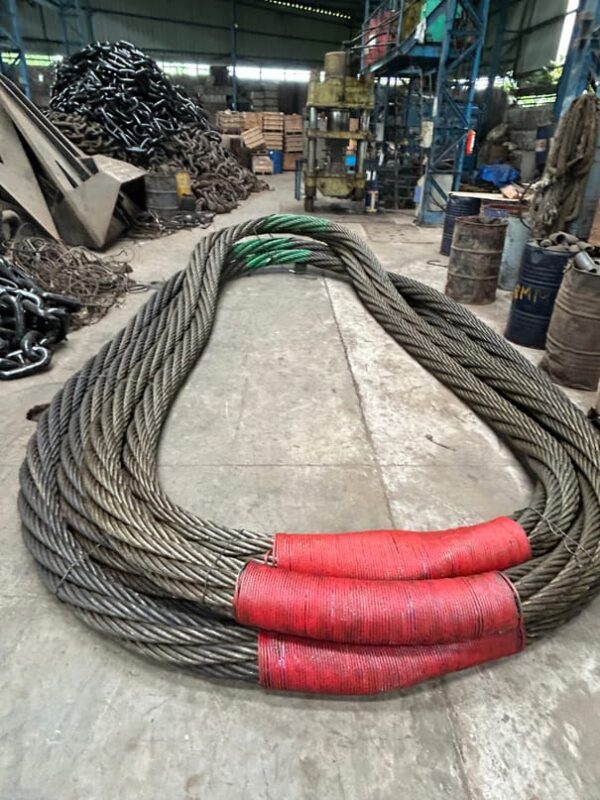
Single and multi-leg wire rope slings, grommets and heavy-lift assemblies made to order in Mumbai — swaged, spliced or socketed, proof-load tested in-house and certified on their serial number.
Wire rope slings are the heart of what Sealinkers has done since 1977: we fabricate them in our own Darukhana workshop, from single-leg strops to multi-leg bridle sets, using Usha Martin rope, Talurit mechanical splicing and Wirelock resin socketing, and proof-load every finished sling on our own test beds, which run up to 1,200 tonnes.
Specifying a sling is a short conversation. First, the load and how you will rig it — straight, choked or basket, single-leg or multi-leg — because the hitch and the leg angle set the required rope size. Second, the terminations: soft eyes for general duty, thimble eyes where the eye rides on hooks and shackles day after day, and resin-socketed or swaged fittings for the heaviest and most permanent assemblies. Third, the fittings: masterlinks, shackles and hooks matched to the legs, so the assembly is certified as a whole rather than as a bag of parts.
Because we cut the rope, splice the eye, fit the hardware and test the result under one roof, the certificate that leaves with the sling describes exactly what was built and the proof load it survived — with the Usha Martin mill certificate behind it. That single chain of custody is what a competent-person examination under the Dock Workers regulations or the Factories Act framework wants to see, and it is why port users across Mumbai send their sling work to us.
In service, wire rope slings live or die by inspection: broken wires at the splice, crushed or kinked sections and corrosion are the usual killers. Our wire rope inspection checklist turns IS 3973 and ISO 4309 discard thinking into a five-minute walk-round any rigger can do.
How we make them
Specification
You give us the load, the hitch and the headroom; we size the legs, the fittings and the working load limit against the standard that applies.
Make
Cut from certified stock rope or webbing and terminated in-house — swaged, spliced, socketed or sewn — with every component traceable to its own certificate.
Proof-load
The finished assembly goes on our own test bed (our beds run from 1 to 1,200 T) and is loaded to the multiple its standard requires.
Certificate
It leaves tagged, with a test and examination certificate in our own name on its serial number — class-witnessed (IRS, ABS, LRS, BV) where the job needs it.
Products
Ask for price, stock and lead time on any item — certificates on request.
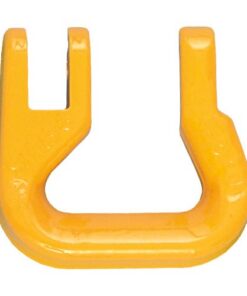
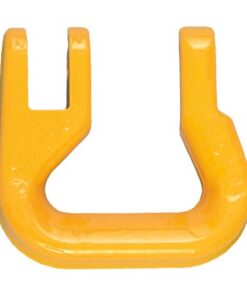

Wire Rope Sling
Frequently asked questions
How quickly can you fabricate and certify a wire rope sling?
For common rope sizes and standard configurations, fabrication, proof-loading and certification happen in our own workshop and test house, so turnaround is fast — breakdown jobs are often handled within days. Unusual rope constructions, very large diameters or special fittings may need material to be brought in first. Tell us the configuration and your deadline and we will commit to a date.
What is the difference between a Talurit splice and a hand splice?
A Talurit (mechanical ferrule) splice presses an alloy ferrule over the rope tails to form the eye — it is consistent, compact and machine-verified, and it is our standard termination. Hand splicing tucks the strands back into the rope, which suits some marine traditions but depends heavily on the splicer. For certified lifting slings we recommend mechanical splicing or resin socketing.
Do slings come tested and certified?
Every sling we fabricate is proof-loaded on our own test bed before despatch and leaves with a test and examination certificate describing the sling, its working load limit and the proof load applied, backed by the mill certificate of the rope used. This is the documentation set that port surveyors and factory inspectors expect to find in your lifting-gear register.
When should a wire rope sling be discarded?
Take a sling out of service for clustered broken wires — especially at the splice or ferrule — significant wear or diameter reduction, kinks, birdcaging, crushing, heat damage or heavy corrosion, or any damage to the eye, thimble or fittings. Discard criteria follow IS 3973 and ISO 4309 thinking. A sling that has been shock-loaded should be examined before it lifts again, whatever it looks like.
Need a price, stock check or certificates?
Send your requirement and we quote with stock, lead time and documentation.