MEIL starts construction of Kaiga Units 5 and 6
On 1 March 2026, the first pour of concrete at Kaiga Units 5 and 6 in Karnataka marked the formal start of construction of two new 700 MWe pressurised heavy water reactors (PHWRs) [1][2]. The Nuclear Power Corporation of India (NPCIL) owns the project. Megha Engineering & Infrastructures (MEIL) holds the engineering, procurement and construction contract, worth Rs 12,800 crore. NPCIL presented the purchase order in April 2025 [1].
The two units are the first of a planned fleet of ten Indian-designed 700 MWe reactors to be built in "fleet mode" [1][4]. MEIL describes the first pour as the shift from pre-project activities to the construction phase [2]. Excavation began in May 2022, and the first new unit is targeted to reach criticality about five years after the first pour [1].
In 2026, Sealinkers supplied one order of rigging to MEIL's Nuclear Island Mega EPC Package (NIMEP) at Kaiga. It covered Crosby shackles from 2 t to 200 t, Usha Martin wire rope slings from 12 mm to 83 mm (up to 100 t SWL), and 36 mm wire rope. This case study describes the project, what we supplied, and what the early nuclear-island phase asks of rigging. Supply details come from our own order and dispatch records. Project facts are cited to NPCIL, MEIL and the other public sources listed at the end.
The project: two 700 MWe PHWRs beside an operating station
- Site. Kaiga already has four operating 202 MWe PHWRs, connected to the grid between 1999 and 2011 [1].
- New units. Units 5 and 6 are two 700 MWe PHWRs of Indian design [1].
- Contract structure. The project is being delivered through a few mega EPC packages, such as excavation, nuclear island, turbine island and nuclear instrumentation [1].
- Milestones. Excavation began in May 2022, the purchase order was presented in April 2025, and the first pour of concrete took place on 1 March 2026 [1][2].
Heavy components are already on their way
A PHWR nuclear island receives some very heavy pieces. L&T has manufactured and dispatched four of the eight steam generators for the new units. Each weighs over 200 t and is about 24 m long and about 4 m in diameter, and the fourth was dispatched nine months ahead of the contractual schedule [3]. In June 2026, the first end shield for the reactor core arrived at site. End shields support the coolant channel assemblies, enable on-power refuelling and form part of the calandria vault enclosure. This one weighs 107 t, is about 9.3 m in diameter and nearly 1 m thick, and was made by L&T Heavy Engineering at Hazira [4]. NPCIL reported that it was unloaded using a 500 t crane, a 70 t crane and a 10 t chain pulley block [4].
That combination of a main crane, a tailing crane and a small chain block shows how heavy nuclear components are handled: the cranes take the weight, and the chain block gives the final millimetres of control.
How Sealinkers supported MEIL
In 2026, we supplied one order to MEIL's Nuclear Island Mega EPC Package at Kaiga Units 5 & 6. It covered:
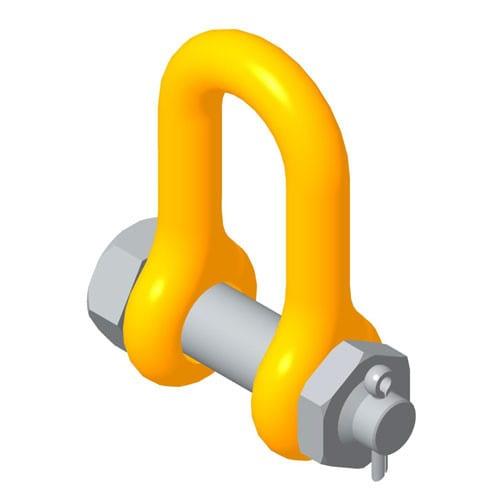
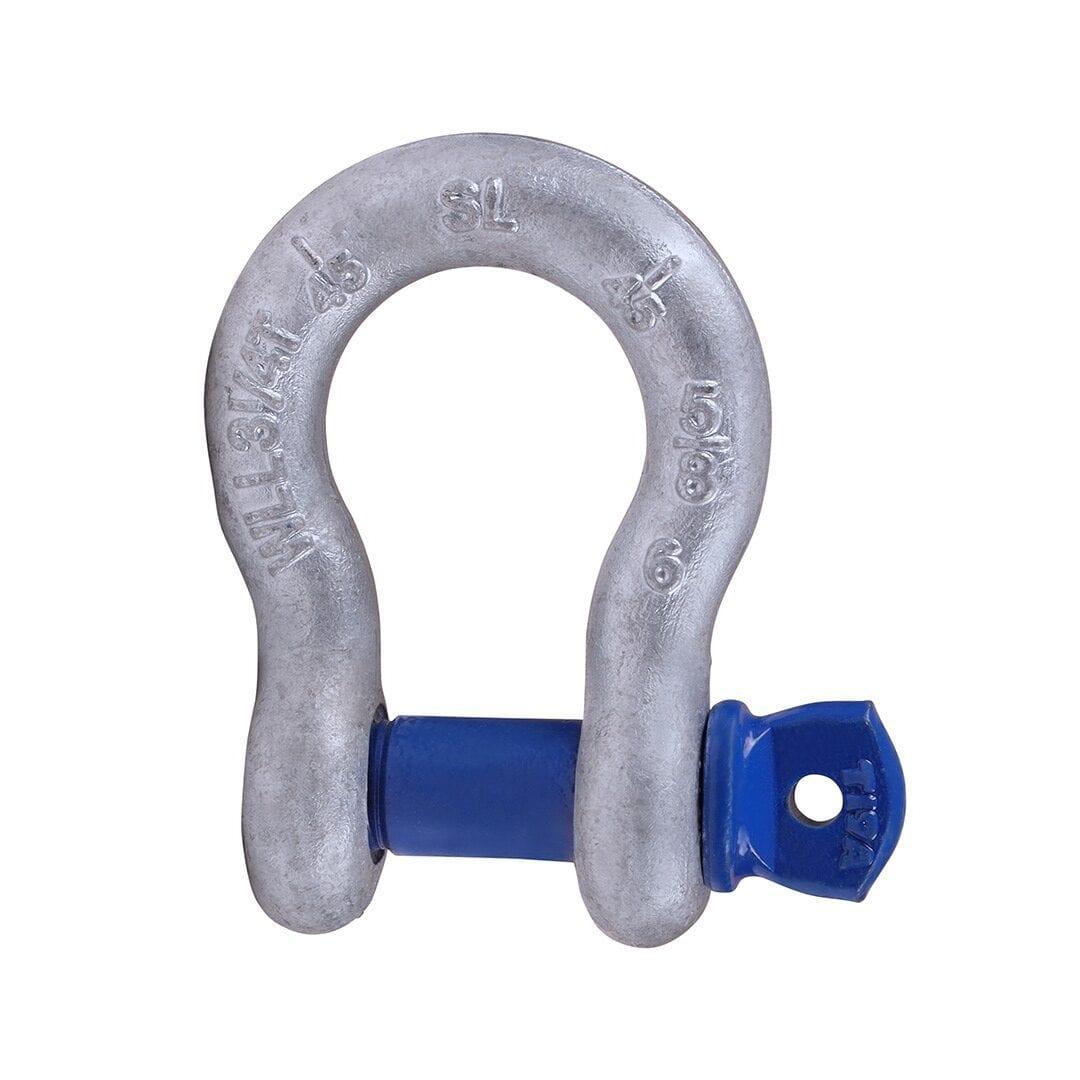
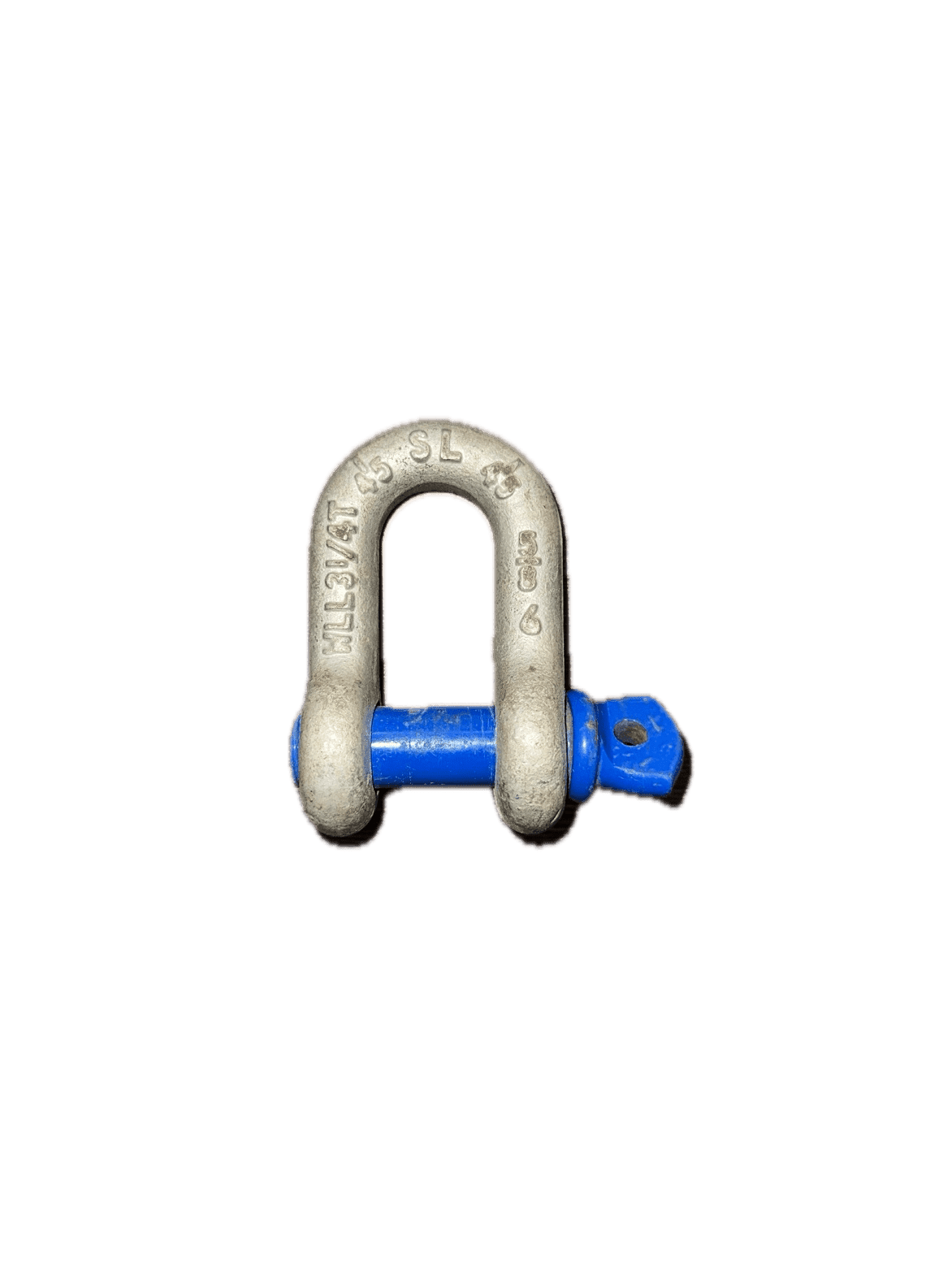
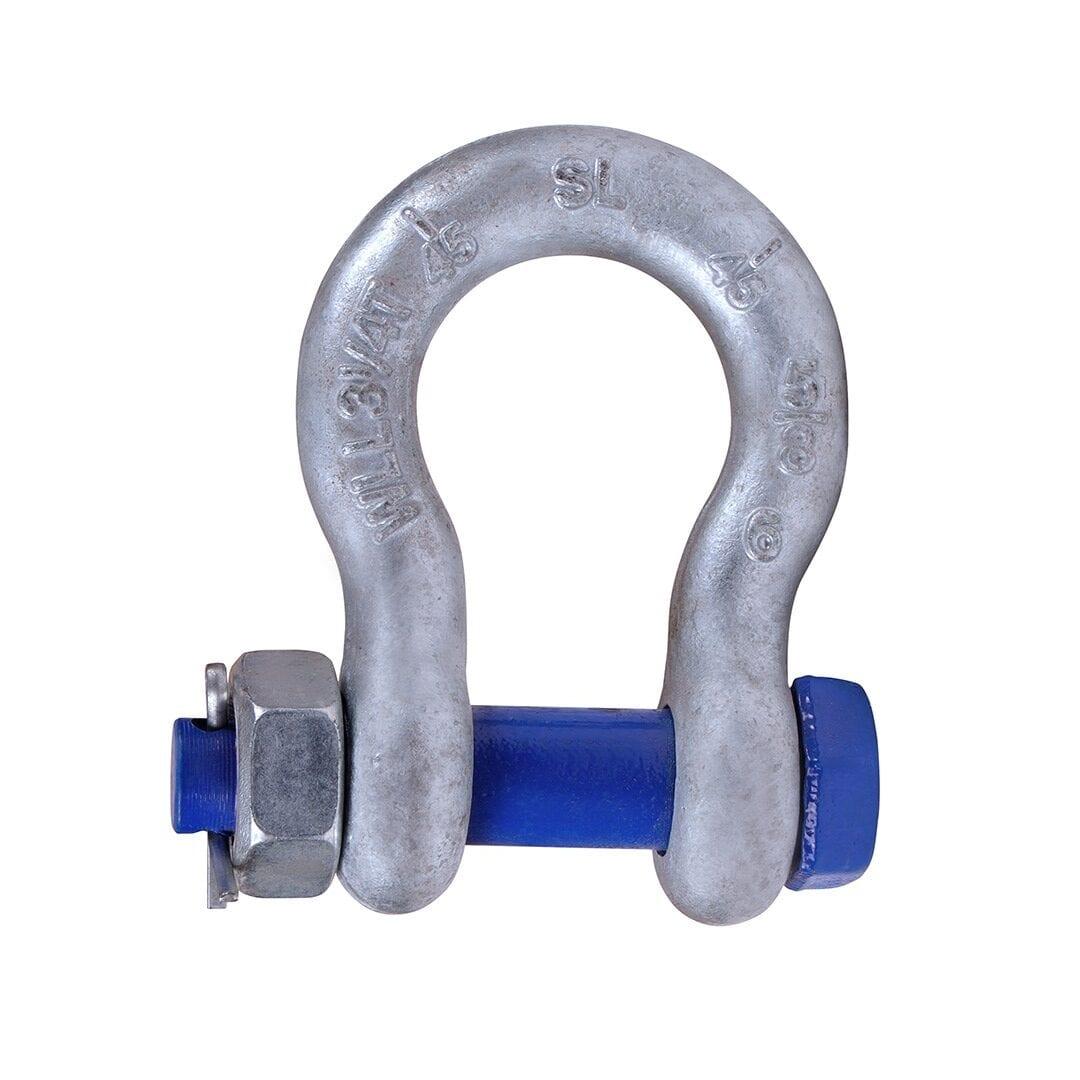
- Shackles. Crosby shackles from 2 t to 200 t, covering everything from light general-handling sizes to heavy-lift sizes.
- Wire rope slings. Usha Martin 6x36 wire rope slings from 12 mm to 83 mm, rated from 2 t up to 100 t SWL.
- Wire rope. Usha Martin 36 mm 6x36 wire rope with a steel core.
Our slings are made at our own works and proof-load tested at our in-house test house, which has a 1,200 T proof-load test bed. We supplied against MEIL's enquiry. Which lift each item served is set by MEIL's own lift plans, and we do not describe them here.
What the early nuclear-island phase asks of rigging
After the first pour, a nuclear island is typically still a civil site. Reinforcement cages, embedded plates, steel liners, formwork panels and the first structural modules have to be lifted into place, often in confined spaces and next to fresh concrete. The heavy mechanical components follow later. A rigging order at this stage therefore spans a very wide range, from 2 t shackles for daily handling to 100 t slings and 200 t shackles for module and liner lifts.
A wide range in one order
An order that runs from 12 mm to 83 mm slings, and from 2 t to 200 t shackles, has to be kept in order on site. Each sling and shackle needs its own identification, rating mark and certificate, and the rigging store needs to issue the right pair for each lift. Buyers can make this easier at the ordering stage. Group the items by lift class, ask for the working load limit on every tag, and ask for certificates that match each item's identification number. Our guide on how to read a test certificate explains what each field means.
Traceable documents on a regulated site
Nuclear construction sites run under a regulator's oversight and a strict quality plan. In practice, every piece of lifting tackle must be traceable from purchase order to test certificate, to its inspection record and its last thorough examination. Gear without a readable mark or a matching certificate is quarantined, not used. A supplier helps most by making the paperwork simple. That means one certificate per identified item, the manufacturer's material or proof-test record where the specification asks for it, and dispatch documents that list the same numbers. Third-party inspection before dispatch can be arranged where the contractor's quality plan calls for it.
Shackles above 100 t and heavy slings
At 120 t to 200 t, shackle choice matters as much as sling choice. A bolt-type shackle, with a nut and cotter pin, stops the pin from unscrewing when a load rotates. A large sling eye needs a shackle bow wide enough to seat it without pinching. An 83 mm sling at 100 t is a heavy item in its own right, so handling it on the ground needs a plan too. See our shackle size selection guide.
Wire rope for winches and reeving
A 36 mm 6x36 steel-core rope is a flexible, general-purpose construction, often used for winch lines, reeving and the fabrication of slings on site. Its life depends on correct storage, drum and sheave sizes suited to the rope, and regular lubrication, especially in the heavy monsoon rainfall of the Western Ghats, where Kaiga lies. Ropes should be inspected and discarded by recognised criteria, not by age alone. See the wire rope discard criteria.
Lessons for buyers
- 1. Order by lift class. Group slings and shackles by the lifts they will serve, so that the site store can issue matched sets.
- 2. Ask for one certificate per item. The identification number on the tag should match the certificate and the dispatch list.
- 3. State the shackle type. Specify bolt-type where loads may rotate, and give the sling size each shackle must seat.
- 4. Build inspection into the schedule. If the quality plan calls for third-party inspection, agree the inspection call date with the supplier at the order stage.
- 5. Plan for the monsoon. Covered storage and a lubrication routine protect wire rope and slings through a long Western Ghats monsoon.
Frequently asked questions
What did Sealinkers supply to Kaiga Units 5 & 6?
In 2026, we supplied one order to MEIL's Nuclear Island Mega EPC Package: Crosby shackles from 2 t to 200 t, Usha Martin wire rope slings from 12 mm to 83 mm (up to 100 t SWL), and 36 mm wire rope.
Who is building Kaiga Units 5 and 6?
NPCIL owns the project, and Megha Engineering & Infrastructures (MEIL) holds the EPC contract. The first pour of concrete took place on 1 March 2026 [1][2].
Do your slings come with test certificates?
Yes. Our slings are made at our own works and proof-load tested in our in-house test house, and each one is supplied with a test certificate that matches its identification tag.
Can you arrange third-party inspection?
Yes. We can arrange inspection by the agency the contractor names, and class-society inspection by IRS, ABS, LRS or BV can also be arranged.
Rigging for a power project?
Send us your rigging list or lift plan. We will propose slings, shackles and wire rope with traceable certificates, and deliver anywhere in India. Contact Sealinkers, or browse wire rope slings and shackles.
Sources
- [1] World Nuclear News, "First concrete poured for new Kaiga capacity in India", 2 March 2026 — world-nuclear-news.org
- [2] Megha Engineering & Infrastructures, "First Concrete Pour Milestone Achieved at Kaiga Nuclear Power Plant, Units 5&6", March 2026, accessed 16 November 2026 — meil.in
- [3] World Nuclear News, "Fourth steam generator for new Kaiga units completed", 7 April 2025 — world-nuclear-news.org
- [4] World Nuclear News, "Major component milestone for Indian reactor", 23 June 2026 — world-nuclear-news.org
Related Guides
Ready to put this into practice?
Every item ships certified, and our in-house test house backs it with the paperwork.
Sealinkers Engineering
Rigging & Lifting Engineering Team
Sealinkers has supplied and certified rigging, lifting and mooring equipment from Darukhana, Mumbai since 1977. These guides are written and checked by the engineers who specify this gear and proof-load it on our own test bed.
- in-house test house — proof-load bed from 1 to 1,200 tonnes
- Proof-load testing and certification in-house since 1977, Darukhana, Mumbai
- Class-society interfaces: IRS, ABS, LRS and BV