How to Read a Lifting Equipment Test Certificate
A lifting equipment test certificate is the formal record that a specific item was tested, examined and found fit for use at a stated rating, by a named competent person, on a stated date. In India the competent person is recognised under the regime the site falls under — by the state Chief Inspector of Factories for factory work, by DGFASLI as Chief Inspector of Dock Safety for dock work, and by the Central Government on construction sites. Reading a certificate properly — field by field, against the item in front of you — is one of the most useful habits a procurement officer, site supervisor or safety manager can build.
What a Certificate Is For
A certificate answers five questions: what item is this, what is it rated to carry, what was it tested to, what condition was it found in, and who says so. If any of those answers is missing, vague or inconsistent with the item, the certificate is weak evidence and the item should not be put into service on its strength. The sections below take each field in turn.
Certificate Number and Date
Every genuine certificate carries a unique certificate number that is never reused for a different item. The date of test or examination fixes when the next examination falls due: under the Factories Act, 1948 lifting machines, chains, ropes and lifting tackle are thoroughly examined at least once in every period of twelve months, or at a shorter interval the Chief Inspector specifies in writing (s.29), and hoists and lifts at least once every six months (s.28). At ports the Dock Workers Regulations, 1990 set their own intervals (regulations 41 and 47).
If you have any doubt about a certificate, ask the issuing test house to confirm the number against its own records. A test house that cannot or will not confirm its own certificate number has told you what you need to know.
Equipment Identification
The certificate must identify one specific item, not a type of item. Look for:
- Identification or serial number: unique to the item, and it must match the marking on the item itself.
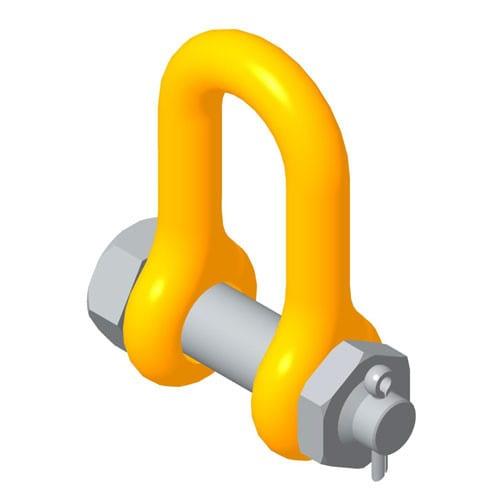
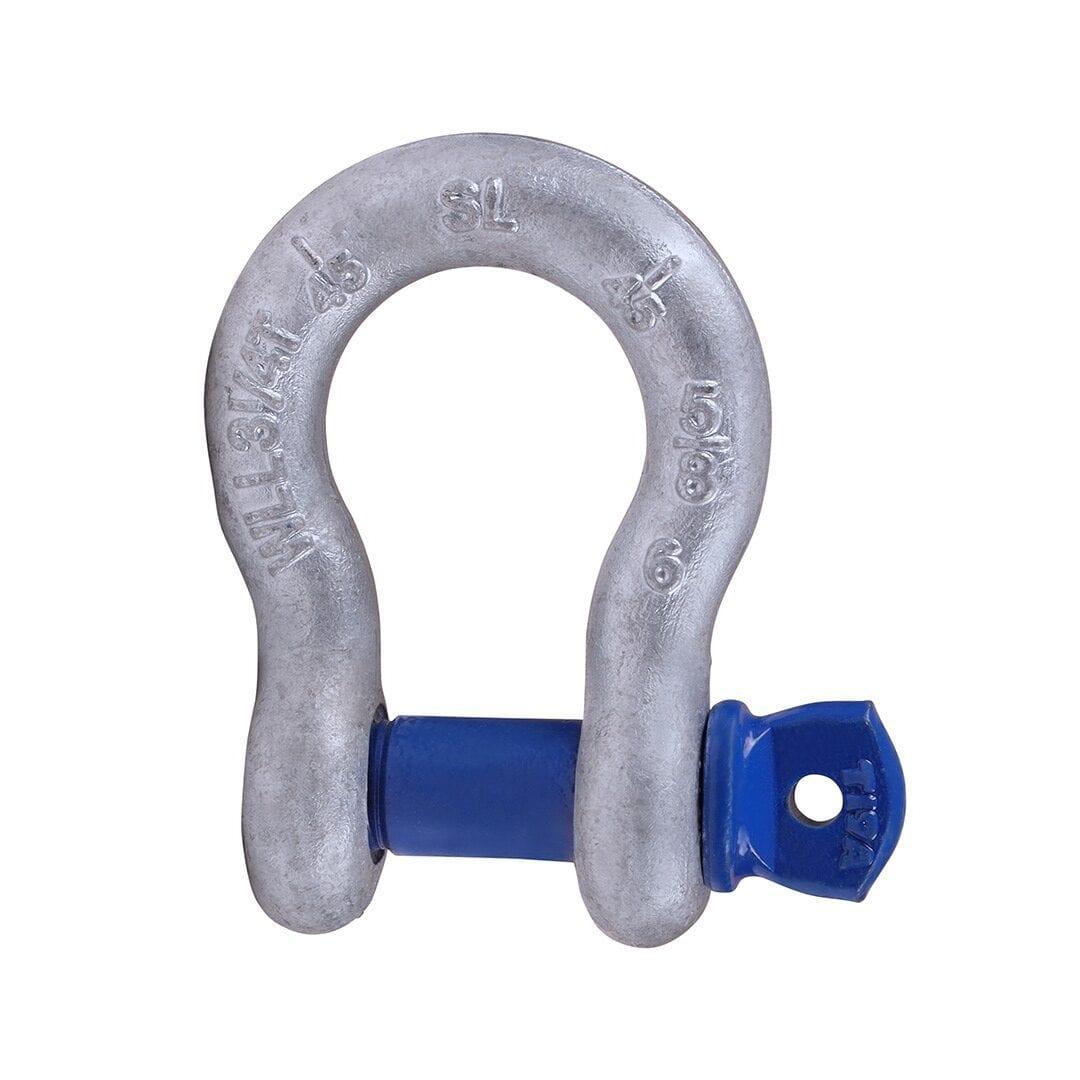
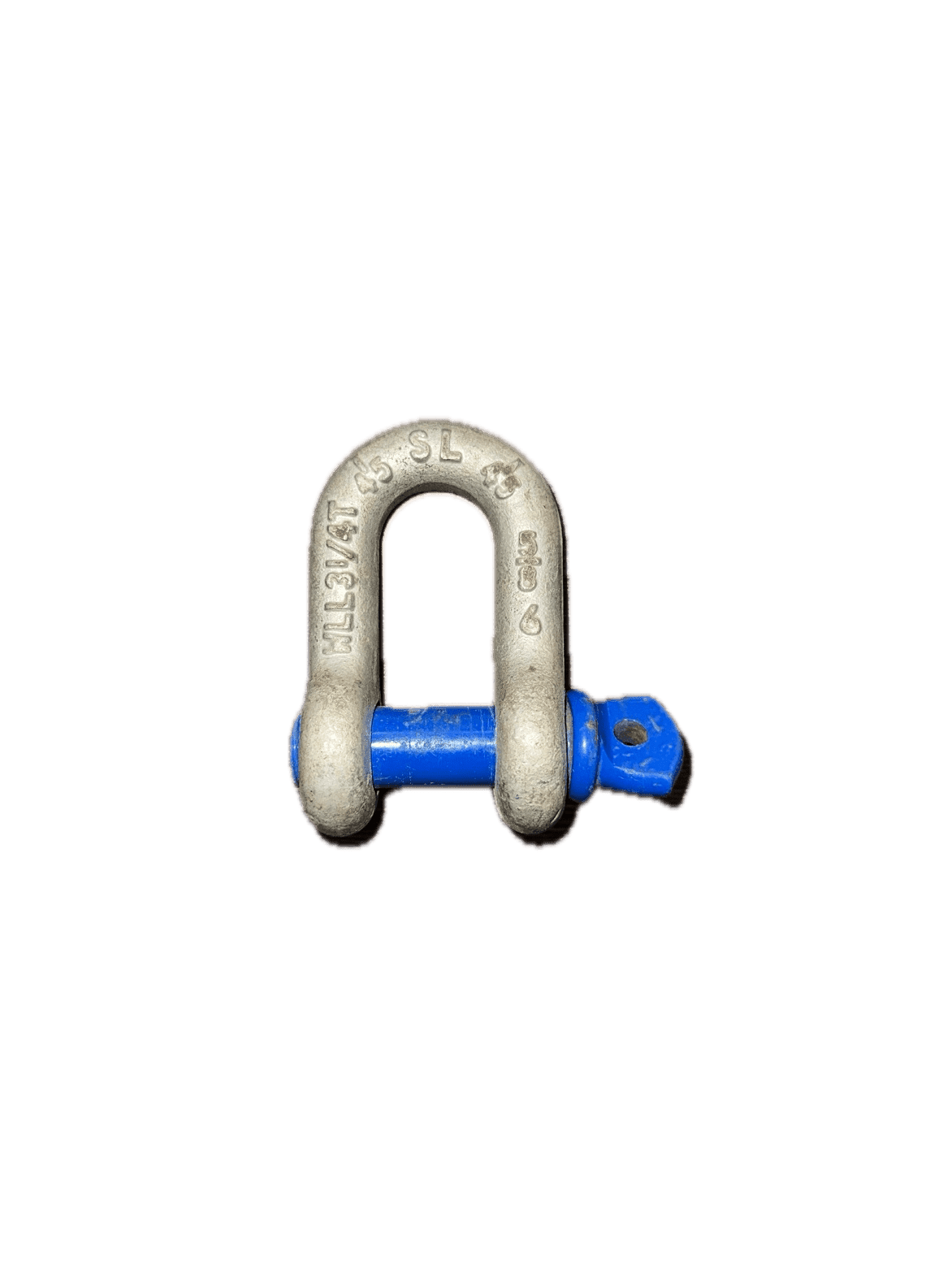
- Description: what the item is — for example a four-leg chain sling with master link and hooks, a bow shackle with safety pin, or a hand chain block.
- Make and grade: the manufacturer and, where relevant, the material grade.
- Product standard: the IS, EN or other standard the item was built to, or the maker's specification where no standard applies.
- Rated capacity (SWL / WLL): the maximum load the item is certified for — it must match the marking on the item exactly. For multi-leg slings, check the angle or configuration the rating applies to.
Proof Load Test Details
A proof load test applies a load above the rated capacity, under control, to show the item carries it without permanent deformation or other defect. The certificate should state:
- Proof load applied: the actual load, in the same units as the rating.
- The basis for that load: the standard or specification the proof load was taken from. The multiple is not universal — it depends on the product and the standard it was built to.
- Result: an explicit statement that the item passed, and the condition found after the load was released.
Note: Check the proof load against the standard named on the certificate. Two examples from the Indian series: IS 2760 sets the proof load for steel chain slings at twice the safe working load, and IS/ISO 2415 sets the proof load for forged dee and bow shackles at twice the working load limit. Other products — hoists, wire rope assemblies, synthetic slings — follow their own product standard or the maker's specification. If the certificate gives a proof load but no basis for it, ask the issuer to state one.
Visual and Dimensional Examination
Beyond the proof load, the certificate should record the thorough examination that followed it:
- Condition of wire rope or chain — broken wires, kinks, corrosion, wear, elongation against the original dimensions
- Condition of hooks — cracks, deformation or opening of the throat, the safety latch
- Pins, threads and locking arrangements on shackles and fittings
- For hoists and blocks — brake function, load chain condition and the operation of any limit or safety devices
- Overall structural integrity — cracks, missing fasteners, damaged welds
- Any non-destructive testing carried out, and its result
The Examiner and the Test House
Red Flag — Forged or Incomplete Certificates: If a certificate lacks a signature, does not show the test house's stamp, or names a signatory the issuing organisation cannot confirm, treat it as invalid and keep the item out of service. A certificate that does not stand up gives you no protection when an inspector or insurer asks.
A valid certificate is signed by the competent person who carried out the examination and carries the test house's name, address and stamp. Ask which regime the examiner is recognised under, and check it matches your site: a factory needs an examiner recognised by the state Chief Inspector of Factories, a port an examiner recognised for dock work. Where your client also needs class-society witnessing, the surveyor's endorsement appears alongside.
Cross-checking Certificate and Item
The single most useful check takes a minute: put the certificate next to the item and compare. The identification number, the rating, the grade and the standard should agree across the item's marking or tag, the certificate and your purchase order. A mismatch on any of them — a different serial number, a higher rating on the paper than on the tag, a different grade — means the certificate does not belong to that item, whatever else it says. Unmarked items, or items whose marking has been ground off or painted over, cannot be matched to anything and should be withdrawn.
Certificates in Your Register
An individual certificate is one page of a longer history. Each item in your register should have its initial certificate from when it first entered service, followed by a report for every periodic thorough examination since. Track the next-due dates in the register itself rather than relying on finding the latest certificate; the commonest compliance failure is not a failed test but an item that simply went past its date unnoticed. Sealinkers issues Form 5 and Form 11 certificates for initial and periodic examination — see our Form 5 and Form 11 guide — and certifies to whatever form your inspector asks for, since form numbering differs between states and regimes.
Quick verification checklist:
- Certificate number is unique and the issuer can confirm it
- Identification number matches the marking on the physical item
- Rated capacity on the certificate matches the item's marking
- Product standard is named, and the proof load matches it
- Condition after test is recorded, with any defects and actions
- Signature, examiner's name and test house stamp are present and legible
- Date of examination and next-due date are stated
- The examiner is recognised under the regime your site falls under
How Sealinkers Can Help
Sealinkers has operated an in-house test house in Darukhana, Mumbai since 1977, with a 1,200 T proof-load test bed. We provide DGFASLI testing, proof-load testing, thorough examination and NDT for gear we supply and for third-party equipment, and we will re-examine an item whose paperwork you cannot rely on. See our proof-load testing page, our load testing guide for what happens on the bed, and our DGFASLI and Factories Act compliance guide for the legal framework.
Frequently asked questions
How long is a test certificate valid?
A certificate does not expire on its own terms; the item's examination falls due. In a factory that is at least every twelve months for lifting machines, chains, ropes and lifting tackle, and at least every six months for hoists and lifts, under sections 29 and 28 of the Factories Act, 1948. Ports follow the Dock Workers Regulations, 1990.
Is a manufacturer's certificate enough?
A manufacturer's certificate of conformity or test is the right starting document for a new item, and it should name the standard and the proof load. Whether your site also needs an examination by a competent person before first use depends on the regime and your state's rules — ask your inspector, or send the item to us.
What if the certificate names no standard?
Treat it as incomplete and ask the issuer to reissue it with the basis of the test stated. Without a standard, there is no way to tell whether the proof load applied was the right one.
Can a certificate be transferred to another item?
No. A certificate belongs to the one item whose identification it records. A replacement item, even an identical one, needs its own certificate.
Summary
A genuine test certificate tells a complete story: what was tested, to what, how, by whom and with what result. If any element is missing or inconsistent with the item, the certificate cannot be relied upon — and neither can the equipment it is meant to approve.
Related Guides
Ready to put this into practice?
Every item ships certified, and our in-house test house backs it with the paperwork.
Sealinkers Engineering
Rigging & Lifting Engineering Team
Sealinkers has supplied and certified rigging, lifting and mooring equipment from Darukhana, Mumbai since 1977. These guides are written and checked by the engineers who specify this gear and proof-load it on our own test bed.
- in-house test house — proof-load bed from 1 to 1,200 tonnes
- Proof-load testing and certification in-house since 1977, Darukhana, Mumbai
- Class-society interfaces: IRS, ABS, LRS and BV