
Titan lever hoists — the come-along or pull-lift the trade generally just calls a ratchet puller — are the tool for pulling, tensioning and positioning a load rather than hoisting it straight up. Where a chain block hangs vertically and is worked with a hand chain, a lever hoist is operated by a short ratchet lever and works happily at any angle: horizontal pulls to draw structural steel into line, angled pulls to position a load, and short vertical lifts where there is no room to stand under a hand chain.
Two decisions cover most purchases. Capacity first: rate it against the heaviest realistic pull, not the average, and resist the temptation to extend the lever with a pipe — a hoist sized correctly is worked by hand alone, and a cheater bar is how load chains and pawls get overloaded. Chain reach second: measure the real distance the hoist must span at full extension, allowing slack for hooking up. Beyond that, choose the hook pattern that suits your anchorage, and specify a self-locking bottom hook if your site standard calls for it.
Buyers often ask which machine to keep on the truck; our comparison of a chain block versus a lever hoist answers it properly, but the short version is that a chain block lifts and a lever hoist pulls.
Load chain for lifting purposes falls under the scope of IS 3109 and EN 818. Every lever hoist we supply can be proof-loaded in our in-house test house at Darukhana and certified for your lifting-gear register — the competent-person documentation the Dock Workers regulations require at ports, and the Factories Act framework expects for lifting machines generally.
Buying questions
What is the difference between a lever hoist and a chain block?
A chain block is worked by a hand chain, hangs vertically and is built for straight lifting. A lever hoist is worked by a short ratchet lever and is built for pulling and tensioning at any angle — horizontal, angled or vertical — over shorter chain reaches. Most sites keep both: the block over the workbench or quay, the lever hoist in the toolbox for positioning and tensioning work.
Can I put a pipe on the lever for extra leverage?
No. A lever hoist is designed to reach its rated pull under hand effort on the standard lever alone. Extending it with a pipe lets an operator apply far more force than the load chain, pawl and gearing were designed for, and the failure when it comes is sudden. If the load will not move under normal hand effort, the hoist is undersized or the load is fouled — stop and reassess.
What chain reach should I order?
Measure the actual distance the hoist has to span at full extension between its two anchor points, then add enough for comfortable hooking up and for the take-up you lose as the load comes on. Ordering short is the usual mistake, and a hoist worked at the very end of its chain leaves nothing in reserve. Tell us the application and we will suggest a practical reach.
When should a lever hoist be withdrawn from service?
Withdraw it if the ratchet or pawl slips or will not hold, if the load creeps when the lever is released, if any chain link is stretched, gouged, twisted or badly corroded, if a hook throat has spread or its latch will not close, or if the lever or housing is bent or cracked. Send it for overhaul and re-testing rather than attempting a repair on site.
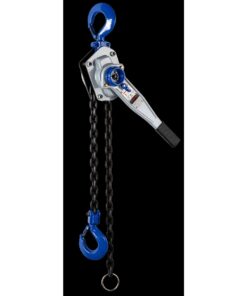
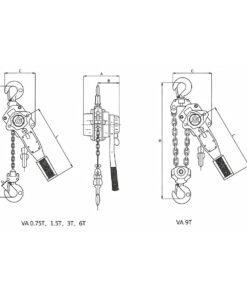
Titan Lever Hoists