
Product family
Chain slings & components
Grade 80, 100 and 120 alloy chain slings assembled to your legs and length, from Gunnebo components we hold in stock.
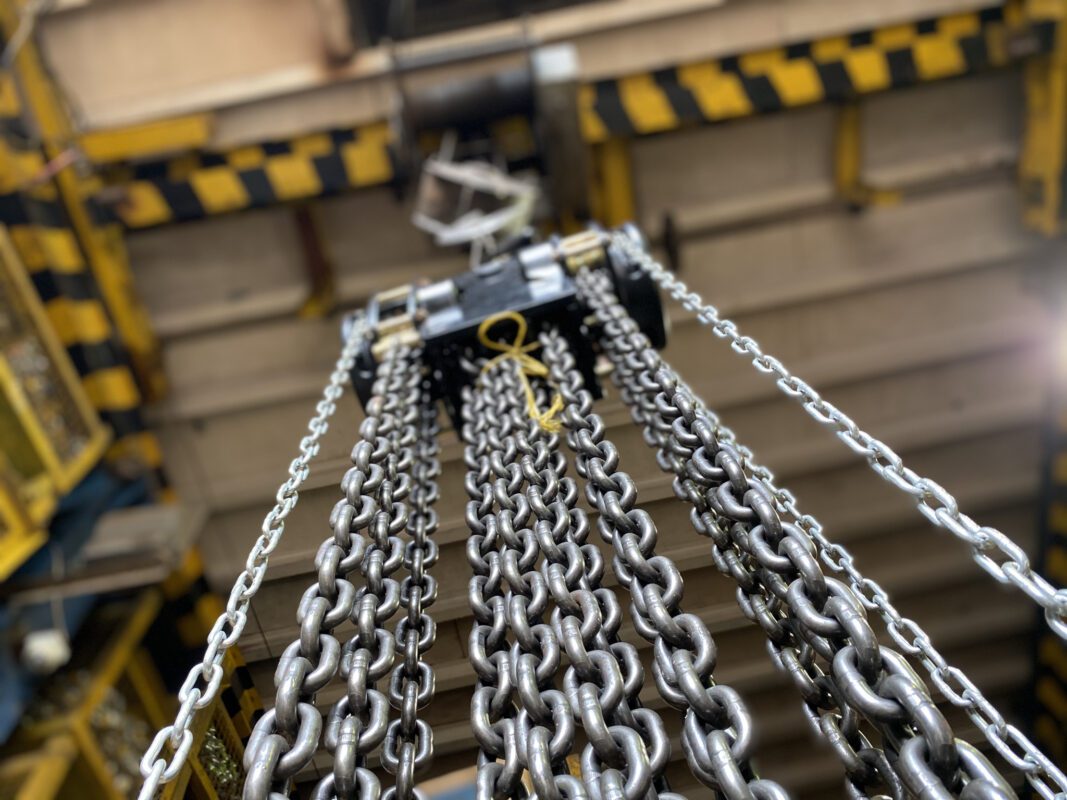
Grade 80, 100 and 120 alloy chain slings built to order and certified, plus Gunnebo chain components — master links, hooks, connectors and shorteners — from stock in Mumbai.
Gunnebo is the Swedish lifting-components house whose chain and fittings set much of the pattern for modern Grade 80 and Grade 100 rigging, and Sealinkers supplies the range in India. This category covers Gunnebo alloy lifting chain, hooks — including their well-regarded self-locking safety patterns — masterlinks, connectors and the shortening and coupling components used to build chain sling systems.
The range is built as a system: chain, hooks and connectors within a grade are designed, rated and marked to work together, so a sling assembled entirely from Gunnebo components carries a coherent rating from masterlink to hook. That is the right way to buy chain rigging — mixing grades or brands within an assembly muddies the rating and the paperwork. The grade decision itself is straightforward: Grade 80 is the established standard for general lifting duty, while Grade 100 gives a higher working load limit at the same chain diameter, saving weight and headroom on demanding lifts. Our comparison of Grade 80 versus Grade 100 chain covers the trade-offs.
Gunnebo components are manufactured to the scope of the European component and chain standards — EN 1677 for forged components and EN 818 for short-link lifting chain — with each part marked with its grade and identification. From those components our Darukhana workshop builds complete chain slings, and our in-house test house proof-loads and certifies the finished assembly, giving you the register documentation the Dock Workers regulations and the Factories Act framework require.
If you are standardising a site’s chain rigging, Gunnebo is a sound backbone: the components are consistent, spares are identifiable years later from their markings, and worn parts can be replaced like-for-like without re-engineering the sling.
How we make them
Specification
You give us the load, the hitch and the headroom; we size the legs, the fittings and the working load limit against the standard that applies.
Make
Cut from certified stock rope or webbing and terminated in-house — swaged, spliced, socketed or sewn — with every component traceable to its own certificate.
Proof-load
The finished assembly goes on our own test bed (our beds run from 1 to 1,200 T) and is loaded to the multiple its standard requires.
Certificate
It leaves tagged, with a test and examination certificate in our own name on its serial number — class-witnessed (IRS, ABS, LRS, BV) where the job needs it.
Products
Ask for price, stock and lead time on any item — certificates on request.
Gunnebo Products
Gunnebo Products
Gunnebo Products
Gunnebo Products
Gunnebo Products
Gunnebo Products
Gunnebo Products
Gunnebo Products
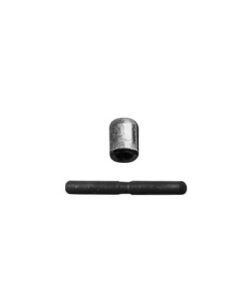
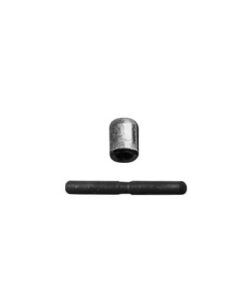
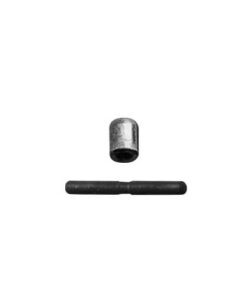
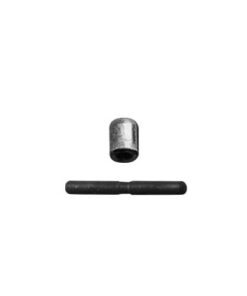
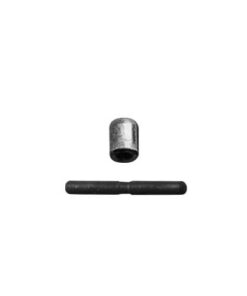
Gunnebo 9/32″ (1/4″) – 5/16″ SKA-7/8-8 Coupler Pin – #Z323624
Frequently asked questions
Can I mix Gunnebo components with other brands of chain?
It is best avoided in certified assemblies. Components within one manufacturer’s grade system are designed and rated to work together, and the sling certificate describes that coherent system. Mixing brands — or worse, grades — makes the assembly’s true rating ambiguous and complicates every future examination. If you must replace a component urgently, match grade and size exactly and have the sling re-examined.
Should I choose Grade 80 or Grade 100 Gunnebo chain?
Grade 80 remains the general-purpose standard: widely stocked, familiar to every inspector, and the economical choice for most duty. Grade 100 delivers a higher working load limit from the same chain diameter, which pays off when sling weight matters to the rigger or headroom is tight. Whichever grade you choose, keep the entire assembly — chain, connectors, hooks — in that one grade.
Are Gunnebo chain slings certified for Indian port and factory use?
Yes. The components carry Gunnebo’s manufacturing certification to the European standards’ scope, and the chain slings we assemble from them are proof-loaded in our in-house test house with a test and examination certificate issued in the prescribed form. That combination satisfies the register requirements applied at Indian ports under the Dock Workers regulations and by factory inspectorates.
How do I inspect a Gunnebo chain sling in service?
Before each use, run the chain through your hands checking for stretched, gouged, twisted or corroded links, check hooks for throat spread and latch function, and confirm the identification tag is present and legible. Periodically, a competent person should examine and gauge the sling for wear and elongation. Any link showing stretch, or any hook with a spread throat, condemns the assembly until repaired and re-tested.
Need a price, stock check or certificates?
Send your requirement and we quote with stock, lead time and documentation.