
Product family
Lifting hooks
Eye, clevis, swivel and self-locking hooks from stock, with the certificate for each one.
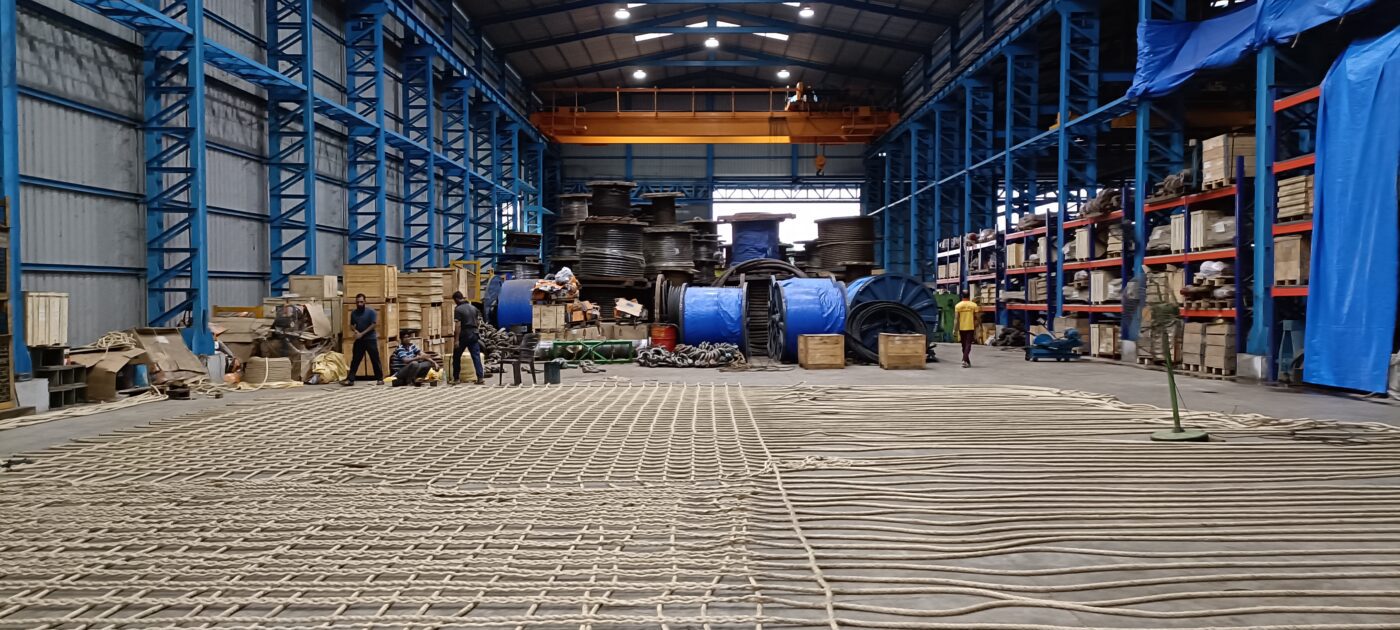
Eye, clevis, swivel and self-locking lifting hooks from Crosby, Gunnebo and Sealinkers, stocked in Mumbai with certificates and proof-tested in-house on request.
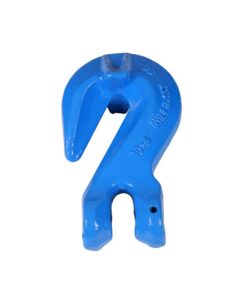
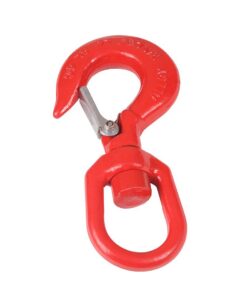
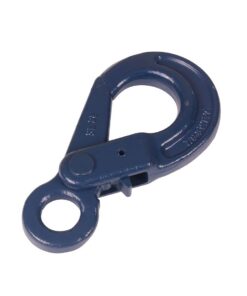
This category gathers general lifting hooks across the brands we carry: eye hoist hooks that splice or lash permanently into a sling, clevis hooks that pin directly onto chain, self-locking hooks that close positively under load, and swivel hooks for loads that need to turn under the crane. If you are replacing a damaged hook or building up a sling set, this is the shelf to start from.
Three things settle the choice. First, the connection: an eye hook becomes part of the sling and stays there, while a clevis hook can be changed in the field with a pin and cotter — useful when one sling serves several jobs. Second, the latch: a spring safety latch simply stops the fitting bouncing out of an unloaded hook and carries no load, whereas a self-locking hook cannot open until the load is off and the trigger is operated, which is what most principal contractors now specify. Third, the rating: the hook must match the grade and working load limit of the chain or sling it serves, and the throat must genuinely clear the masterlink, shackle or lifting point — tip-loading a hook because the fitting would not seat is the classic route to a spread throat. Our explainer on WLL versus SWL covers how these ratings are expressed.
Forged components for slings fall under the scope of EN 1677, with ASME B30.26 the common international reference for rigging hardware. Every hook we supply can be proof-loaded on our own test bed and certified for your lifting-gear register — the same competent-person documentation the Dock Workers regulations require for loose gear at Indian ports, and which factory inspectorates expect for lifting tackle generally.
Products
Ask for price, stock and lead time on any item — certificates on request.
Sealinkers Hooks
Sealinkers Hooks
Sealinkers Hooks
Sealinkers Hooks
Sealinkers Hooks
Sealinkers Hooks
Sealinkers Hooks
Sealinkers Hooks
Frequently asked questions
Eye hook or clevis hook — which should I order?
Choose an eye hook when the hook becomes a permanent part of the sling, spliced or lashed in and never removed. Choose a clevis hook when it pins straight onto chain with a pin and cotter, so a worn hook can be swapped in the field without rebuilding the sling. If you are replacing an existing hook, match the pattern that is already in the assembly unless you are re-engineering the whole sling.
Do I need a self-locking hook or is a safety latch enough?
A safety latch is a spring flap that keeps the fitting from bouncing out of an unloaded hook; it carries no load and is not a security device. A self-locking hook closes and locks as load comes on and cannot release until the load is off and the trigger operated. For lifts over people, loads that can swing, and most modern project specifications, self-locking is the expected standard.
What certificate comes with a hook?
New hooks arrive with the manufacturer certificate stating the grade and working load limit for the production lot. Because we operate an in-house test house at Darukhana, we can also proof-load the hook or the complete hook-fitted assembly before despatch and issue the test and examination certificate in the prescribed form, which is what port surveyors and factory inspectors ask to see in the register.
When must a lifting hook be scrapped?
Withdraw any hook showing a spread or opened throat, cracks, nicks or gouges, wear in the saddle, a bent or twisted body, corrosion pitting, illegible markings, or a latch that no longer closes. Throat spread means the hook has been overloaded or tip-loaded. Never repair a forged hook by welding, heating or straightening — the heat treatment is lost. Replace it, re-certify the sling, and find out what caused the damage.
Need a price, stock check or certificates?
Send your requirement and we quote with stock, lead time and documentation.