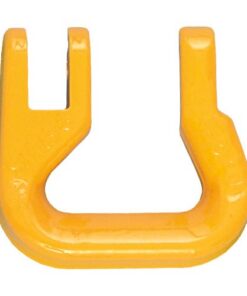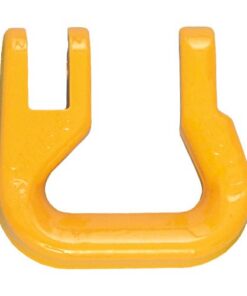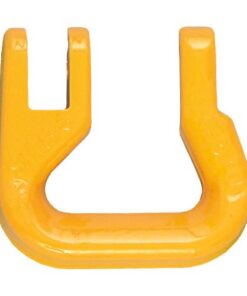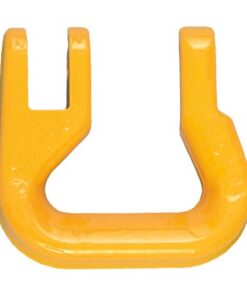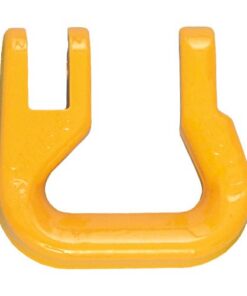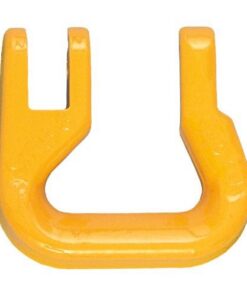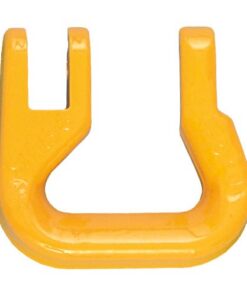
A sling is the interface between crane and load, and this umbrella category covers all three families we make and stock: wire rope slings fabricated in our own Darukhana workshop, chain slings built from alloy chain and components, and soft slings — polyester webbing and roundslings under our Zebra brand, plus fibre rope from Cortland and Garware.
Choosing between the families is mostly a question of the load and the environment. Wire rope slings are the general-purpose workhorse: tolerant of heat, abrasion and rough handling. Chain slings win where the duty is brutal or the sling must be re-legged and adjusted; they are the most durable and the most repairable. Webbing and roundslings win where the load surface is finished or fragile — machined shafts, painted vessels, timber — because they are soft, light and wide-bearing, though they must be kept away from edges, heat and chemicals.
Whatever the family, geometry rules the rating: as the angle between sling legs and the horizontal reduces, the tension in each leg climbs sharply, and below shallow angles the loss of capacity accelerates. Our guide to sling angle effects on SWL is the one page we ask every new rigger to read.
Slings are covered at scope level by IS 6132 for steel chain slings, IS 15041 and EN 1492 for webbing, and ASME B30.9 as the common international reference. Every sling we fabricate is proof-loaded on our own test bed — our beds run up to 1,200 tonnes — and despatched with its test certificate, the document your competent-person examinations under the Dock Workers and Factories Act frameworks will be built on.
Buying questions
Wire rope, chain or webbing — how do I choose?
Start with the load surface and the environment. Finished or fragile surfaces call for webbing or roundslings; hot, abrasive or rough-and-tumble duty calls for wire rope; the harshest repetitive duty, or slings needing adjustable legs, calls for chain. Cost and weight also differ: webbing is lightest and cheapest, chain the heaviest and most durable. Many sites sensibly run all three for different lifts.
Why does the sling angle change what I can lift?
When two or more legs spread apart, each leg carries more than its simple share of the load — the shallower the angle to the horizontal, the higher the leg tension. At moderate angles the effect is already significant, and below shallow angles it accelerates quickly, which is why very flat rigging arrangements are not recommended. Always rate the lift from the sling chart at the actual working angle.
What paperwork comes with a fabricated sling?
Every sling made in our workshop is proof-loaded on our own test bed and leaves with a test and examination certificate identifying the sling, its construction, its working load limit and the proof load applied. For wire rope slings, the rope’s mill certificate backs this up. These documents seed the lifting-gear register your inspector or port surveyor will audit.
How long does a made-to-order sling take?
It depends on the family and the material in stock. Wire rope slings in common rope sizes are fabricated, tested and certified quickly in our own workshop; chain slings depend on component availability; webbing slings in standard specifications are usually ex-stock. For urgent breakdowns tell us the duty and the date you need it — same-week supply is routine for common configurations.