
Product family
Lifting clamps
Vertical and horizontal plate clamps and beam clamps for handling steel plate and sections.
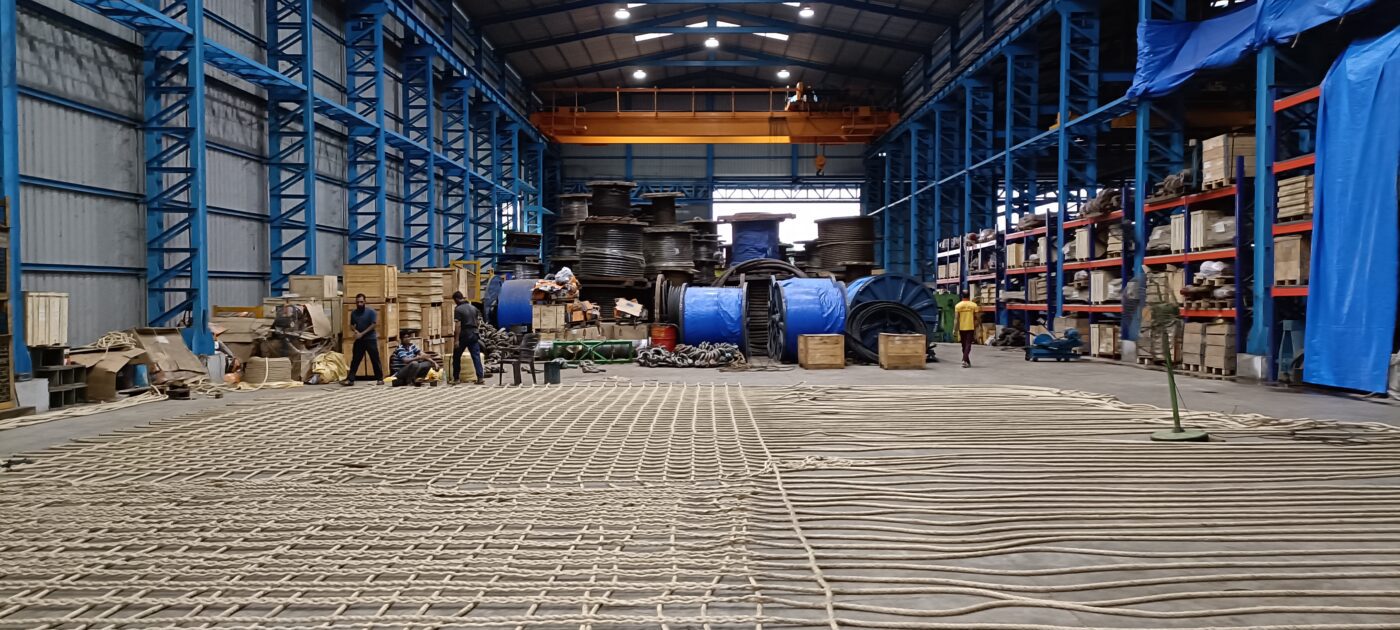
Vertical and horizontal plate clamps and beam clamps from Crosby IP, stocked in Mumbai with certificates — for handling plate and structural steel.
Lifting clamps grip the plate itself instead of threading a sling through a hole, which makes them the fastest way to move steel plate and structural sections around a fabrication shop, a shipyard or a stockyard. This category covers vertical clamps, which lift a plate on edge and are used for turning and upending, and horizontal clamps, which are used in matched pairs or sets to lift a plate flat.
Two decisions matter more than anything else. First, orientation: a vertical clamp is designed to take the load through its cam and pivot with the plate hanging on edge, and a horizontal clamp is designed for a flat lift with the load shared between the units in the set — using either outside its intended orientation is how clamps let go. Second, the jaw: every clamp has a plate thickness range and a plate surface it is designed for, and clamping thinner or thicker material than the jaw is made for, or clamping over paint, scale, grease or a curved surface, will compromise the grip long before the working load limit is reached. Check the plate thickness and clean the gripping area before every lift.
Clamps live a hard life and wear at the one point that matters: the cam and pivot teeth. A clamp whose teeth are rounded, clogged or chipped, or whose spring no longer holds the jaw closed on an unloaded lift, must come out of service. Our explainer on load testing covers what proof-loading actually demonstrates and why clamps deserve it more often than most gear.
Clamps used at Indian ports count as loose gear under the Dock Workers regulations and need periodic examination by a competent person; our in-house test house at Darukhana handles both initial proof-loading and the re-examination cycle.
Products
Ask for price, stock and lead time on any item — certificates on request.
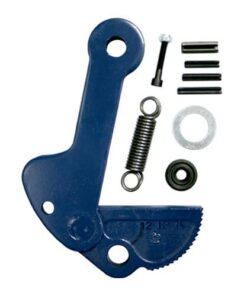
Lifting Clamps
Frequently asked questions
What is the difference between a vertical and a horizontal lifting clamp?
A vertical clamp lifts a plate on edge and, in the locking patterns, allows the plate to be turned or upended — the load runs through the cam with the plate hanging vertically. A horizontal clamp lifts a plate flat and is used in a matched pair or set, with the load shared between units. The two are not interchangeable, and using a clamp outside its intended orientation risks release.
Does the plate thickness matter?
Very much. Every clamp is made for a stated jaw range, and grip depends on the cam biting into material within that range. Too thin and the jaw cannot close on it properly; too thick and it will not seat at all. Confirm the plate thickness before the lift, and remember that grip also assumes a clean, sound surface — paint, mill scale, grease and rust all reduce it.
How often should lifting clamps be inspected?
Check before every lift that the cam teeth are clean and sharp, the pivot moves freely, the spring holds the jaw closed and the body is free of cracks or distortion. Because clamps depend entirely on the condition of those teeth, they warrant more frequent thorough examination by a competent person than most rigging gear, particularly on sites handling scaled or painted plate.
Can you proof-test and certify lifting clamps?
Yes. Our in-house test house at Darukhana proof-loads clamps on our own bed and issues the test and examination certificate in the prescribed form for your lifting-gear register. We handle both new clamps before despatch and re-examination of clamps already in service, which is the routine port and shipyard users in Mumbai bring their gear to us for.
Need a price, stock check or certificates?
Send your requirement and we quote with stock, lead time and documentation.