
Titan hand chain blocks are the workhorse manual chain pulley blocks we supply for workshops, sheds, ports and construction sites across India. A chain block hangs from a beam, trolley or tripod and lifts vertically by hand chain — no power, no compressed air, nothing to fail in a monsoon downpour — which is why it remains the default lifting machine on sites where a power supply is neither available nor welcome.
Three things need settling before you order. Capacity first: choose the working load limit above your heaviest realistic lift, not your average one, and remember the block is sized for the load plus whatever rigging hangs below it. Height of lift second: measure the real distance from the suspension point to the lowest position the bottom hook must reach — standard load-chain drops rarely match Indian shed and quay heights, and this is the single most common reason a block goes back. Hand chain drop third: tell us where the operator will stand, because the hand chain must fall comfortably to hand without pooling on the floor.
If the same lift happens dozens of times a shift, a manual block stops being the right answer — our comparison of a manual versus electric hoist sets out where the crossover sits.
Hand-operated chain pulley blocks are supplied against the scope of IS 3832, with the load chain to IS 3109 or EN 818 scope. Every block can be proof-loaded in our in-house test house at Darukhana and issued with the test and examination certificate your register needs — a statutory expectation for lifting machines under the Factories Act framework, and required by competent-person examination at ports under the Dock Workers regulations.
Buying questions
What capacity and height of lift should I specify?
Size the block above your heaviest realistic load with margin, never at the exact figure, and include the weight of any slings and fittings hanging below it. Then measure the true distance from the suspension point to the lowest position the bottom hook must reach — that is your height of lift. Tell us the operator standing level too, so the hand chain drop is right first time.
What certification comes with a Titan chain block?
Each block is supplied with the manufacturer test certificate. On request we proof-load it on our own test bed and issue a test and examination certificate in the prescribed form, which is what factory inspectors and port surveyors ask for. We also carry out periodic examination and re-certification of blocks already in service, whatever brand they are.
How often should a chain block be inspected and serviced?
Give it a visual check before every use: load chain condition and reeving, hook throat and latch, brake action on a test lift, and a legible capacity marking. Beyond that, a competent person should carry out a thorough periodic examination at the interval your statutory framework and site policy set. Blocks working in marine, dusty or chemical air need stripping and servicing considerably more often.
When must a chain block be taken out of service immediately?
Stop using it if the brake slips or the load creeps, if the load chain jumps or binds in the pockets, if any chain link is stretched, gouged, twisted or corroded, if the hook throat has spread or the latch will not close, or if the body or suspension hook is cracked or distorted. Do not attempt field repairs on the brake — send it in for overhaul and re-testing.
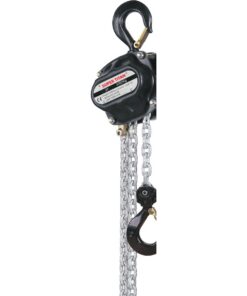
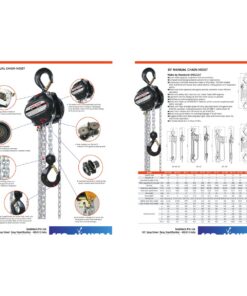
Titan Chain Blocks