Keeping a refining and petrochemical hub supplied by sea
Reliance Industries' Jamnagar complex on the Gulf of Kutch processes about 1.4 million barrels of crude a day, and Reliance gives it a Nelson complexity index of 21.1 [1]. Two refineries share the site: the original domestic refinery, commissioned in 1999, and an export refinery added in 2008 [2]. Around them sit a refinery off-gas cracker with 1.7 MMTPA of ethylene capacity, paraxylene, polypropylene and alkylation units, and petcoke gasification [1]. Crude arrives by sea and product leaves the same way, through marine facilities that Reliance says can berth everything from gas carriers to very large crude carriers [1].
Since 2024, Sealinkers has been a direct supplier to Reliance's Jamnagar complex and to Sikka Ports & Terminals, the Reliance group company that runs the port facilities at Sikka. This case study describes the complex and its marine terminal, what we supplied, and what port and plant maintenance on a coast like this asks of chain, wire rope and rigging. Supply details come from our own order and dispatch records; project facts are cited to public sources listed at the end.
The complex and its marine terminal
- Two refineries, one site. The domestic tariff area refinery was commissioned in 1999 and the special economic zone (export) refinery in 2008, at 580,000 barrels a day [2]. Together they run more than 50 process units, including crude distillation, fluid catalytic cracking, catalytic reforming and delayed coking [2].
- Petrochemicals and gasification. The refinery off-gas cracker produces 1.7 MMTPA of ethylene, and petcoke gasification turns refinery residue into syngas, which Reliance says cuts its dependence on imported LNG [1].
- Power. A 2,880 MW captive plant of gas turbines, steam turbines and heat-recovery boilers supplies the refineries with power and process steam [2].
- Marine facilities. Five single point moorings receive crude and export products, six liquid jetty berths dispatch products through pipelines, and RO-RO and LO-LO jetties handle other cargo, backed by a marine tank farm [2].
- Weather. When Cyclone Biparjoy hit the Gujarat coast in June 2023, vessel entry at Sikka was restricted for several days. Up to 21 tankers waited to discharge crude before operations resumed [3].
A site that runs around the clock on seaborne crude depends on its moorings, jetties, cranes and plant being kept in service. That is the work our supply goes into.
How Sealinkers supported Reliance and Sikka Ports
We supply Reliance Industries and Sikka Ports & Terminals directly, against their own purchase orders. Material goes to the port division at Sikka and to the central stores of the Jamnagar complex. Our 2024–26 supply covered three groups of product:
- Marine chain and fittings. U2-grade stud link anchor chain from 17.5 mm to 52 mm, with swivels, Kenter shackles and anchor shackles to join and terminate it.
- Wire rope. Usha Martin wire rope from 9 mm to 28 mm, in general-purpose, compacted and rotation-resistant constructions for cranes, winches and hoists.
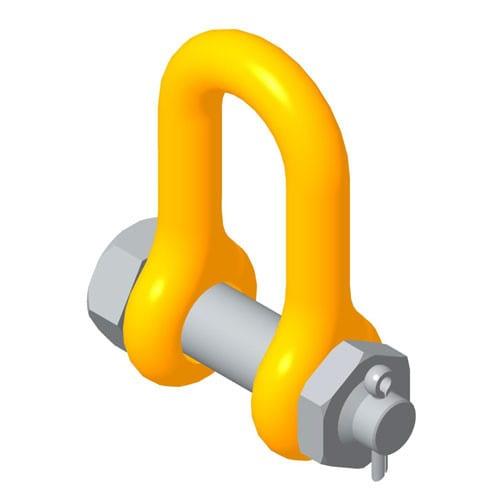
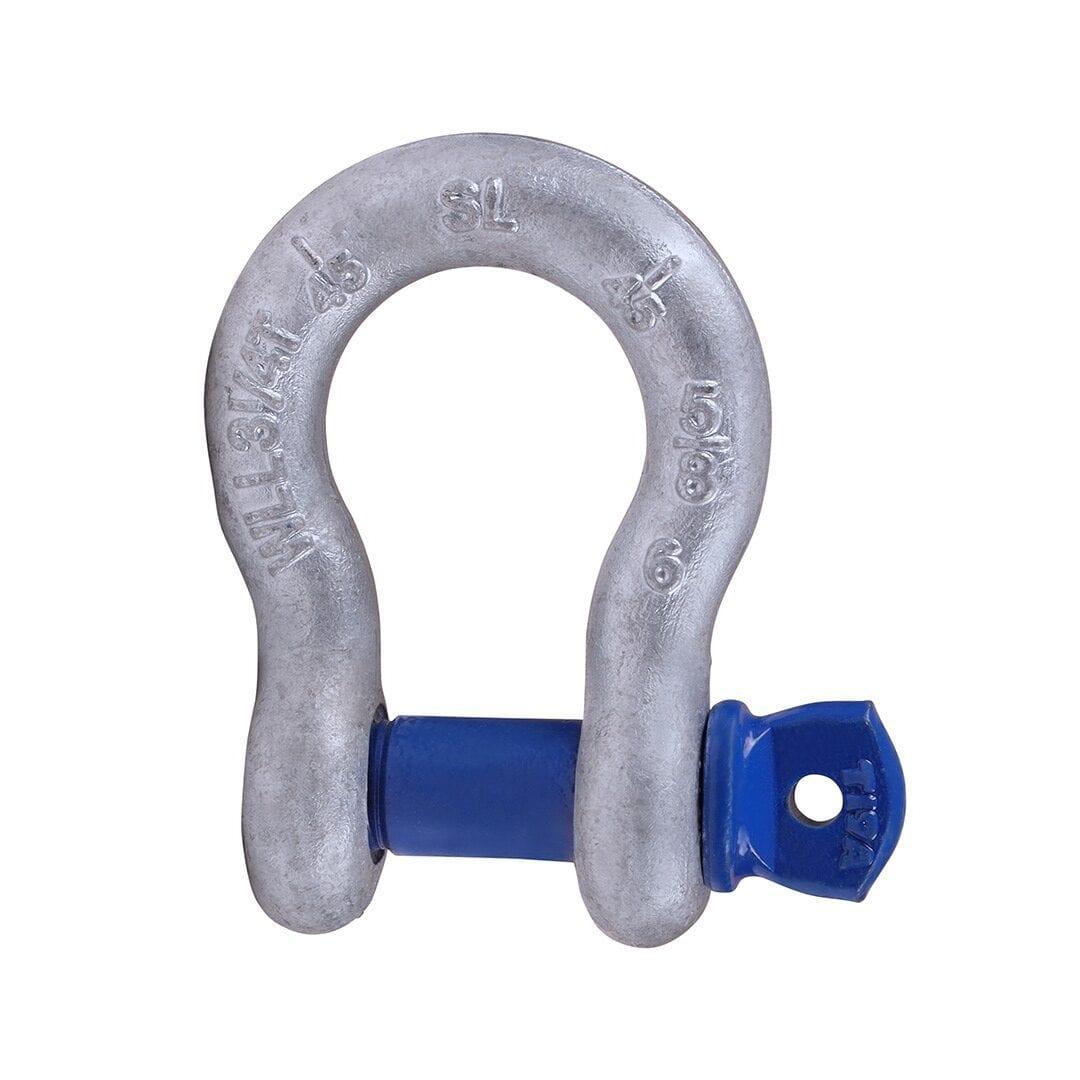
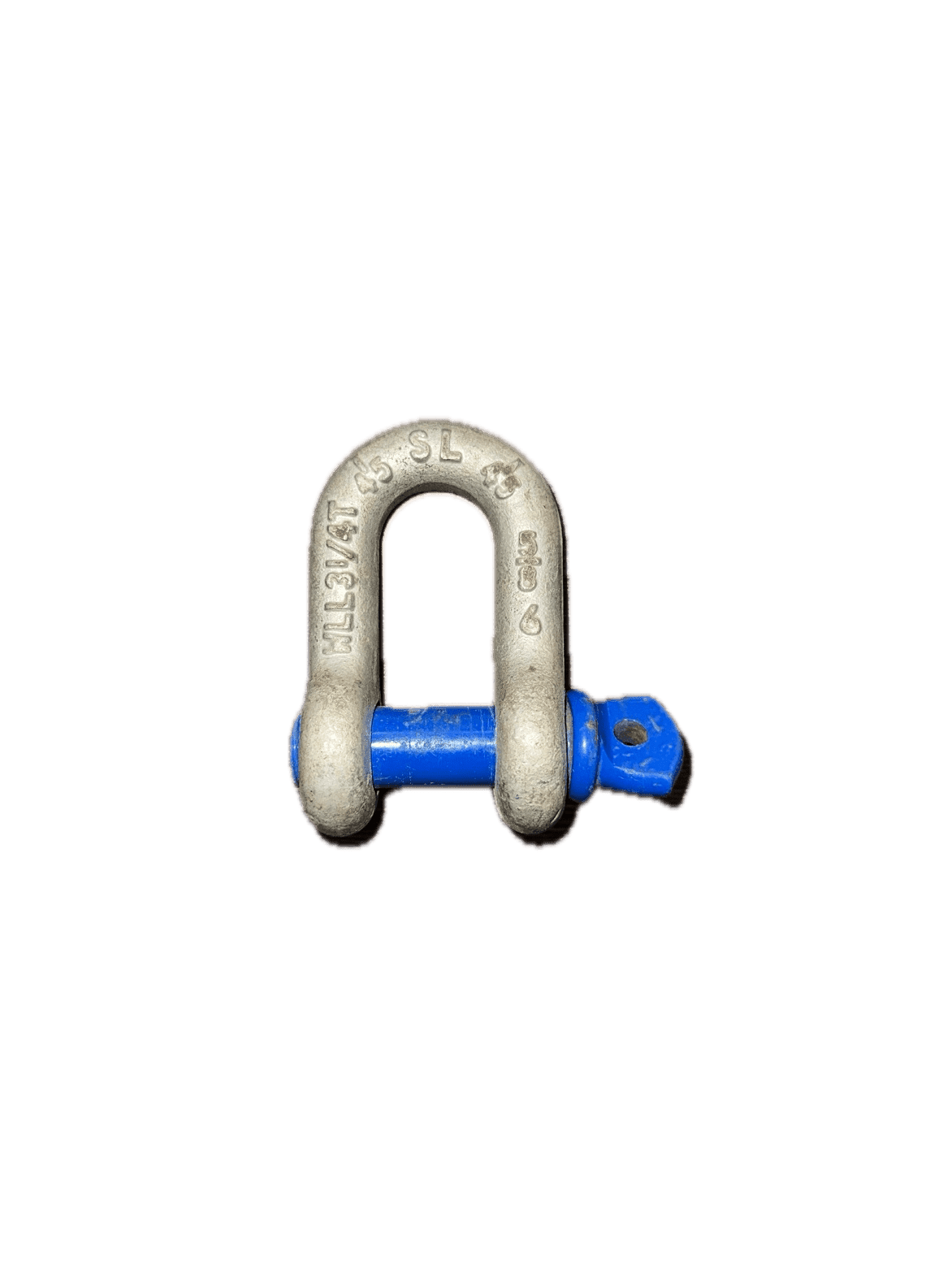
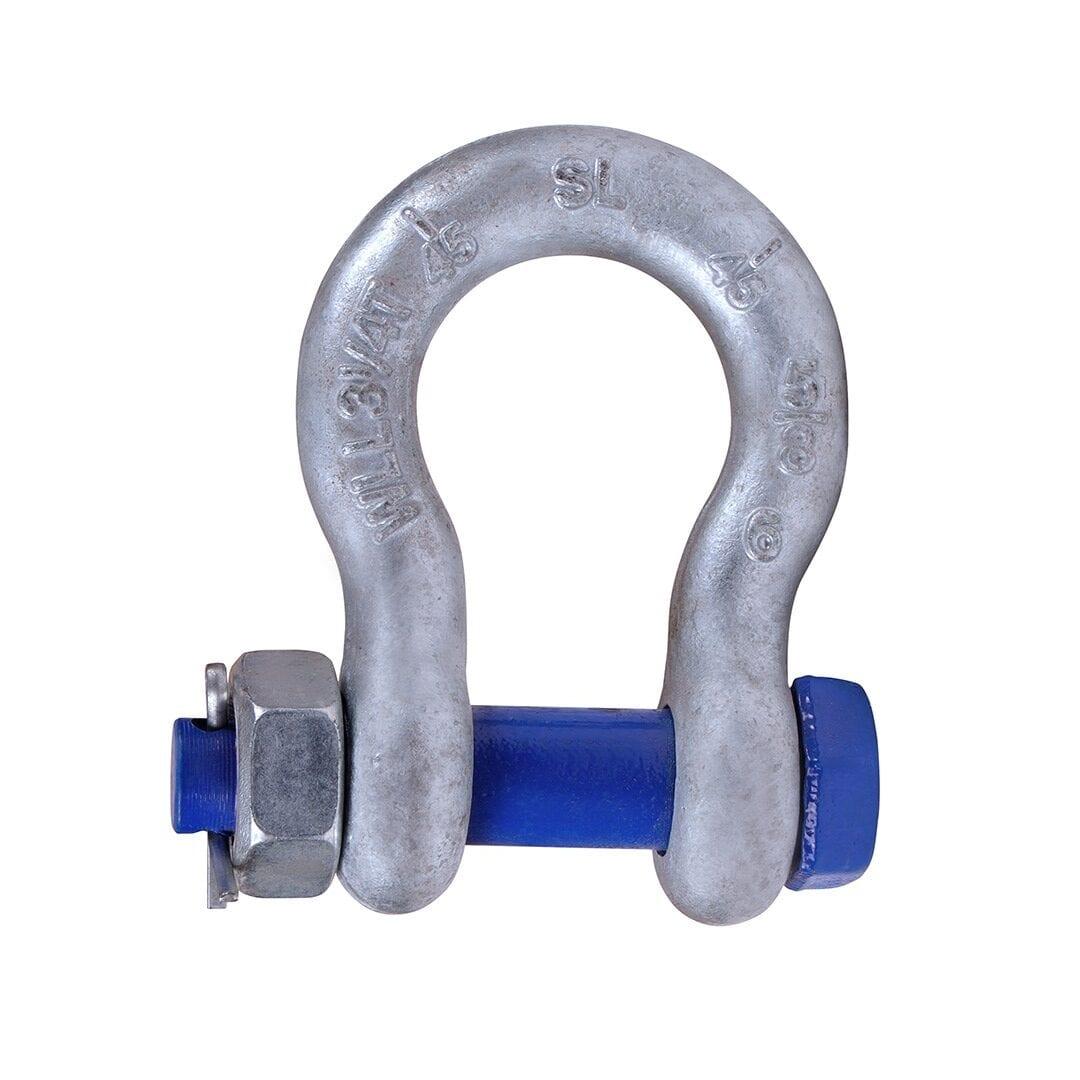
- Lifting gear. Wire rope slings up to 50 mm, made at our own works; Crosby shackles up to 85 t; Crosby swivel hoist rings; and snatch blocks.
A shackle order for Sikka Ports was offered for third-party inspection by DNV before dispatch. Our slings are proof-load tested at our in-house test house, on a 1,200 T proof-load test bed, before they leave our works.
What a marine terminal and refinery complex ask of rigging
Stud link chain is a graded, certified product
Stud link chain is made in grades U1, U2 and U3. Each step up gives higher proof and breaking loads for the same diameter. A stud welded or pressed across each link stops the link closing under load, so the chain does not kink or tangle in a hawse pipe or on a chain locker floor. U2 is widely used for harbour and terminal duty. Marine chain is bought by grade and diameter, and each length is proof-loaded before dispatch, so the certificate matters as much as the steel. Check that it states grade, diameter, length, proof load and breaking load, and that the shackle and fitting markings match it. Our anchor chain selection guide covers the grades in more detail.
Kenter shackles and swivels must match the chain
A Kenter shackle is a detachable joining link. It has the outside dimensions of a common link, so it passes over a gypsy or windlass wheel like any other link. Its halves are held by a stud and a tapered locking pin, which is secured with a lead pellet hammered into the countersink. Three points matter on a chain job:
- 1. Same size and grade. A Kenter shackle is made for one chain diameter and grade. A 32 mm U2 link does not belong in a 28 mm chain, or the other way round.
- 2. Assemble it as designed. Assemble the halves in their marked orientation, drive the pin home and peen the lead in. A missing pellet lets the pin walk out under the cyclic loads of a moored vessel.
- 3. Use swivels to take out twist. A swivel lets the chain turn without twisting. Twisted chain carries load unevenly and wears faster at the link contact points.
Wire rope for a salt-laden coast
Crane and winch ropes at a Gulf of Kutch terminal work in heat, salt spray and blown dust. Three habits extend their life. Keep the rope lubricated so salt cannot settle into the strands. Choose the construction for the duty: rotation-resistant rope for single-fall hoisting at height, compacted rope where crushing on a multi-layer drum is the problem. Inspect against defined discard criteria rather than by calendar. Corrosion pitting, broken wires at the valleys and loss of diameter are the usual reasons to discard rope here. See our guide to wire rope discard criteria.
Hoist rings and snatch blocks for plant maintenance
Much maintenance lifting at a refinery is short and frequent: a pump casing, a motor, a valve body or an exchanger cover lifted from a bolted lifting point, often under a pipe rack with little headroom. Swivel hoist rings suit this work. They bolt into a tapped hole, swivel through 360 degrees and pivot through 180 degrees, so the ring lines up with the sling instead of bending sideways like an eyebolt. Tighten them to the stated torque, and use the stated thread engagement in the parent material. Snatch blocks let a winch or crane pull around an obstruction. The block's rating covers the total load on its hook or shackle, which can approach twice the line pull when the rope turns through 180 degrees.
Lessons for terminal and plant buyers
- 1. Specify chain by grade, diameter and certificate, and order joining shackles and swivels with the chain, not later.
- 2. Plan third-party inspection into the delivery date. On a Sikka shackle order, the material was offered for DNV inspection as part of the dispatch plan, not as an afterthought.
- 3. Name the rope construction, not just the diameter, for each crane and winch. A 22 mm rotation-resistant rope and a 22 mm 6x36 rope are not interchangeable.
- 4. Keep maintenance kits complete: hoist rings with the right thread, shackles sized to the sling, and a snatch block rated for the worst rope angle.
- 5. Treat salt as a load case. Lubricate and inspect more often at a coastal site than inland.
Frequently asked questions
What has Sealinkers supplied to Reliance's Jamnagar complex and Sikka port?
Since 2024 we have supplied Reliance Industries and Sikka Ports & Terminals directly with U2-grade stud link anchor chain from 17.5 mm to 52 mm with swivels and Kenter shackles, Usha Martin wire rope from 9 mm to 28 mm, wire rope slings up to 50 mm, Crosby shackles up to 85 t, swivel hoist rings and snatch blocks.
What is a Kenter shackle?
A Kenter shackle is a detachable link used to join two lengths of anchor chain. It is the same size as a common link, so it runs over a windlass gypsy, and it is held together by a tapered pin locked with a lead pellet. It must match the chain's diameter and grade.
Can you arrange third-party inspection before dispatch?
Yes. A shackle order for Sikka Ports was offered for inspection by DNV before dispatch. We can also arrange inspection by IRS, ABS, LRS or BV, or by the agency your client names.
Which wire rope construction suits a port crane?
It depends on the crane and the duty. Rotation-resistant rope suits single-fall hoisting at height. Compacted rope resists crushing on multi-layer drums. A 6x36 rope suits general winching. Send us the crane make and model, the drum and sheave sizes and the duty, and we will propose a construction from the Usha Martin range.
Supplying a port or plant maintenance team?
Send us your chain specification, crane rope list or maintenance rigging list. We will quote matched chain, fittings, rope and lifting gear, with certificates and the inspection your client requires. Contact Sealinkers.
Sources
- [1] Reliance Industries, refining and marketing business page, accessed 16 November 2026 — ril.com
- [2] NS Energy, project profile of Reliance Industries' Jamnagar complex, 23 September 2022 — nsenergybusiness.com
- [3] Maritime Gateway, "Reliance Industries resumes vessel operations at Gujarat port", 20 June 2023 — maritimegateway.com
Related Guides
Ready to put this into practice?
Every item ships certified, and our in-house test house backs it with the paperwork.
Sealinkers Engineering
Rigging & Lifting Engineering Team
Sealinkers has supplied and certified rigging, lifting and mooring equipment from Darukhana, Mumbai since 1977. These guides are written and checked by the engineers who specify this gear and proof-load it on our own test bed.
- in-house test house — proof-load bed from 1 to 1,200 tonnes
- Proof-load testing and certification in-house since 1977, Darukhana, Mumbai
- Class-society interfaces: IRS, ABS, LRS and BV