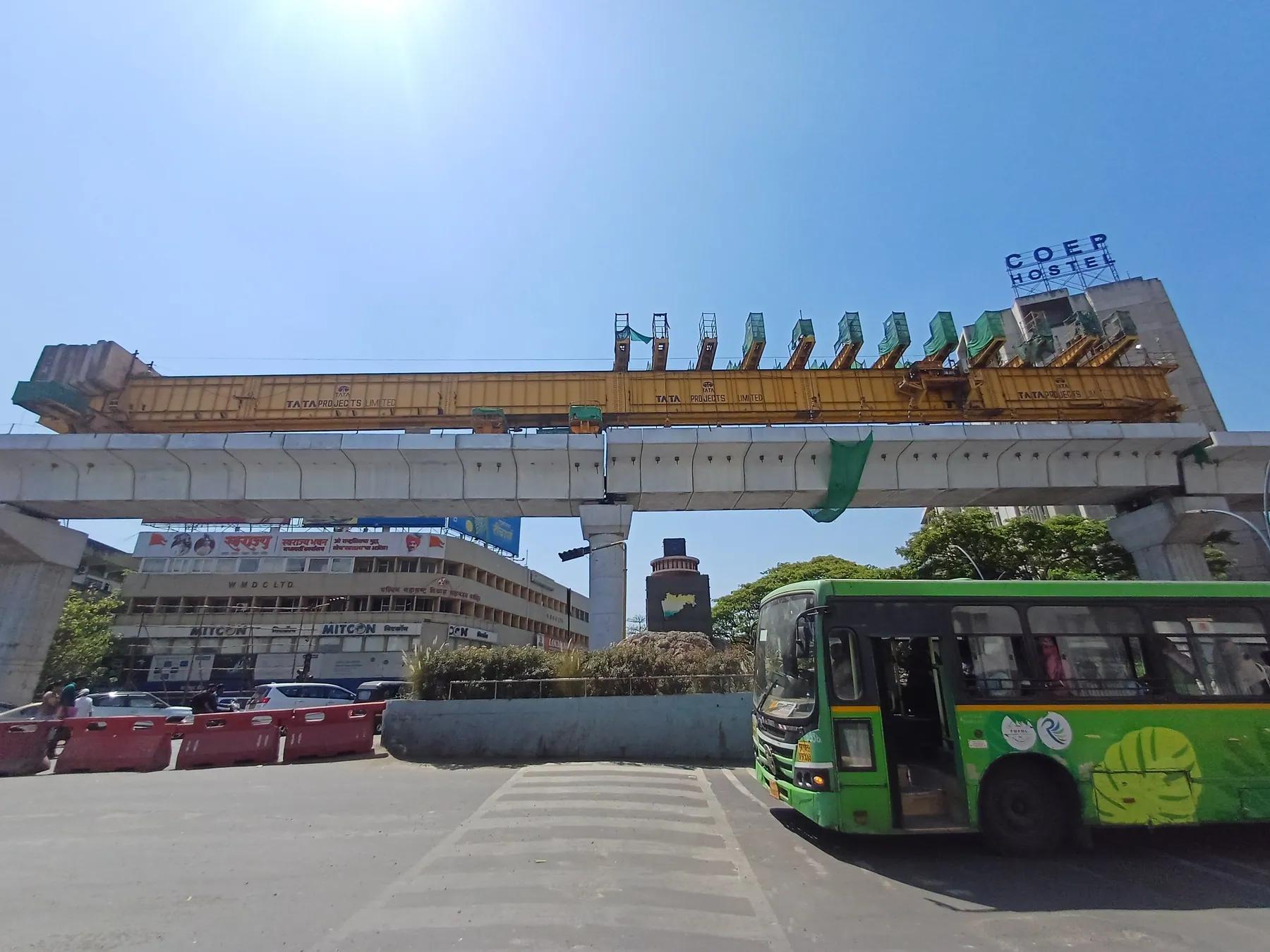
Pune Metro Line 3: Hinjewadi to Shivajinagar on a public-private partnership
On 3 November 2026 the Prime Minister inaugurated Pune Metro Line 3, and passenger services began the next morning [5][6]. The line runs 23.2 km on a fully elevated alignment from the Maan–Hinjewadi IT hub to Shivajinagar, with 23 stations, at a cost of Rs 8,313 crore [5]. It is described as the country's first metro line built under a public-private partnership on a design, build, finance, operate and transfer (DBFOT) model [6].
The Pune Metropolitan Region Development Authority (PMRDA) took the project up on a PPP basis, and the Tata group set up Pune IT City Metro Rail Ltd as the special purpose company to deliver it [1]. The concession went to TRIL Urban Transport and Siemens Project Ventures for 35 years [2]. Tata Projects carried out the civil construction, and Siemens took on signalling, electrification, communications and depot systems [2]. During 2024–25, Sealinkers supplied lifting and rigging equipment to Tata Projects' Line 3 casting yard at Dange Chowk. This case study looks at what the contractor achieved, what we supplied, and what a metro casting yard asks of its rigging.
The project: thousands of precast segments in a few years
Line 3 is a segmental viaduct, and the scale of the casting programme is what stands out. The first segments were poured in February 2022 at the project's yard in Tathawade; each is 8.5 m wide [2]. The first segment was lifted into place in July 2022 between Hinjewadi stations 1 and 2, 11 m above the ground. It weighed about 46 tonnes [3].
- Casting rate. The 5,000th segment was cast on 2 December 2023, sixteen consecutive months after the first, and about 80% of the piers were up within the first year and a half of work [1].
- Double-decker viaduct. On Ganeshkhind Road, between Aundh Road and RBI Chowk, the line shares a 1.6 km double-decker structure with a road flyover. Segment launching on that stretch began at the end of March 2024, after two older flyovers were demolished [4].
- Systems. The line runs Alstom Metropolis three-car trains and Siemens Trainguard MT CBTC signalling on a 750 V DC third rail, with the trains commissioned at the Maan depot [7].
Opening an elevated line of this length through the western IT corridor and the dense Ganeshkhind Road stretch, on a PPP model, is a significant achievement for PMRDA, the concessionaire and Tata Projects' construction teams.
How Sealinkers supported Tata Projects
During 2024–25, Sealinkers supplied Tata Projects' Pune Metro Line 3 casting yard at Dange Chowk. It was a short supply episode over a few months, not a long programme, and the equipment was the general lifting tackle a yard keeps in its stores:
- Hand winches of 3 and 5 tonnes.
- Titan chain pulley blocks up to 10 tonnes.
- Usha Martin wire rope, 16 mm, 6x19 construction with a steel core.
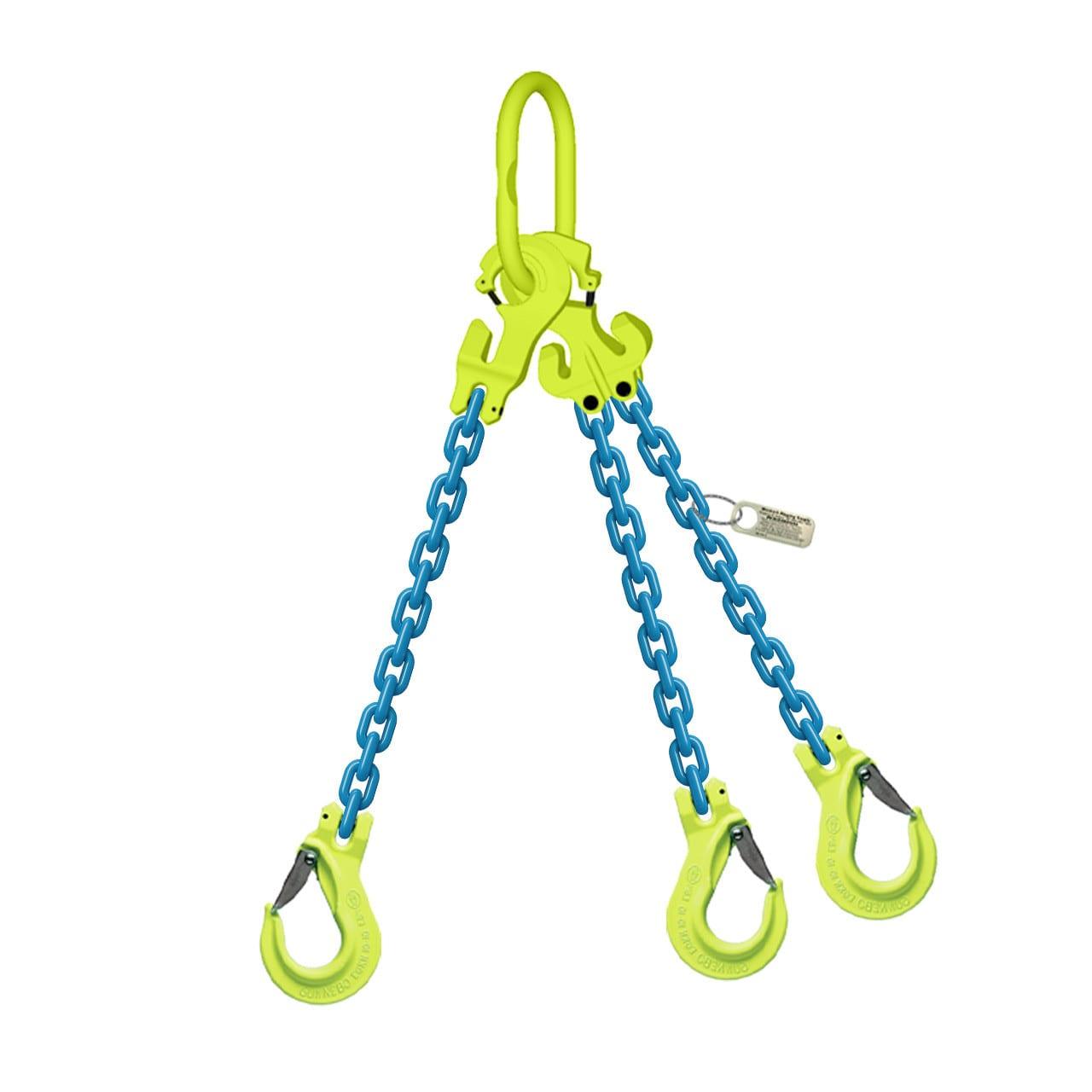
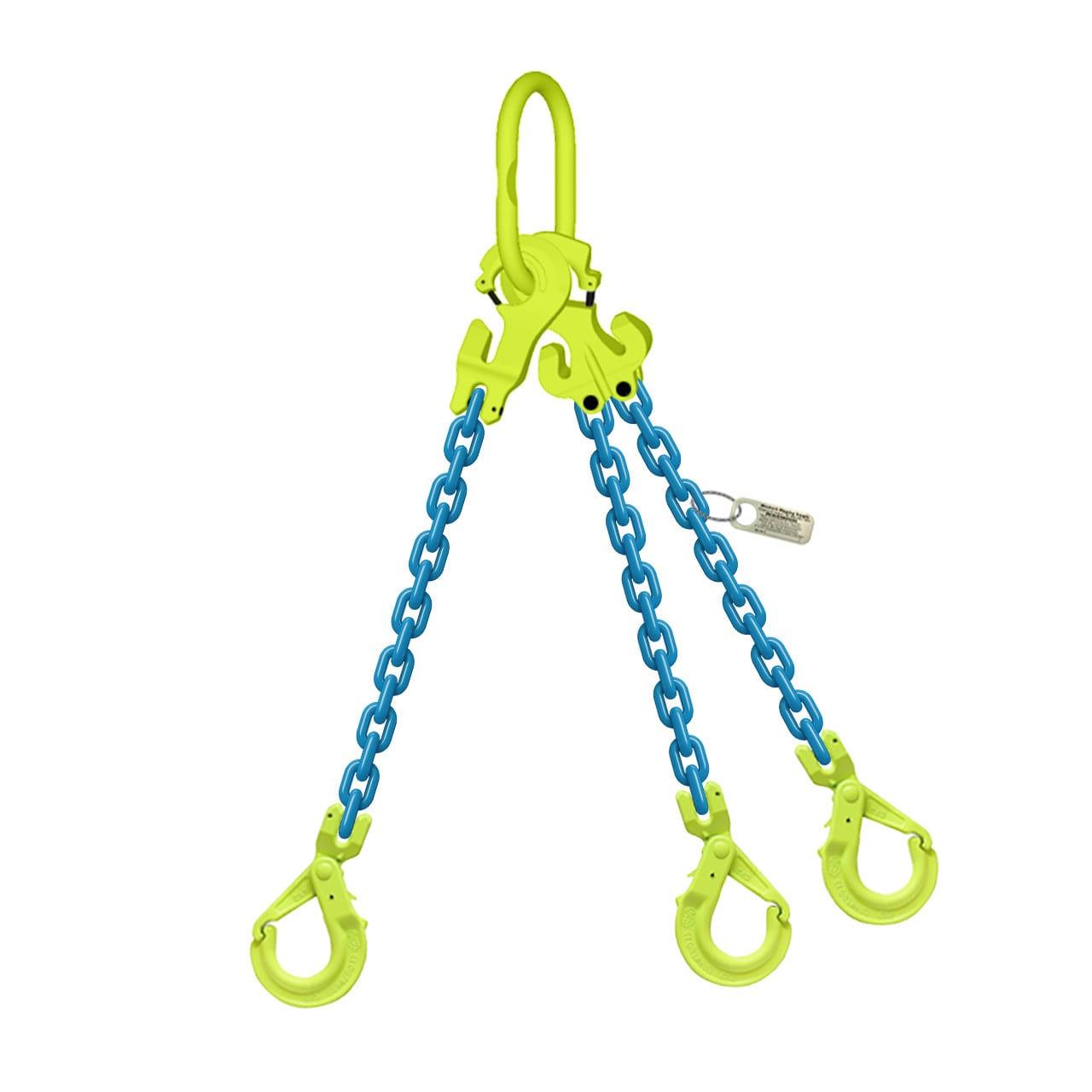
- Two-leg wire rope slings of 6x36 construction, up to 10 tonnes SWL.
- Zebra polyester webbing slings up to 10 tonnes.
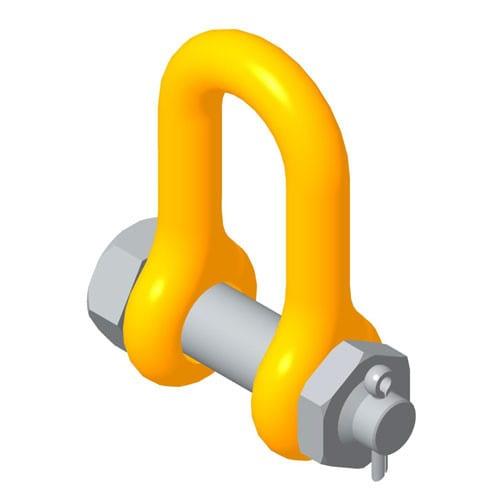
- Alloy bow shackles rated at 12 tonnes.
We supply against the contractor's tackle list. Which lift each item served was set by Tata Projects' own lift plans, and we do not describe them here.
What a segment casting yard asks of rigging
Moulds, cages and bulkheads: winches, chain blocks and their rope
A short-line segment yard repeats the same cycle every day: a reinforcement cage goes into the mould, the bulkhead and inner shutter are set, the segment is cast against its neighbour (match-casting), and the mould is stripped. Much of this work happens below a gantry crane but does not need one. Hand winches pull mould parts and cages into position along the bed, and chain pulley blocks hung from a frame or trestle make fine adjustments of a few millimetres that a crane cannot. A 10-tonne chain block is a sensible upper size for a yard: large enough for heavy shutter sections and cage assemblies, still light enough to rig by hand. See our range of hoists and blocks.
Wire rope in a yard runs on winch drums and through sheaves, and it gets dragged over concrete and steel edges. It wears faster than rope on a permanent installation. A 6x19 rope is stiff and resists abrasion and crushing on the drum better than a finer 6x36, which is why it suits winch work. Rope on a winch should be inspected at set intervals and discarded against clear criteria, not when it breaks. See wire rope discard criteria.
Turning and stacking segments: matched slings and shackles
A box segment of around 46 tonnes [3] is normally lifted from the mould by a yard gantry on a spreader or lifting frame, then stacked to cure before it goes out on a trailer. The lifting points are cast-in, so the sling-and-shackle set below the frame must keep the segment level and load each point evenly. Two-leg wire rope slings in matched pairs, with legs cut and made from the same rope, avoid a long leg that leaves one anchor carrying more than its share. The sling angle also matters: as the legs open from vertical, the tension in each leg rises for the same load. Our guide to sling angle and SWL sets out the factors.
Finished faces: webbing slings
In a match-cast span, each segment face has to fit its neighbour, so a chipped edge or a crushed corner is a real defect. Where a precast item, a mould part or a finished steel component must not be marked, a polyester webbing sling with edge protection is the right tool. A 10-tonne webbing sling gives a wide, soft bearing that a steel sling cannot. Our webbing sling selection guide covers widths, colour codes and wear sleeves.
Lessons for buyers
- 1. Buy slings in matched sets. For any multi-point segment lift, order the legs together, made from the same rope and to the same length, rather than one at a time.
- 2. Choose rope construction for the duty. 6x19 for winch drums and abrasive work, 6x36 for flexible slings. State the construction and core on the purchase order.
- 3. Keep certificates with the tackle. A yard runs many identical slings and shackles. Tag each one and keep its test certificate in the register so the safety officer can trace it.
- 4. Protect match-cast faces. Keep webbing slings and sleeves in the stores for finished elements, and keep steel slings for raw lifts.
- 5. Plan for wear. Yard tackle sees the same lift hundreds of times. Budget for replacements before the programme peaks, not after an inspection fails a set.
Frequently asked questions
What did Sealinkers supply to Pune Metro Line 3?
During 2024–25 we supplied Tata Projects' Line 3 casting yard at Dange Chowk with hand winches, chain pulley blocks up to 10 tonnes, 16 mm wire rope, wire rope and webbing slings, and bow shackles.
Why does a casting yard need hand winches as well as gantry cranes?
Gantry cranes lift segments. Hand winches and chain blocks do the slow, precise moves around the mould: pulling cages and shutter parts into place and adjusting them by small amounts. They also keep working when the gantry is busy elsewhere.
Do your slings come with test certificates?
Yes. Slings are made at our own works and proof-load tested at our in-house test house on a 1,200 T proof-load test bed, and each one ships with its certificate. Class-society inspection by IRS, ABS, LRS or BV can be arranged. See proof-load testing.
Can you supply sites outside Mumbai?
Yes. Sealinkers has operated from Darukhana, Mumbai, since 1977 and delivers across India, including to project sites in Pune.
Planning a casting yard?
Send us your lifting plan or tackle list for a segment yard, launching programme or station works, and we will propose slings, shackles, rope and blocks to suit, with certificates. Contact Sealinkers.
Sources
- [1] Punekar News, "Pune Metro Line 3 completes the milestone of 5000 segments casting", 2 December 2023 — punekarnews.in
- [2] The Metro Rail Guy, "Pune Metro Line-3's 1st Segment Cast by TATA-Siemens JV", 23 February 2022 — themetrorailguy.com
- [3] The Metro Rail Guy, "Tata Launches Pune Metro Line-3's 1st Segment at Hinjewadi", 26 July 2022 — themetrorailguy.com
- [4] The Metro Rail Guy, "Pune Metro Line-3 Double Decker Viaduct's 1st Segment Launched", 31 March 2024 — themetrorailguy.com
- [5] Punekar News, "PM Modi Inaugurates Pune Metro Line 3, Lays Foundation Stone for Four New Corridors Under Phase II", 3 November 2026 — punekarnews.in
- [6] Construction World, "Pune Metro Line 3 Opens to Passengers After Modi Inauguration", 9 November 2026 — constructionworld.in
- [7] Railway-News, "Pune Metro Line 3 Enters Service with Alstom and Siemens Technology", 9 November 2026 — railway-news.com
Cover photo: Pune Metro Line 3 viaduct installation, March 2025, by DesiBoy101, Wikimedia Commons, CC BY 4.0. Photos are resized and are not endorsed by their authors.
Related Guides
Ready to put this into practice?
Every item ships certified, and our in-house test house backs it with the paperwork.
Sealinkers Engineering
Rigging & Lifting Engineering Team
Sealinkers has supplied and certified rigging, lifting and mooring equipment from Darukhana, Mumbai since 1977. These guides are written and checked by the engineers who specify this gear and proof-load it on our own test bed.
- in-house test house — proof-load bed from 1 to 1,200 tonnes
- Proof-load testing and certification in-house since 1977, Darukhana, Mumbai
- Class-society interfaces: IRS, ABS, LRS and BV