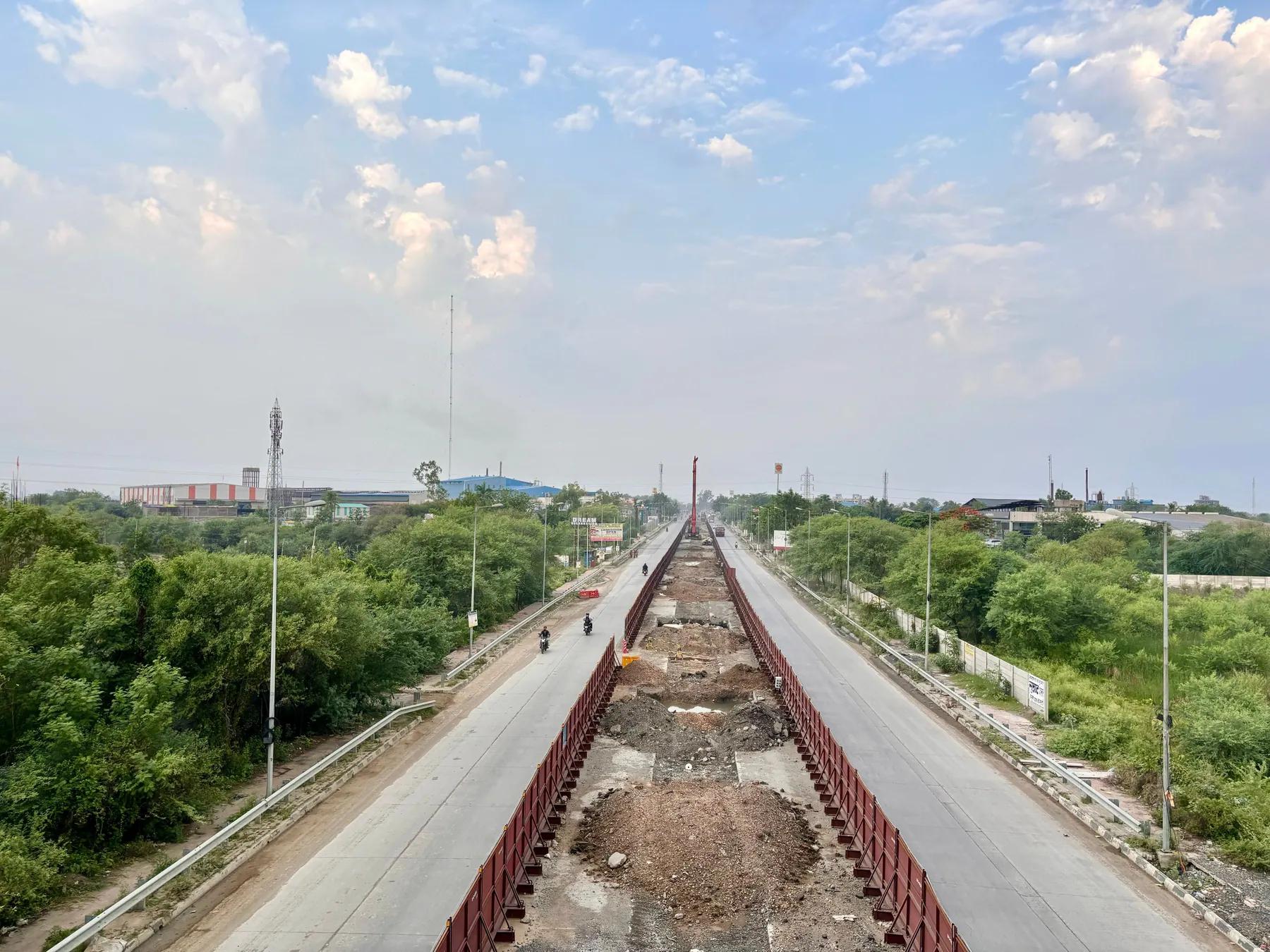
Kalpataru Projects International on Nagpur Metro Phase 2
Nagpur Metro Phase 2 adds 43.8 km of metro and 32 stations to the city's network, linking its outskirts to the core, at an estimated cost of Rs 67.08 billion [3]. Kalpataru Projects International Ltd (KPIL) holds package C-11, the design and construction of three separate elevated viaduct reaches, worth Rs 999 crore with a three-year completion period [1]. KPIL won the package in December 2024 and was casting its first pile cap by mid-January 2025 [2]. Within about four months of the award it was pouring its first precast box segments at its own yard in Hingna [1].
Since 2025, Sealinkers has been a regular supplier to KPIL on Nagpur Metro Phase 2, delivering wire rope slings, wire rope, alloy chain slings, chain pulley blocks, screw jacks and heavy shackles to its Kamptee Road and Hingna sites. This case study describes the project, what we supplied, and what a multi-reach viaduct package asks of its rigging.
The project: three viaducts in three corners of the city
Package C-11 is unusual in that its three reaches are not connected to each other [1]:
- Reach 2B runs from Cantonment towards the Kanhan River along the Kamptee Road corridor, extending the Orange Line to the north-east [1][3].
- Reach 3A is the 6.41 km western extension of the Aqua Line, from Hingna Mount View to Hingna [1][2].
- Reach 4A runs 5.33 km from Pardi to Transport Nagar [1][2].
The viaducts are built from precast box segments. KPIL's Hingna yard alone has 2,175 segments to cast for the Aqua Line reach [1]. In January 2025 Phase 2 already had three casting yards operating, work under way on 14 of the 32 stations, and 80% of the land acquired, with the full network targeted for December 2027 [3].
Running foundations, piers, a segment yard and launching on three separate fronts at once, under a three-year deadline, is a demanding programme for any contractor. KPIL moved from award to first segments inside four months [1].
How Sealinkers supported Kalpataru Projects International
Since 2025, Sealinkers has delivered repeat orders to KPIL's Nagpur Metro Phase 2 sites on Kamptee Road and at Hingna. The supply covers both everyday and heavy rigging:
- Wire rope slings from 8 mm up to 64 mm, in Usha Martin 6x19 and 6x36 rope, single-leg and two-leg, with SWLs up to 50 tonnes.
- Steel wire rope from 10 mm to 24 mm, plus 28 mm rotation-resistant 35x7 rope.
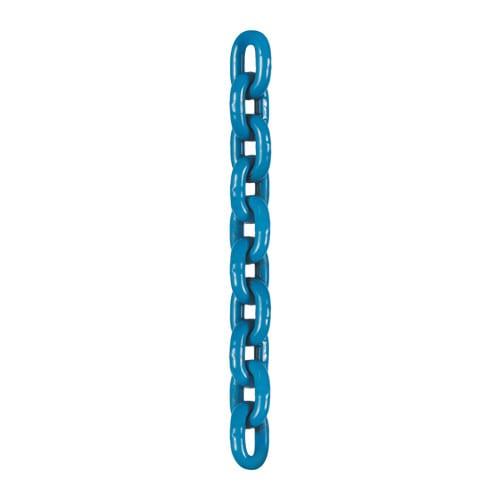
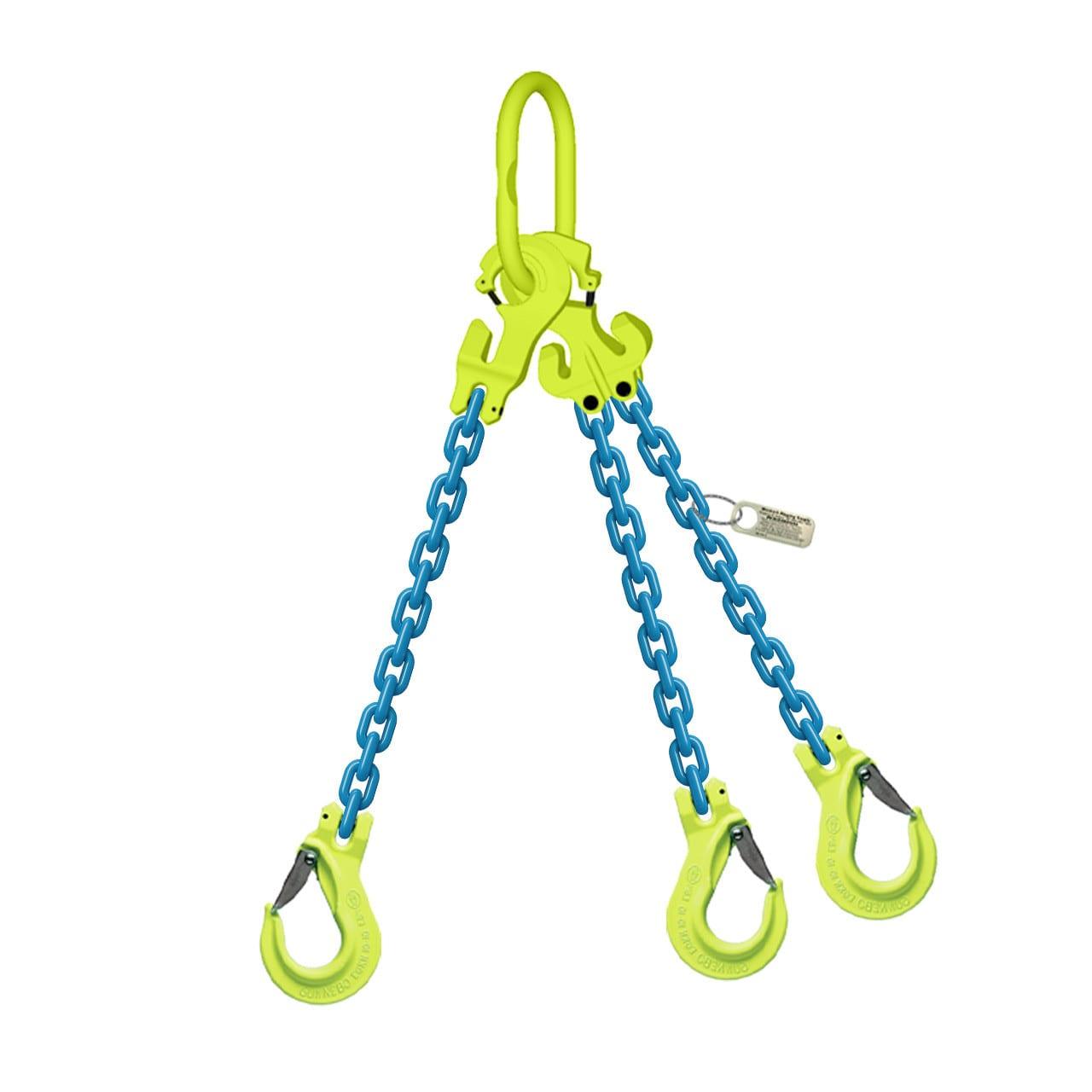
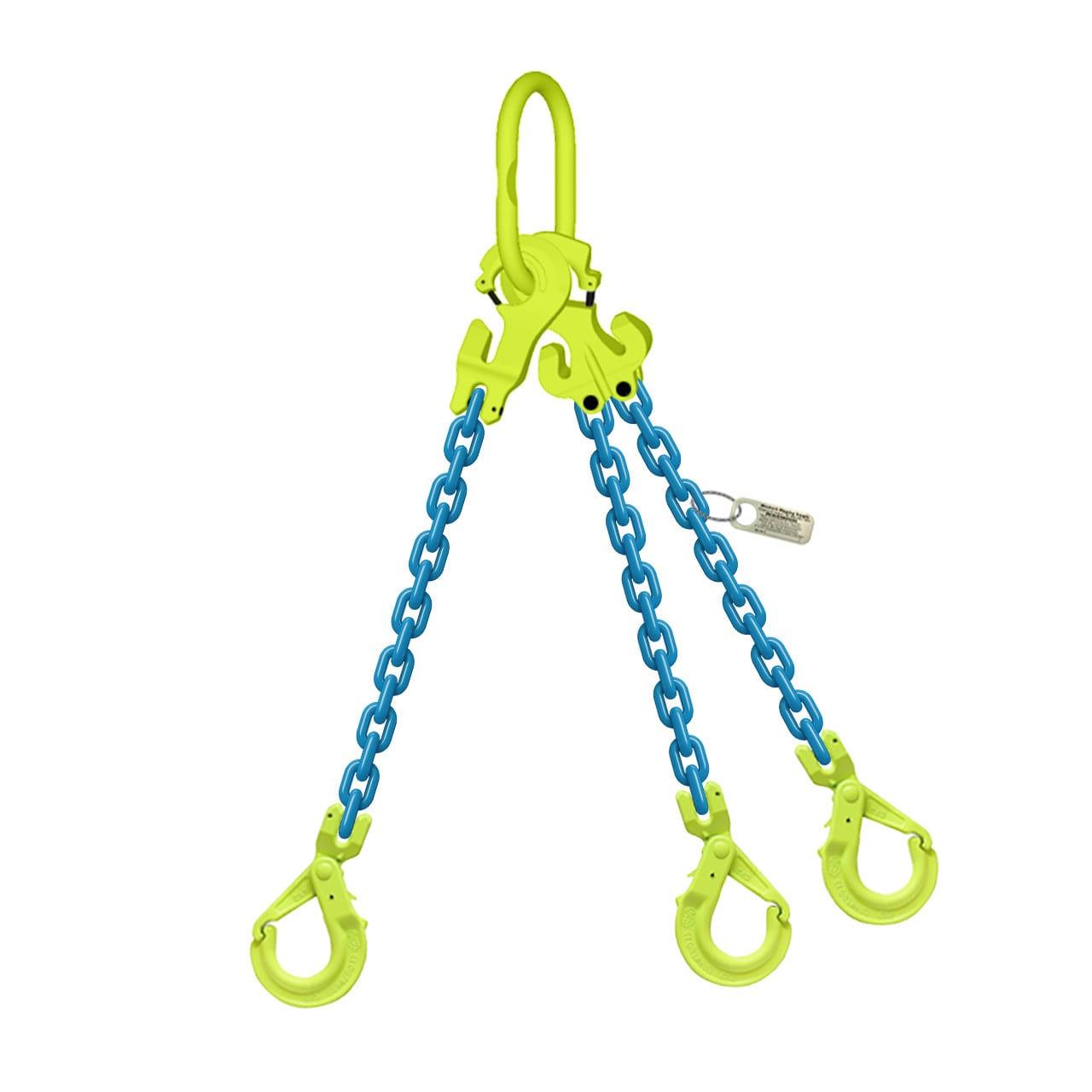
- Two-leg alloy chain slings from 10 mm to 20 mm (up to 17.5 tonnes), with self-locking hooks or shackles.
- Chain pulley blocks from 1 to 10 tonnes and 10-tonne mechanical screw jacks.
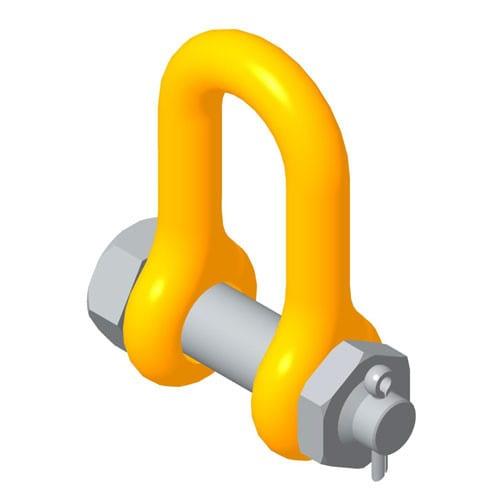
- Shackles from 4.75 tonnes up to a 120-tonne bolt-type bow shackle.
- Accessories: polyester webbing slings up to 10 tonnes, ratchet lashings, turnbuckles, wire rope clips, safety latches and wire rope lubricant.
We supply against KPIL's purchase orders and tackle lists. Which lift each item served is set by the contractor's own lift plans, and we do not describe them here.
What a multi-reach viaduct package asks of rigging
Foundations and piers: cages, shutters and chain slings
Before any segment is launched, each reach needs its piles, pile caps and piers. That work is dominated by reinforcement cages and steel shutters, lifted by crane and set to line by hand. Two-leg alloy chain slings suit it well: they tolerate rough steel edges and site handling better than wire rope, they can be shortened with grab hooks, and they last a long time when inspected. Self-locking hooks keep a hook from opening if a load snags. Our note on Grade 80 vs Grade 100 chain explains the grades.
The segment yard: repeat lifts and heavy connections
A yard casting 2,175 segments [1] repeats the same lift every day: strip the segment, turn or stack it, load it onto a trailer. Wire rope slings in matched sets keep the segment level, and they wear steadily from the repetition, which is why a yard reorders them through its programme. On any viaduct package, slings of 60 mm and above and shackles of 100 tonnes or more are kept for the heaviest moves, such as launching-girder assembly and equipment handling, where the crane hook, master link and shackle must all suit one another. Our shackle size selection guide covers matching shackles to hooks and lugs.
Jacks, blocks and rope care on a long programme
A crane can put a heavy steel or concrete element close to its position; chain pulley blocks and screw jacks put it exactly there. Screw jacks hold a load mechanically, so they do not creep under sustained load the way an unattended hydraulic jack can. Chain blocks in a range from 1 to 10 tonnes let a site match the block to the job instead of using one heavy block for everything. See our hoists and blocks.
Nagpur's hot, dry summers and heavy monsoon are hard on wire rope left in the open. Rope that dries out loses its internal lubricant and corrodes from the core outwards, where an inspector cannot see it. Re-lubricating rope in service and storing slings off the ground and under cover extends their life. See lubrication of wire ropes.
Lessons for buyers
- 1. Split the tackle list by front. Three separate reaches need three sets of stores. Plan rigging per site, not for the package as a whole, so one front is not short while another holds spares.
- 2. Order matched sets for multi-leg lifts. Legs made together from the same rope to the same length share load evenly.
- 3. Match heavy shackles to the hardware they meet. A 120-tonne shackle must fit the hook, link or lug. Check jaw width and pin diameter, not only the rating.
- 4. Budget for lubricant and inspection, not only replacement. On a multi-year job, rope care costs less than early discard.
- 5. Keep certificates with each item. Repeat orders across years and sites make traceability harder. Tag every sling and file its test certificate.
Frequently asked questions
What has Sealinkers supplied to Nagpur Metro Phase 2?
Since 2025 we have supplied Kalpataru Projects International's Kamptee Road and Hingna sites with wire rope slings up to 64 mm and 50 tonnes SWL, wire rope, alloy chain slings, chain pulley blocks, screw jacks and shackles up to 120 tonnes.
When should a site choose chain slings over wire rope slings?
Chain slings suit rough, hot or sharp-edged loads and frequent handling, and their length can be adjusted. Wire rope slings are lighter for a given capacity and are usually preferred for heavy, repeated lifts of precast elements.
Are your slings tested before dispatch?
Slings are made at our own works and proof-load tested at our in-house test house on a 1,200 T proof-load test bed, with a test certificate for each. Class-society inspection by IRS, ABS, LRS or BV can be arranged. See proof-load testing.
Do you deliver to Nagpur?
Yes. Sealinkers has been based at Darukhana, Mumbai, since 1977 and delivers across India, including regular deliveries to project sites in Nagpur.
Working on a viaduct package?
Send us your tackle list or lifting plan for piers, a segment yard or launching, and we will propose slings, shackles, chain and blocks to suit, with certificates. Contact Sealinkers.
Sources
- [1] The Metro Rail Guy, "Nagpur Metro Phase 2: KPIL & GRIL Cast 1st Segments for Packages C-11 & C-02", 30 March 2025 — themetrorailguy.com
- [2] Indian Infrastructure, "Kalpataru commences work for package C-11 under Nagpur metro project phase II", 17 January 2025 — indianinfrastructure.com
- [3] Construction World, "Kamptee Corridor Leads as Nagpur Metro Phase 2 Construction Advances", 16 January 2025 — constructionworld.in
Cover photo: Nagpur Metro Phase 2 works on the Automotive Square–Kanhan corridor, May 2024, by Kmohankar, Wikimedia Commons, CC BY 4.0. Photos are resized and are not endorsed by their authors.
Related Guides
Ready to put this into practice?
Every item ships certified, and our in-house test house backs it with the paperwork.
Sealinkers Engineering
Rigging & Lifting Engineering Team
Sealinkers has supplied and certified rigging, lifting and mooring equipment from Darukhana, Mumbai since 1977. These guides are written and checked by the engineers who specify this gear and proof-load it on our own test bed.
- in-house test house — proof-load bed from 1 to 1,200 tonnes
- Proof-load testing and certification in-house since 1977, Darukhana, Mumbai
- Class-society interfaces: IRS, ABS, LRS and BV