Mumbai Metro Line 7A: twin tunnels under the airport approach, completed
On 14 July 2025, J. Kumar Infraprojects' tunnel boring machine Dhruv broke through at the Airport Colony shaft in Andheri East. That finished the main-line tunnelling for Mumbai Metro Line 7A, the link that will take the Red Line from Gundavali into Terminal 2 of Chhatrapati Shivaji Maharaj International Airport (CSMIA) [1][2]. Its twin, Disha, had reached the same shaft in April 2025 [1][4]. To get there, the machines passed above the twin tunnels of Metro Line 3 and under the ramp of the Sahar Elevated Access Road, the road link into Terminal 2, as well as a major sewer and a water main [1][2].
Line 7A is short, but it is one of the more technically demanding stretches of Mumbai's metro network. The Mumbai Metropolitan Region Development Authority (MMRDA) is the owner, and J. Kumar Infraprojects is building the whole line under package CA-48 [1]. Since 2025, Sealinkers and its sister company Zebra Weblift have supplied J. Kumar's CA-48 underground site near the airport. This case study covers the project, our supply, and what an urban TBM site next to an airport asks of its rigging.
The project: 3.4 km, most of it underground
- Route. About 3.4 km from Andheri East to CSMIA, of which about 0.94 km is elevated and about 2.5 km underground [2][3].
- Stations. Two: Airport Colony (elevated) and CSMIA Terminal 2 (underground). At Terminal 2 the line will interchange with Line 3 [1][2].
- Package CA-48. Awarded to J. Kumar Infraprojects by MMRDA in September 2019 for Rs 1,998 crore. It covers the viaduct, the ramp, the underground tunnels and both stations [1].
- Tunnelling. Two dual-mode TBMs of about 6.68 m diameter. Dhruv's up-line drive started from the Terminal 2 station shaft on 4 November 2023 and covered about 1.65 km in 19 months. The finished tunnel is lined with 1,178 rings, each 1.4 m long and made of six precast segments [1][2].
- Utilities. An 1,800 mm sewer was diverted by micro-tunnelling. In January 2026 MMRDA completed the diversion of a 2,400 mm Upper Vaitarana water main along the alignment [2][3].
Both machines came to Line 7A after earlier drives for J. Kumar's joint venture on Metro Line 3. Disha was refurbished and renamed for this package, and it built the 1.647 km down-line tunnel from Terminal 2 [1][4]. Reusing machines this way saves time and cost, but it brings its own work: each TBM has to be refurbished, transported in pieces and reassembled in a new shaft.
How Sealinkers supported J. Kumar Infraprojects
Our supply to the CA-48 underground site, opposite Airport Terminal 2, ran through 2025 and 2026, from both companies in the group:
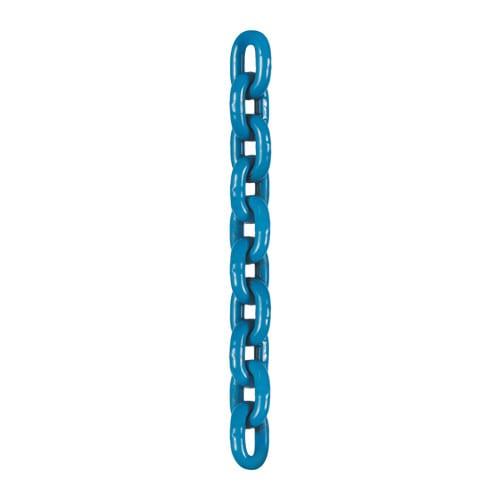
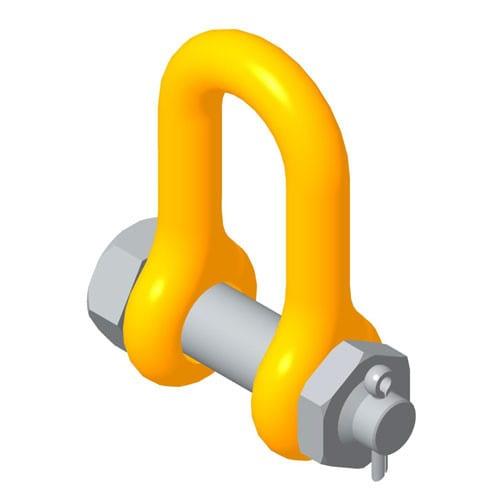
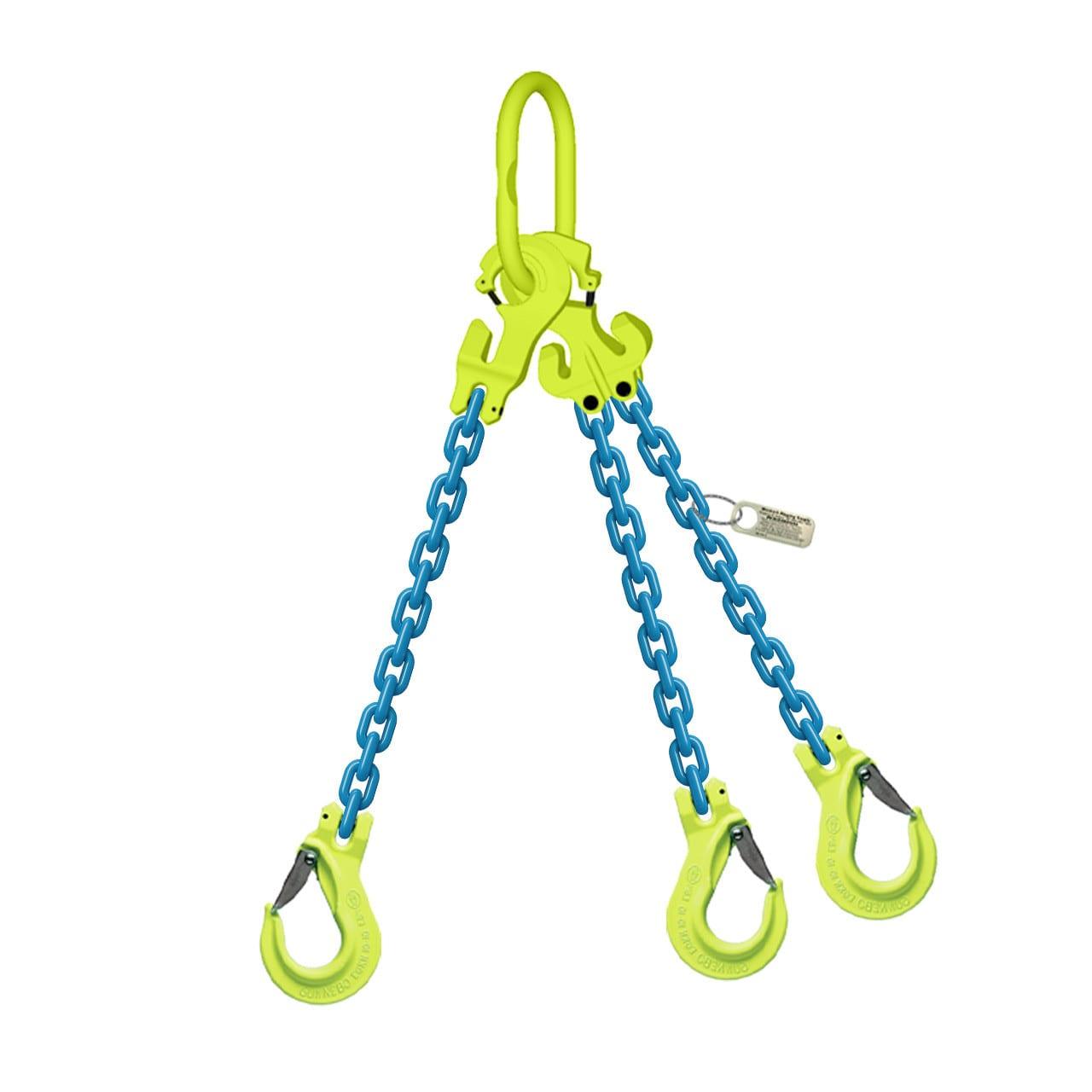
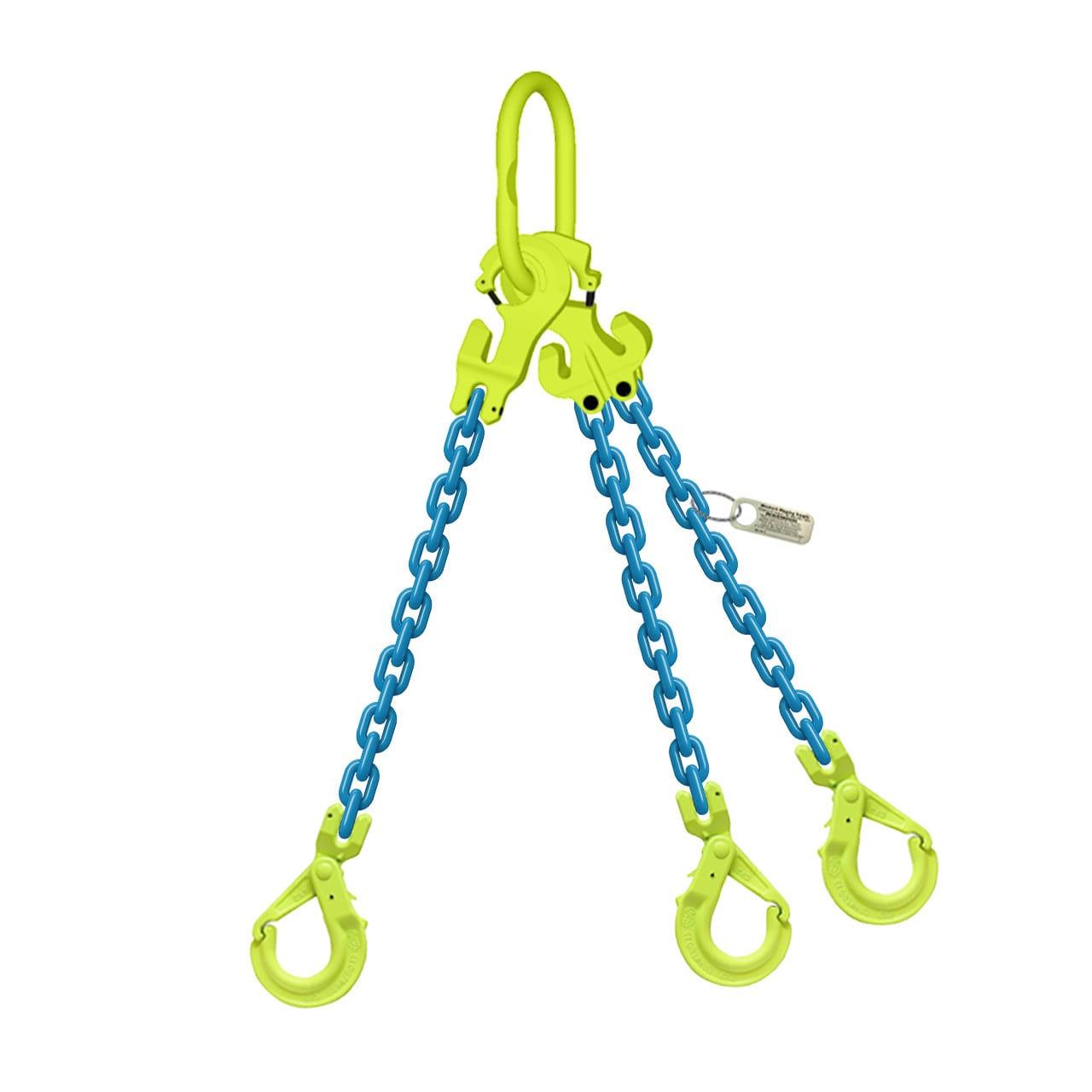
- Sealinkers supplied wire rope slings, alloy chain slings and fittings, including self-locking hooks.
- Zebra Weblift supplied polyester webbing slings to the site on repeat orders through 2025 and 2026.
Our slings are made at our own works and proof-load tested in our in-house test house, and each one is dispatched with its certificate. We supplied the site's stores against J. Kumar's own lists. Which lift each item served is set by the contractor's lift plans, so we do not attribute any particular lift to our equipment.
What a TBM site at an airport asks of its rigging
Shaft work with little headroom
A TBM goes into a shaft in pieces: cutterhead, shield sections, erector, screw conveyor and back-up gantries. Afterwards the shaft becomes the route for everything going down to the face and everything coming back up. Line 7A worked from a station shaft at Terminal 2 and a ramp shaft at Airport Colony [1]. In general practice, a confined shaft calls for short, stiff sling sets made accurately to length. Multi-leg chain slings are common because they are compact, take rough handling and can be shortened with grab hooks. Self-locking hooks are worth specifying wherever a load is landed and re-slung blind, because the hook stays closed until it is deliberately released. For the leg-angle arithmetic behind short slings, see sling angle effects on SWL.
Segment handling for 1,178 rings
Each 1.4 m ring of the up-line tunnel is six precast segments [2], so the tunnel's lining alone means thousands of segment lifts between the stockyard, the shaft, the segment car and the erector. In general practice, segments are lifted by vacuum or mechanical erectors underground, while slings and lifting clutches handle them in the yard and at the shaft top. Segment edges carry gaskets and must not be chipped. Polyester webbing slings are the usual choice wherever a segment is slung directly, because they grip without cutting into concrete or gasket. Webbing should be inspected before every shift for cuts, abrasion and heat damage, and taken out of service when the label is unreadable. Our webbing sling selection guide covers working load colours, hitches and sleeves.
Cranes, height limits and night work near the runway
An airport adds a constraint that most tunnel sites never meet: the airspace. In general practice, cranes and tall equipment close to a runway need height clearance from the aviation authorities, and work is often limited to approved heights and hours. Lower crane heights mean shorter boom radii and more lifts done in stages, and that changes the rigging. More of the work is done with chain blocks, lever hoists and short sling sets. Long single-hook lifts become rare. Rigging that arrives tagged, certificated and checked against the lift plan saves a night shift that would otherwise be lost waiting for a replacement.
Utility diversions beside a live road
Diverting a 2,400 mm water main and an 1,800 mm sewer [2][3] means handling large pipe sections in a narrow corridor beside traffic. In general practice, large pipe is slung with wide webbing slings in a basket or choke hitch so the coating is not damaged, and placed with tag lines because there is little room for a load to swing.
Lessons for buyers on an underground metro package
- 1. Buy for the shaft, not the catalogue. Give the supplier the shaft size, hook height and heaviest piece. Sling lengths and leg counts follow from those, not from a standard list.
- 2. Keep webbing and steel slings separate. Webbing slings go on segments, pipe and finished items. Steel and chain slings go on structural and rough loads. Mixing them up damages both the load and the sling.
- 3. Specify self-locking hooks where loads are landed blind. A hook that cannot open under load removes one common cause of dropped loads in a shaft.
- 4. Plan for re-orders. Segment handling wears out webbing slings steadily. Repeat orders across the tunnelling period are normal and should be budgeted.
- 5. Check every certificate on receipt. Match the tag to the certificate before the sling goes underground. See how to read a test certificate.
Frequently asked questions
What did Sealinkers supply to Mumbai Metro Line 7A?
Sealinkers supplied wire rope slings, alloy chain slings and fittings, including self-locking hooks, to J. Kumar Infraprojects' CA-48 underground site near Airport Terminal 2. Zebra Weblift supplied polyester webbing slings to the same site through 2025 and 2026.
Why are webbing slings used on tunnel segments?
Precast segments carry gaskets and finished edges that steel slings can chip or cut. Polyester webbing spreads the load over a wide contact area and does not damage the concrete, provided it is protected from sharp edges with sleeves.
Are slings tested before they reach site?
Yes. Our slings are made at our own works and proof-load tested at our in-house test house, which has a 1,200 T proof-load test bed. Each item ships with its test certificate. Class-society inspection by IRS, ABS, LRS or BV can be arranged on request.
Does Zebra Weblift make the webbing slings?
Zebra Weblift is our sister company for webbing and round slings. Sealinkers handles wire rope, wire rope slings, chain slings, shackles and hoists, so a site can order both families from one group.
Working on a TBM or shaft package?
Send us your shaft dimensions and lift list and we will propose sling sets, hooks and webbing to suit, with certificates. Contact Sealinkers, or browse chain slings and fittings and Zebra Weblift webbing slings.
Sources
- [1] The Metro Rail Guy, J Kumar's Mumbai Metro TBM Dhruv records final breakthrough for Line-7A, 15 July 2025 — themetrorailguy.com
- [2] Free Press Journal, Mumbai Metro Line 7A achieves final breakthrough in upline tunnel connecting Andheri (East) to CSMIA, 16 July 2025 — freepressjournal.in
- [3] Free Press Journal, Metro Line 7A gets major push as MMRDA diverts 2,400 mm Upper Vaitarana water line, 25 January 2026 — freepressjournal.in
- [4] The Metro Rail Guy, J Kumar's Mumbai Metro TBM Disha records breakthrough for Line-7A, 18 April 2025 — themetrorailguy.com
Related Guides
Ready to put this into practice?
Every item ships certified, and our in-house test house backs it with the paperwork.
Sealinkers Engineering
Rigging & Lifting Engineering Team
Sealinkers has supplied and certified rigging, lifting and mooring equipment from Darukhana, Mumbai since 1977. These guides are written and checked by the engineers who specify this gear and proof-load it on our own test bed.
- in-house test house — proof-load bed from 1 to 1,200 tonnes
- Proof-load testing and certification in-house since 1977, Darukhana, Mumbai
- Class-society interfaces: IRS, ABS, LRS and BV