Mumbai Metro Line 6: a viaduct that crosses everything in its way
On the night of 25–26 April 2026, a 42 m steel composite span weighing about 169 tonnes was set over the Western Railway suburban tracks between Jogeshwari and Ram Mandir. The lift used one 600-tonne crane and two 500-tonne cranes, with two more cranes of similar size on standby, inside a ten-hour railway block [2][3]. It was one of the major crossings on Mumbai Metro Line 6, the Pink Line, a 13-station elevated corridor from Swami Samarth Nagar in Andheri West to Vikhroli along the Jogeshwari–Vikhroli Link Road (JVLR) [1][2]. Along the way the viaduct crosses the Line 2A and Line 7 viaducts, the Western Express Highway and the Western Railway [3][4][6].
The Mumbai Metropolitan Region Development Authority (MMRDA) is the owner, and the Delhi Metro Rail Corporation is the implementing agency [2]. J. Kumar Infraprojects holds two of the three civil packages, BC-03 at the western end and BC-01R1 at the eastern end [1][4]. Since late 2025, Sealinkers has supplied J. Kumar's Line 6 sites at Jogeshwari (BC-03) and Powai (BC-01), and our sister company Zebra Weblift has supplied webbing slings to the BC-03 site. This case study covers the line, our supply, and the rigging problems a viaduct like this creates.
The project: about 15 km of viaduct along the JVLR
- Route and stations. About 15 km, fully elevated, with 13 stations from Swami Samarth Nagar to Vikhroli [1][2]. Reported lengths vary between sources, from 14.47 km to 15.31 km [2][7].
- Cost. MMRDA's investment is reported at Rs 67.72 billion [2].
- BC-03 (Swami Samarth Nagar to Shyam Nagar). A 6.079 km viaduct with five stations: Swami Samarth Nagar, Adarsh Nagar, Jogeshwari (West), JVLR and Shyam Nagar. It was awarded to J. Kumar Infraprojects in a joint venture with CRTG in August 2018 [4].
- BC-01R1 (IIT Powai to Vikhroli). A 4.771 km viaduct with three stations, awarded to J. Kumar Infraprojects in February 2019 [1].
- Status. MMRDA reported about 88% physical progress in April 2026, with partial operation expected by early 2027 [2]. Because the Kanjurmarg depot land is still awaiting clearance, MMRDA plans to start services using an elevated pit-line corridor beside the Eastern Express Highway [7].
The crossings
Line 6 stands out for how much it has to cross. The JVLR corridor is already full of flyovers, railways and other metro lines, so many spans could not be standard precast girders:
- J. Kumar placed its first U-girder, 25 m long and about 140 tonnes, near Swami Samarth Nagar in May 2020 [5].
- A 48 m special steel girder went over the Line 2A viaduct on Link Road in April 2022 [6].
- Three 56 m steel composite girders, about 240 tonnes in all, were set over the Western Express Highway and the Line 7 viaduct at JVLR in November 2022. There Line 6 runs at about 33.8 m above ground [4].
- The Western Railway span at Jogeshwari followed in April 2026, launched from a pier built in the gap between the up and down through lines [3].
How Sealinkers supported J. Kumar Infraprojects
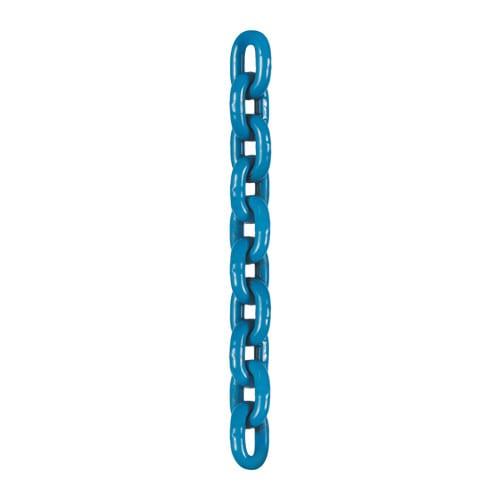
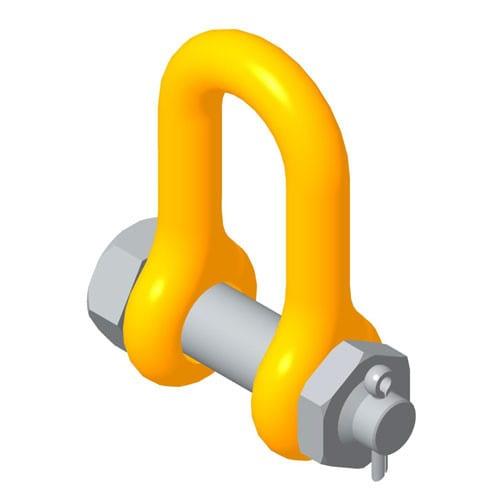
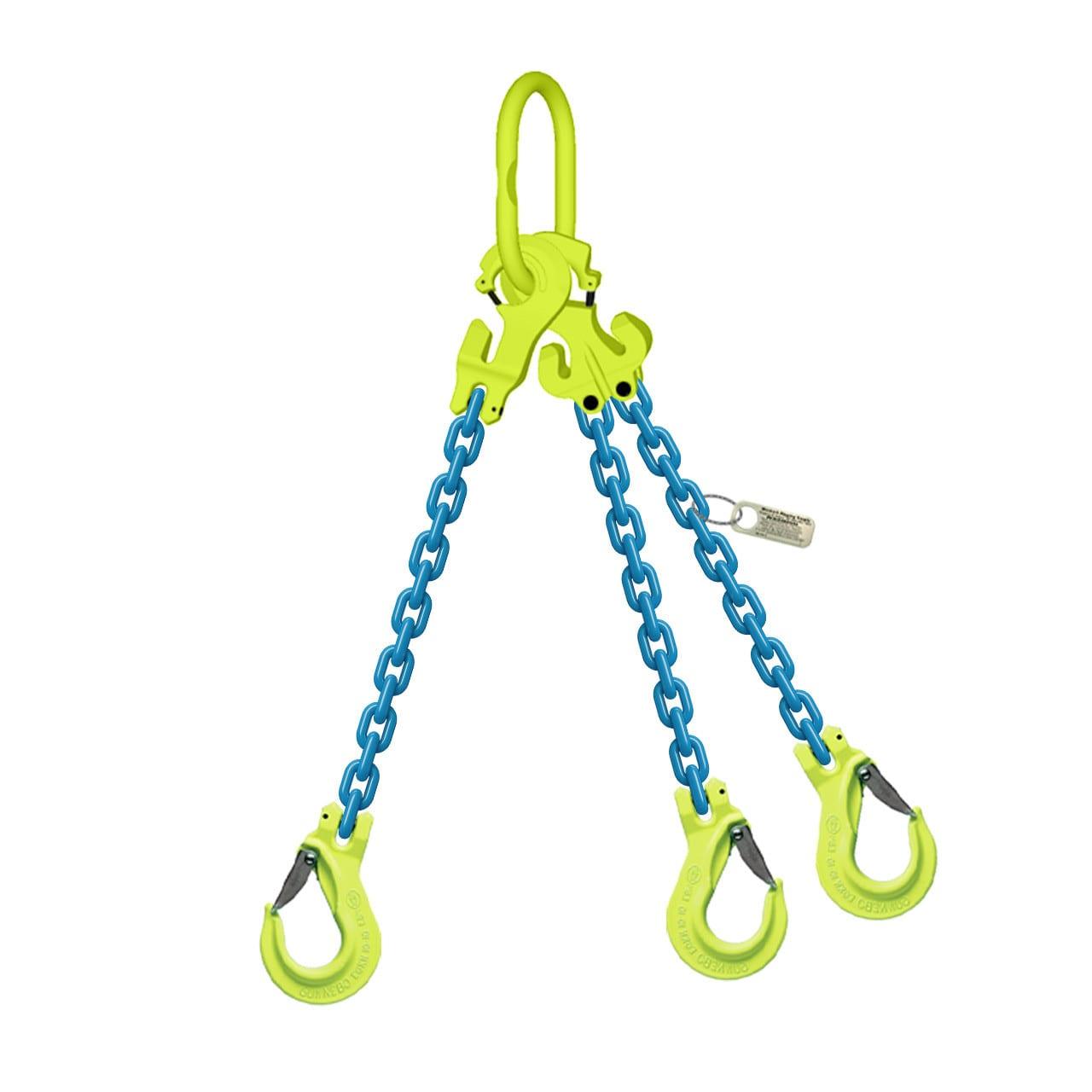
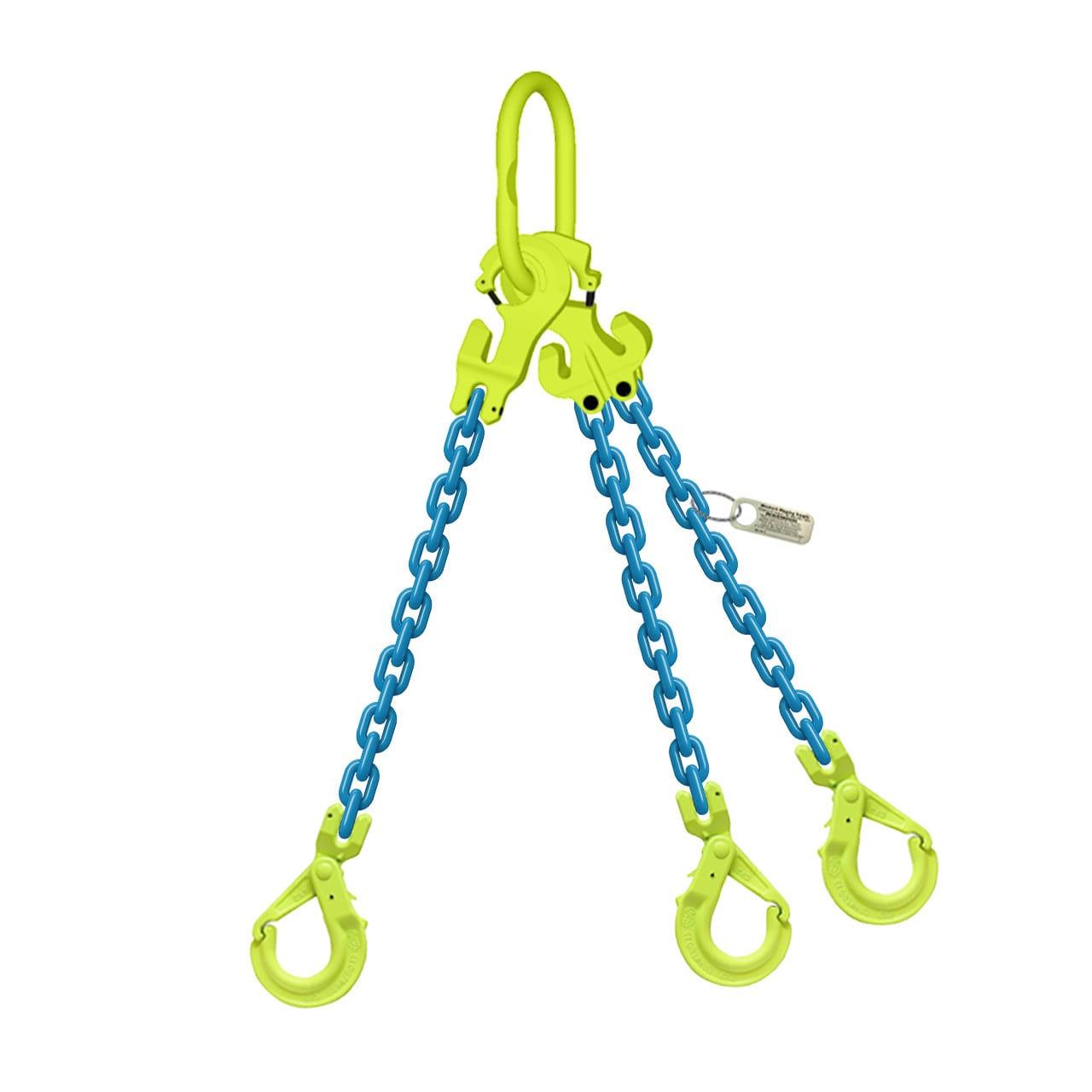
We have supplied two J. Kumar sites on Line 6 since late 2025: the BC-03 site at Jogeshwari and the BC-01 site at Powai. The supply covered wire rope slings, alloy chain slings and shackles. Zebra Weblift supplied polyester webbing slings to the BC-03 site in 2026. Sealinkers was supplying the Jogeshwari site during 2026, the year of the Western Railway crossing. That lift was planned and run by MMRDA and its contractors, and we do not claim it for our equipment [2][3].
Our slings are made at our own works and proof-load tested in our in-house test house, and every sling and shackle is dispatched with its certificate. We supply against the contractor's list. The site's lift plans decide where each item is used.
What Line 6 asks of its rigging
U-girders: heavy, repetitive and lifted in pairs
A 140-tonne U-girder [5] is normally set by two cranes in tandem, one at each end. In general practice, each crane's rigging is sized for more than half the weight, because a tandem lift never shares the load perfectly. One crane will carry more as the girder tilts or one hook moves faster than the other. Engineers usually allow for an uneven share and check each sling set against the worst case, not the average. The legs at each end should be matched in length so the girder hangs level across its width, and shackles should be sized to the cast-in lifting points. For the angle arithmetic, see sling angle effects on SWL. For choosing shackles, see the shackle size selection guide.
Steel spans in railway and road blocks
The Jogeshwari span went in during a three-hour traffic and overhead-equipment block on one line and a ten-hour block for setting up and stabilising the cranes [3]. In general practice, a block that short leaves no time to fix rigging on the night. The sling sets, shackles and spreader arrangements are assembled, inspected and tagged beforehand. Spare sets are kept at the crane, and every certificate is checked against its tag before the block starts. Steel composite girders also have painted and coated surfaces. Where slings bear directly on the steel, edge protectors or webbing slings stop the coating being cut and the sling being damaged on a sharp flange.
Working high, in a corridor already full of structures
At the Line 7 crossing, Line 6 runs at about 33.8 m [4], above a road, a flyover and another metro. In general practice, work at that height relies on lighter rigging in large numbers: chain slings and lever hoists to pull bearings and steel into line, small shackles for temporary attachments, and webbing slings for station roofs, finishes and services. That gear is easy to drop, easy to lose and easy to misuse. Tag it, issue it from stores against a register, and inspect it on a fixed cycle. Our guide on Grade 80 vs Grade 100 chain covers chain sling grades.
Lessons for buyers on an elevated metro
- 1. Size tandem rigging for the worst share. In a two-crane lift, plan each end's slings and shackles for more than half the load, as the lift engineer specifies.
- 2. Prepare block-night rigging in advance. Assemble, inspect and tag the full rig, with spares, before a railway or road block.
- 3. Protect coated steel. Order edge protectors and webbing slings along with the steel slings for composite girders.
- 4. Keep the light gear under control. Lever hoists, small shackles and chain slings used at height need tagging, registers and regular inspection.
- 5. Re-order before a crossing. Bring sling inspection forward ahead of a major span, and replace anything doubtful rather than taking it into the block.
Frequently asked questions
Which Line 6 sites did Sealinkers supply?
J. Kumar Infraprojects' BC-03 site at Jogeshwari and its BC-01 site at Powai, from late 2025 through 2026. Zebra Weblift supplied webbing slings to the BC-03 site.
What equipment went to the Line 6 sites?
Wire rope slings, alloy chain slings and shackles from Sealinkers, and polyester webbing slings from Zebra Weblift.
Why are tandem lifts rigged above half the load at each end?
Two cranes rarely share a load exactly. Small differences in hook speed, boom deflection or girder tilt shift weight from one end to the other, so each end's rigging is sized for the larger share the lift plan allows.
Are your slings tested and certified?
Yes. Our slings are proof-load tested at our in-house test house, which has a 1,200 T proof-load test bed, and each ships with its certificate. Class-society inspection by IRS, ABS, LRS or BV can be arranged.
Planning girder or span erection?
Send us your lift plan and we will propose matched sling sets, shackles and webbing to suit, with certificates. Contact Sealinkers, or see wire rope slings and shackles.
Sources
- [1] The Metro Rail Guy, Mumbai Metro Pink Line: info, route map, tenders and updates, updated 14 September 2025 — themetrorailguy.com
- [2] Indian Infrastructure, 169 tonne steel span launched at Jogeshwari station under Mumbai Metro Line 6 Project, 27 April 2026 — indianinfrastructure.com
- [3] Swarajya, Mumbai Metro Line 6 crosses key Western Railway hurdle as 42-metre steel span installed between Jogeshwari and Ram Mandir, 27 April 2026 — swarajyamag.com
- [4] The Metro Rail Guy, Mumbai Metro Line-6's 56 m girders placed over WEH and Line-7, 22 November 2022 — themetrorailguy.com
- [5] The Metro Rail Guy, J Kumar launches 1st U-girder for Mumbai Metro Line-6, 22 May 2020 — themetrorailguy.com
- [6] The Metro Rail Guy, Mumbai Metro Line 6's girder launched over Line 2A by JKIL, 26 April 2022 — themetrorailguy.com
- [7] Free Press Journal, Mumbai Metro 6 progress update: MMRDA to open Pink Line without Kanjurmarg depot, 21 January 2026 — freepressjournal.in
Related Guides
Ready to put this into practice?
Every item ships certified, and our in-house test house backs it with the paperwork.
Sealinkers Engineering
Rigging & Lifting Engineering Team
Sealinkers has supplied and certified rigging, lifting and mooring equipment from Darukhana, Mumbai since 1977. These guides are written and checked by the engineers who specify this gear and proof-load it on our own test bed.
- in-house test house — proof-load bed from 1 to 1,200 tonnes
- Proof-load testing and certification in-house since 1977, Darukhana, Mumbai
- Class-society interfaces: IRS, ABS, LRS and BV