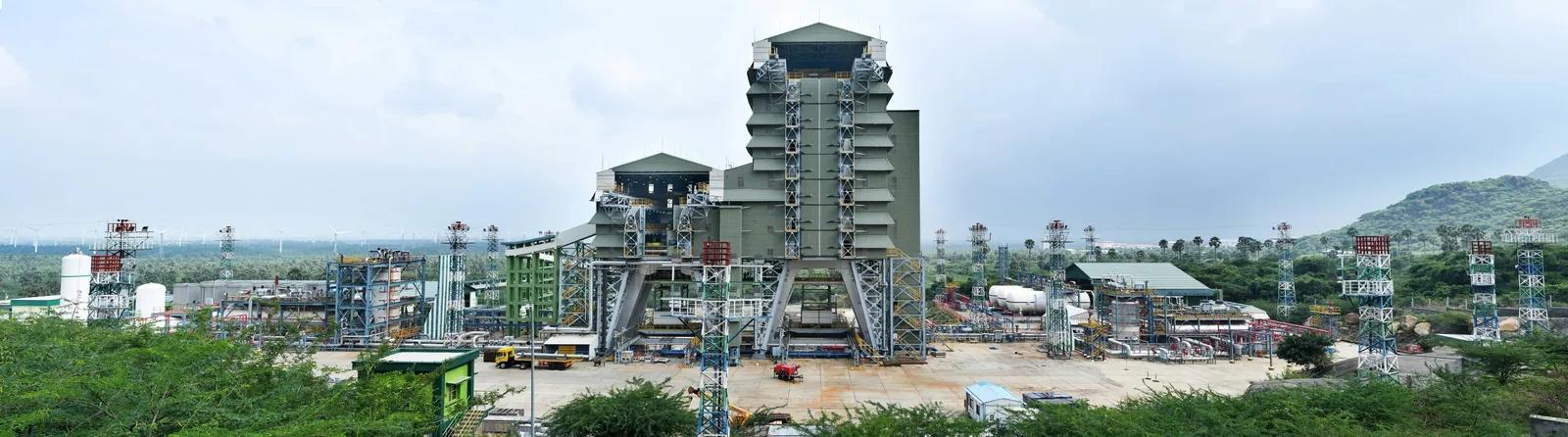
Tata Projects and India's rocket-engine test complex
The ISRO Propulsion Complex (IPRC) at Mahendragiri, in Tamil Nadu's Tirunelveli district, is ISRO's lead centre for the assembly, integration and testing of the liquid propulsion engines and stages of Indian launch vehicles [3]. Every new liquid engine has to prove itself on a test stand before it flies, and Mahendragiri is where ISRO does that work.
Tata Projects lists two Mahendragiri facilities among its space projects: the Integrated Cryogenic Engine and Stage Test facility (ICET), built for ISRO, and the Semicryo Integrated Engine Test facility (SIET) [1]. On 10 May 2023, ISRO ran the first integrated test at the newly commissioned semi-cryogenic test facility. It can test engines of up to 2,600 kN thrust [2]. Building test stands like these means putting tall steel structures, cryogenic and non-cryogenic fluid systems, safety systems and instrumentation together on one site [3].
In early 2026, Sealinkers supplied Tata Projects for works at the ISRO Propulsion Complex with galvanised turnbuckles up to 2¾ inch, Crosby Grade 100 alloy chain, connecting links and master links. The material was offered for third-party inspection by TÜV SÜD at our Rabale facility before dispatch. This case study describes the complex, what we supplied, and what buyers should know about turnbuckles, alloy chain assemblies and works inspection. Supply details come from our own order and dispatch records. Project facts are cited to ISRO and Tata Projects, as listed at the end.
The project: test stands for India's launch vehicle engines
- Owner. The ISRO Propulsion Complex, Mahendragiri, part of the Indian Space Research Organisation under the Department of Space [3].
- Contractor. Tata Projects lists ICET (client ISRO) and SIET, both at Mahendragiri, among its space and nuclear projects [1].
- ICET. Built to evaluate the cryogenic propulsion systems of ISRO's launch vehicles, which run on liquid hydrogen and liquid oxygen. It consists of a structural system, cryogenic and non-cryogenic fluid systems, a safety system and instrumentation [3].
- Semi-cryogenic test facility. Its first integrated test, on 10 May 2023, ran a power head test article, which carries every engine system except the thrust chamber. The test validated the propellant feed system, including the low- and high-pressure turbopumps and the gas generator. The facility can test engines of up to 2,600 kN thrust, and the engine it was built for is rated at 2,000 kN [2].
- Next phase. In December 2024, IPRC invited expressions of interest to augment the ICET fluid systems for testing the LOX-methane engines of the Next Generation Launch Vehicle (NGLV). The scope covers liquid methane, liquid oxygen and liquid nitrogen systems, gas systems and cooling water [3].
The ISRO milestone
The May 2023 test was the first of a planned series and a major step before full engine integration and qualification [2]. The chill-down operations alone took about 15 hours [2]. Engine tests like this depend on test facilities built to a demanding standard, and Tata Projects lists two of them at Mahendragiri among its projects [1].
How Sealinkers supported Tata Projects
In early 2026, we supplied one order to Tata Projects for works at the ISRO Propulsion Complex, Mahendragiri. It covered:
- Turnbuckles. Galvanised turnbuckles in eye-and-eye and jaw-and-eye patterns, up to 2¾ inch.
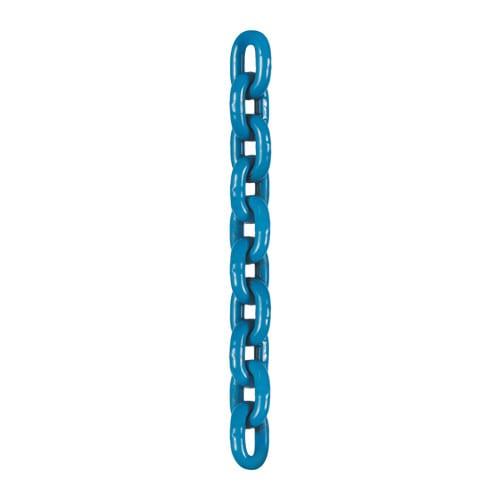
- Alloy chain. Crosby Grade 100 alloy chain.
- Chain components. Crosby mechanical connecting links and welded master links.
The material was offered for third-party inspection by TÜV SÜD at our Rabale facility before dispatch. We supplied against Tata Projects' purchase order. Which task each item served is set by Tata Projects' own work plans, and we do not describe it here.
Turnbuckles, alloy chain and works inspection
Large turnbuckles: end fittings, take-up and locking
A turnbuckle is a threaded body with a right-hand and a left-hand end fitting. Turning the body draws the ends together or apart, which tensions a rod, rope or chain. At 2¾ inch, a turnbuckle is a heavy item with a high working load, so three points matter when ordering:
- End fittings. Eye ends take a shackle or pin. Jaw ends take a plate or an eye directly. Hook ends are for light, non-critical duty only. Order the fitting that matches the connection at each end.
- Take-up. The body length sets how far the turnbuckle can adjust, and a longer body gives more adjustment. Size it for the slack you need to remove, with threads still fully engaged at the end of the adjustment.
- Locking. On any structure exposed to vibration or wind, the ends must be locked against turning, with lock nuts or locking wire. A turnbuckle must take load in line only and must never be bent or side-loaded.
Galvanising protects the threads and body in humid, rainy conditions such as those in southern Tamil Nadu. Threads should be kept clean and lightly greased so that the turnbuckle can still be adjusted after months outdoors.
Grade 100 chain assemblies are built from matched parts
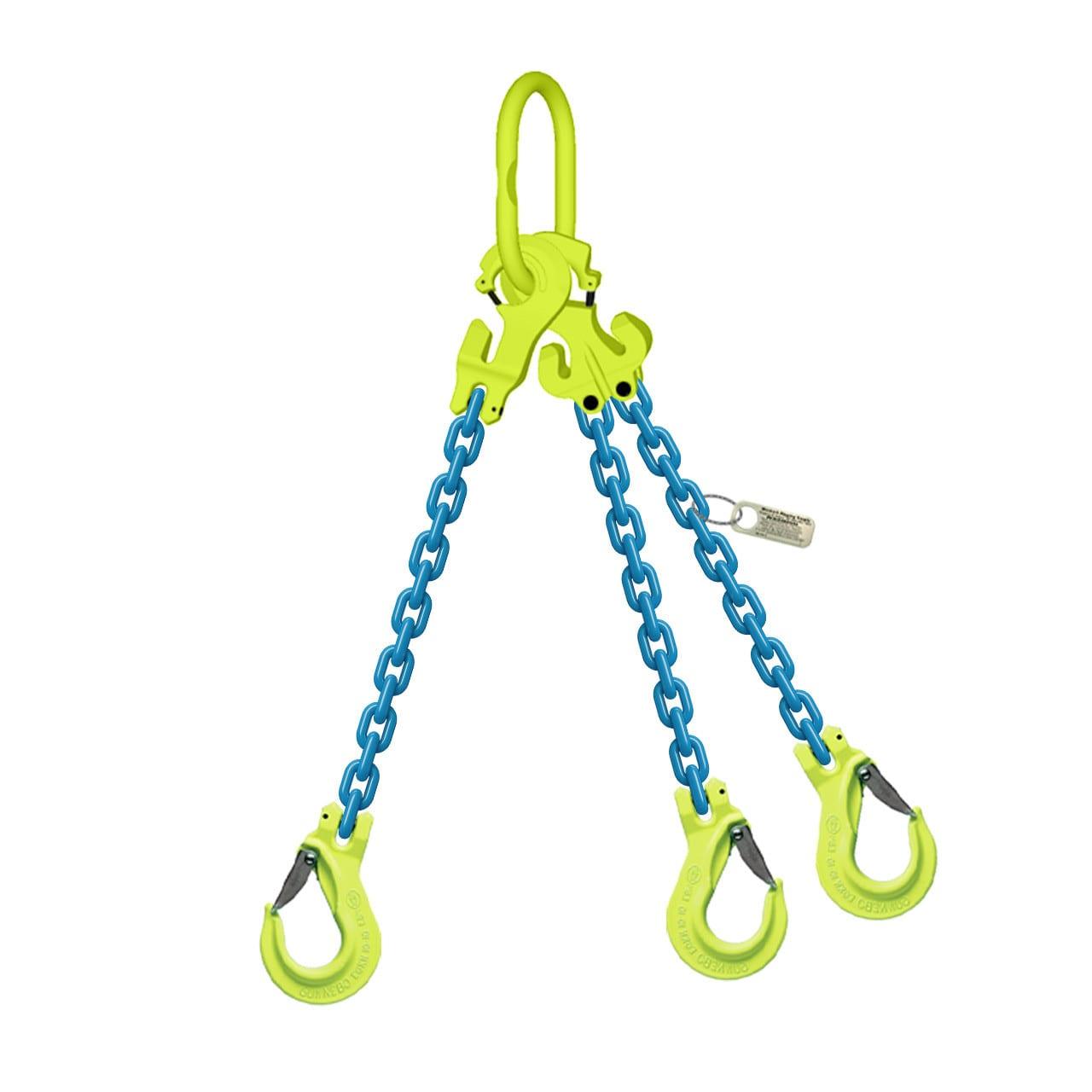
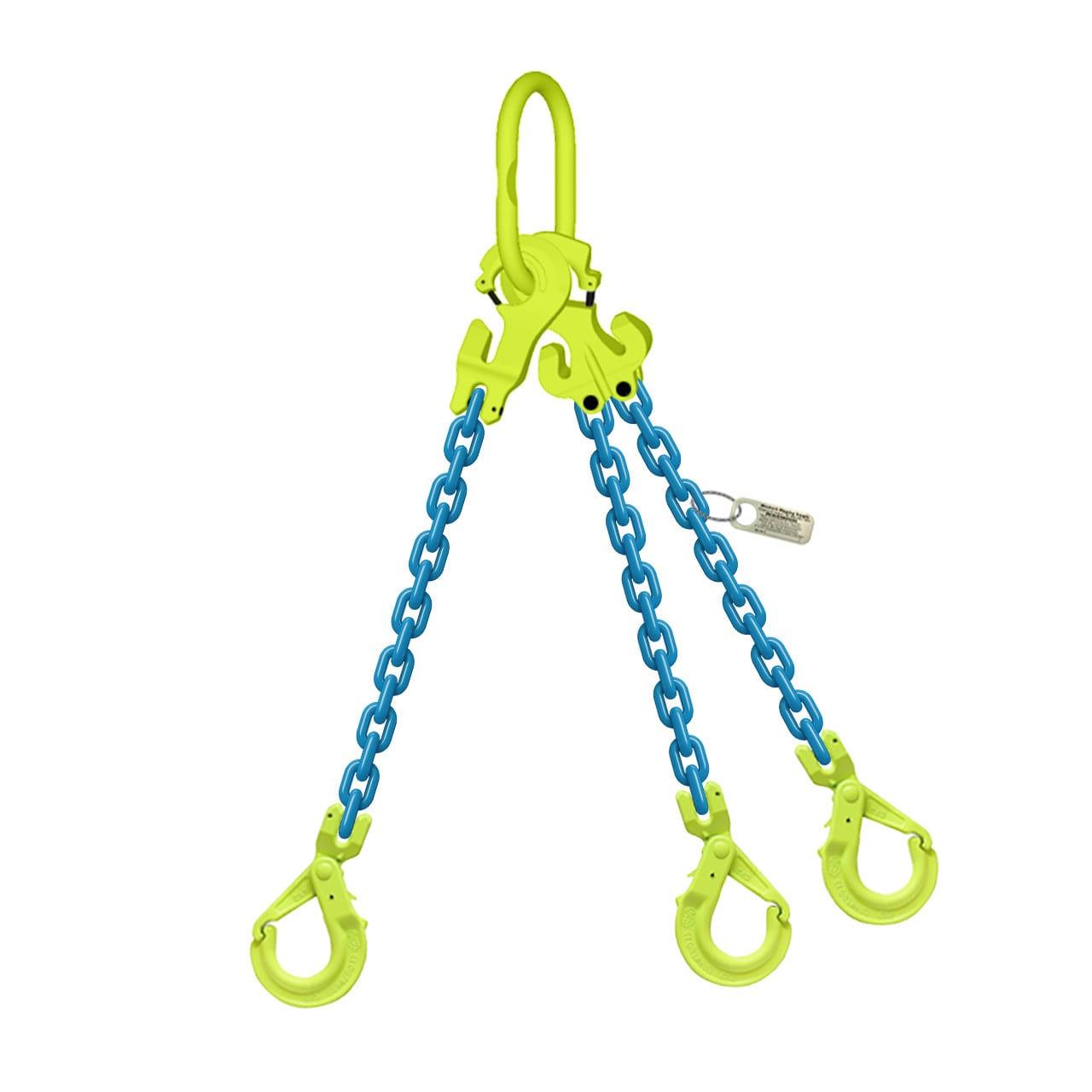
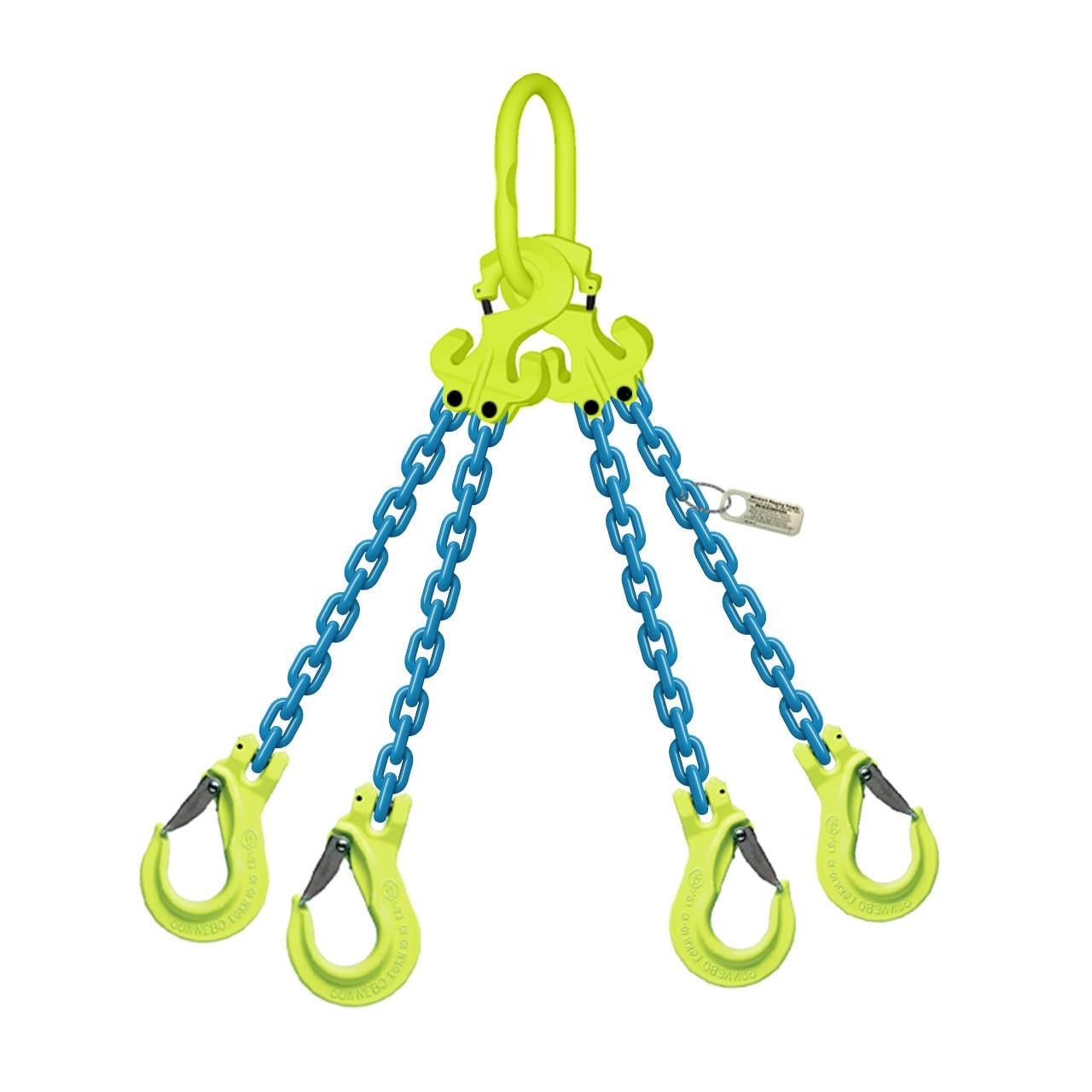
A Grade 100 chain sling or tie-back is assembled from chain, connecting links and a master link. Grade 100 alloy chain carries about 25% more working load than Grade 80 chain of the same size, so it allows a lighter assembly for the same duty. That benefit holds only if every component is rated for Grade 100. A Grade 80 connecting link in a Grade 100 assembly sets the rating of the whole assembly at Grade 80. Mechanical connecting links let an assembly be built or repaired without welding. The welded master link must be sized both for the number of legs and for the crane hook or shackle it will hang from. Like all heat-treated alloy chain, Grade 100 chain must never be galvanised, plated or heated after manufacture. See Grade 80 vs Grade 100 chain and our chain slings and fittings.
Third-party inspection at the supplier's works
Large clients and their contractors often name an inspection agency, such as TÜV SÜD, to inspect material at the supplier's works before dispatch. In a typical inspection call, the inspector checks the purchase order against the material, reviews the manufacturers' certificates, checks marking and identification, measures key dimensions, checks the galvanising and, where the plan asks for it, witnesses a proof-load test. The order is ready for the call only when every item is labelled, the certificates are collated in the order of the purchase order, and test equipment is available. Our in-house test house has a 1,200 T proof-load test bed. See inspection and certification and proof-load testing.
Lessons for buyers
- 1. Specify turnbuckles fully. Give the size, the end fittings at each end, the take-up length and the finish.
- 2. Keep the grade consistent. Every link, connector and master link in a Grade 100 assembly must be rated for Grade 100.
- 3. Size the master link for the hook. Check that it seats properly in the hook or shackle it will hang from.
- 4. Agree the inspection call early. Name the agency and the inspection test plan in the purchase order, and allow time for the call in the delivery date.
- 5. Ask for a certificate pack. One set of certificates, in purchase-order order, saves time at the inspection and at the site store.
Frequently asked questions
What did Sealinkers supply for the ISRO Propulsion Complex?
In early 2026, we supplied Tata Projects for works at the complex with galvanised turnbuckles up to 2¾ inch, Crosby Grade 100 alloy chain, connecting links and master links.
Was the material inspected before dispatch?
The material was offered for third-party inspection by TÜV SÜD at our Rabale facility before dispatch.
Who was Sealinkers' customer on this project?
Our customer was Tata Projects, which lists the ICET and SIET test facilities at Mahendragiri among its projects.
Do you supply large galvanised turnbuckles?
Yes. We supply galvanised turnbuckles in eye-and-eye and jaw-and-eye patterns, including large sizes such as 2¾ inch, with certificates.
Need inspected rigging for a regulated site?
Send us your list and the inspection requirement. We will supply turnbuckles, alloy chain and fittings with certificates, arrange the inspection call, and deliver anywhere in India. Contact Sealinkers.
Sources
- [1] Tata Projects, "Space & Nuclear", accessed 16 November 2026 — tataprojects.com
- [2] ISRO, "Tests commenced on Semicryogenic engine at IPRC, Mahendragiri", May 2023 — isro.gov.in
- [3] ISRO Propulsion Complex, "Invitation for Expression of Interest for augmentation to fluid systems at ICET for NGLV project", 23 December 2024 — isro.gov.in
Cover photo: the Semicryogenic Integrated Engine & Stage Test facility at the ISRO Propulsion Complex, Mahendragiri. Photo: Indian Space Research Organisation, via Wikimedia Commons, Government Open Data License – India. The photo is resized, and its use does not imply endorsement by ISRO.
Related Guides
Ready to put this into practice?
Every item ships certified, and our in-house test house backs it with the paperwork.
Sealinkers Engineering
Rigging & Lifting Engineering Team
Sealinkers has supplied and certified rigging, lifting and mooring equipment from Darukhana, Mumbai since 1977. These guides are written and checked by the engineers who specify this gear and proof-load it on our own test bed.
- in-house test house — proof-load bed from 1 to 1,200 tonnes
- Proof-load testing and certification in-house since 1977, Darukhana, Mumbai
- Class-society interfaces: IRS, ABS, LRS and BV