MEIL's polymer units at HPCL's Rajasthan Refinery
On 22 June 2026, HPCL Rajasthan Refinery Ltd (HRRL) declared its 9 MMTPA refinery-cum-petrochemical complex at Pachpadra, in Rajasthan's Balotra district, commercially operational. That was about nine days ahead of the 1 July target [1]. The complex is a joint venture of HPCL (74%) and the Government of Rajasthan (26%), and it carries 2.4 MMTPA of petrochemical capacity on top of the refinery [1].
Megha Engineering & Infrastructures (MEIL) has a major EPC role at HRRL. Its scope there includes a 980 KTPA polypropylene unit, a 59 KTPA Butene-1 unit with its conveying and bagging systems, and a single-train LLDPE/HDPE plant [2]. These are the units that turn the complex's olefins into polymer granules, so they sit at the end of the value chain that justifies a refinery of this size.
In 2025 and 2026, Sealinkers supplied heavy-lift rigging to two of MEIL's packages: EPCC-08, the LLDPE/HDPE swing unit, and EPCC-09, the polypropylene unit with the Butene-1 unit. The supply covered Usha Martin wire rope slings up to 150 t SWL, Crosby shackles up to a 500 t wide-body shackle, and a 150 t round sling. This case study describes the project, what we supplied, and what polymer-unit erection asks of heavy rigging. Supply details come from our own order and dispatch records. Project facts are cited to the public sources listed at the end.
The project: a greenfield refinery with a petrochemical core
- Owner. HPCL Rajasthan Refinery Ltd, a joint venture of Hindustan Petroleum and the Government of Rajasthan [1].
- Capacity. 9 MMTPA of crude, a mix of 7.5 MMTPA imported crude and 1.5 MMTPA Rajasthan crude, with 2.4 MMTPA of petrochemicals [1].
- Polymer units. MEIL lists the polypropylene unit, the Butene-1 unit with conveying and bagging, and the LLDPE/HDPE plant among its HRRL packages. It also lists a sulphur recovery unit, steam turbine generators and a 66 kV gas-insulated substation [2].
- Commercial operation. HRRL declared its commercial operations date as 22 June 2026, and lead lender SBI took the declaration on record the next day [1].
Heavy equipment on a desert site
Pachpadra is an inland site, so large vessels reached it by road on modular trailers. One logistics contractor moved 110 pieces for an EPC contractor on the project. Twenty-four of them weighed over 100 t, and the top piece weighed 260 t and measured 33 m long and 6.2 m wide. All of them moved on hydraulic axle trailers, using about 300 imported axles [3]. On the cracker and FCC side of the complex, Mammoet brought in two ring cranes for L&T. One set reactors, regenerators and fractionators. The other set a 127 m C3 rectifier, delivered in three parts, and a quench water tower [4].
Those lifts were on other packages. They show the scale of equipment the site handled, and the kind of rigging every contractor on it had to plan for.
How Sealinkers supported MEIL
For MEIL's EPCC-08 and EPCC-09 packages at HPCL's Rajasthan Refinery, our supply in 2025 and 2026 covered:
- Heavy wire rope slings. Usha Martin 6x36 wire rope slings from 60 mm to 103 mm, rated up to 150 t SWL.
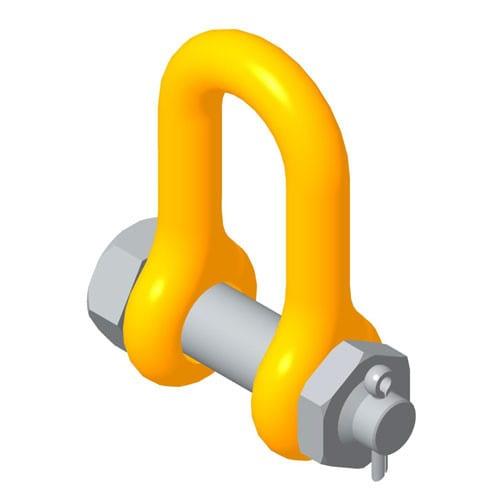
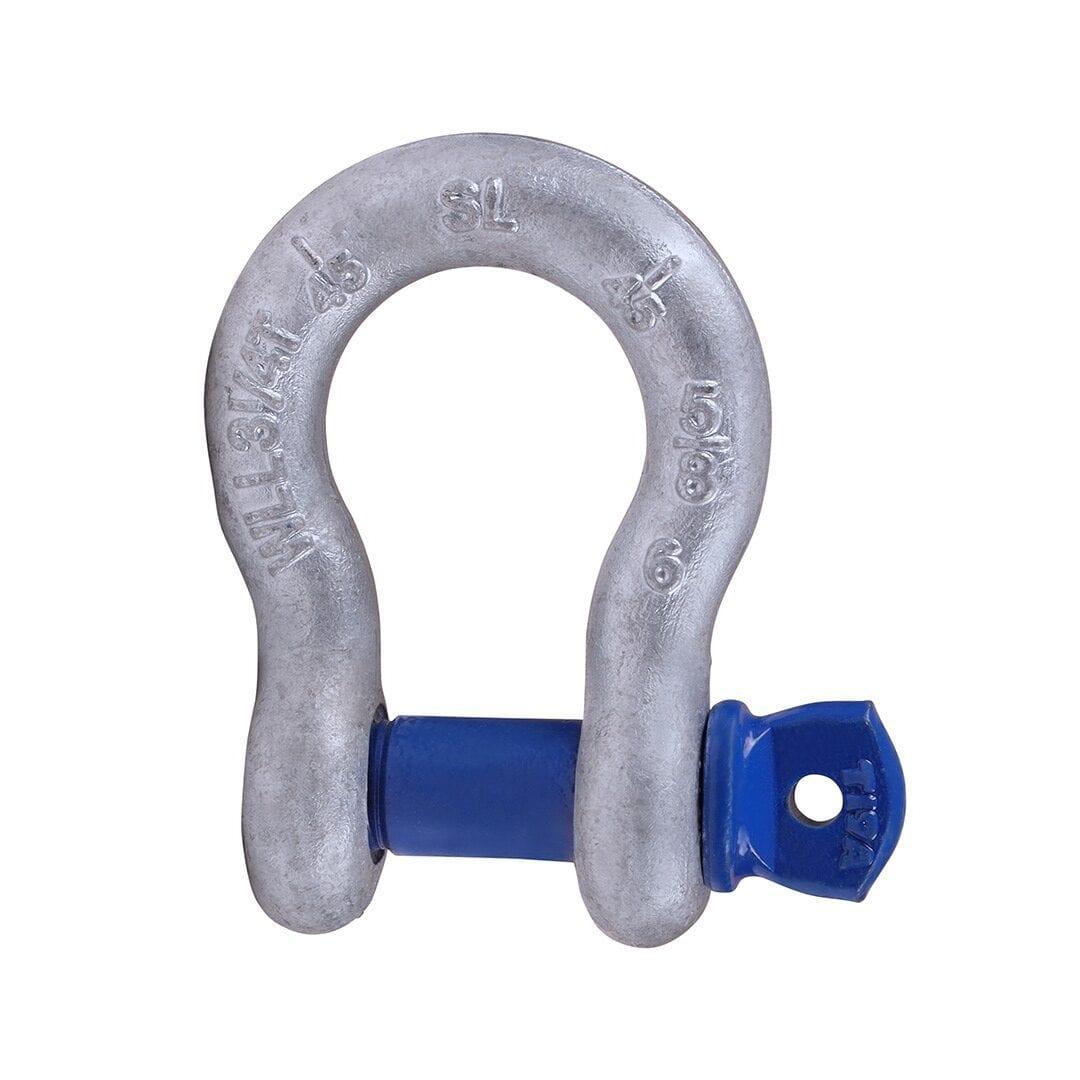
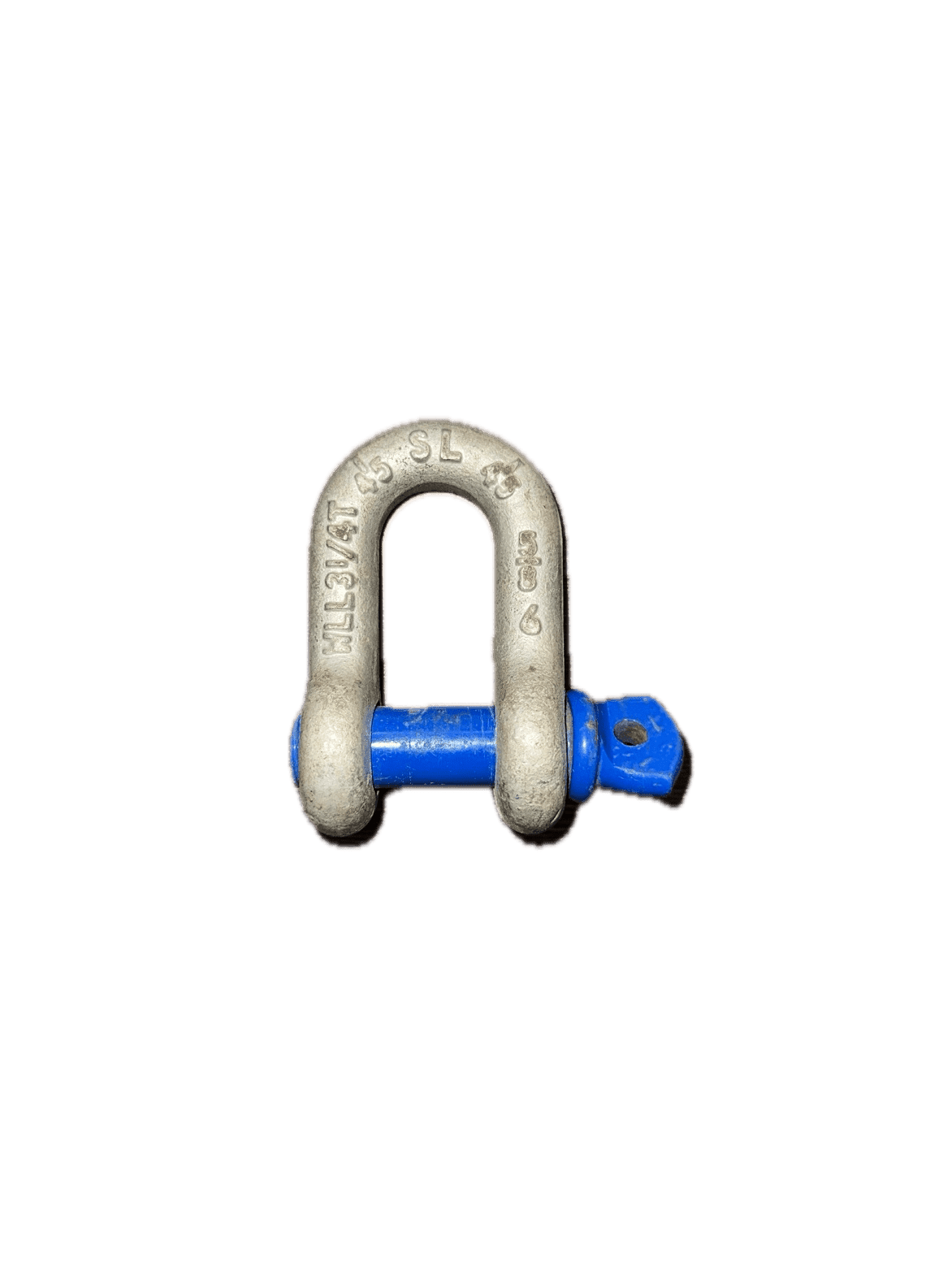
- Heavy shackles. Crosby shackles from 55 t upward: bolt-type bow shackles, alloy shackles in the 300 t and 400 t class, and a 500 t G-2160 wide-body shackle.
- Round sling. A 150 t polyester round sling from our sister company Zebra Weblift.
Slings of this size are made to order. Ours are made at our own works and proof-load tested at our in-house test house, which has a 1,200 T proof-load test bed. We supplied against MEIL's requirements. Which lift each item served is set by MEIL's own lift plans, and we do not describe them here.
What polymer-unit erection asks of rigging
A polypropylene or polyethylene unit contains heavy reactors and columns, but much of its equipment is tall, slender or finished: purge bins, product silos, degassing vessels, extruder trains and conveying pipework. That mix shapes the rigging.
Wide-body shackles at the top of a heavy rig
At 150 t and above, the shackle is chosen together with the sling it carries. A large wire rope sling or grommet passed over a standard shackle pin is bent around a small diameter, and a wire rope sling loses strength when it is bent tightly. A wide-body shackle has a broad bow that spreads the sling over a larger bearing surface. That keeps more of the sling's rated capacity available. This is why wide-body shackles turn up at the hook end of a heavy tandem or single-crane lift, where a 100 mm-class sling eye meets the shackle. Below the hook, bolt-type shackles are used where a rotating load could unscrew a screw pin. See our bow vs dee shackle guide and the shackle size selection guide.
Large slings come in matched sets
Most heavy vertical lifts use two or four sling legs. If one leg is longer than its partner, the load tilts and the shorter leg takes more than its share. For slings in the 90–103 mm range, buyers should order matched pairs or sets made to the same length tolerance from the same rope batch, and check the measured lengths on the test certificate. The rated capacity also depends on how the sling is used. A choke or a basket around a trunnion changes the working load, and so does the angle between the legs. Our guide to sling angle and SWL shows the factors.
Round slings for finished and coated equipment
Much of a polymer unit's equipment arrives painted, insulated or in stainless steel, and a steel sling can damage those surfaces. A polyester round sling carries its load on an endless core of parallel yarns inside a protective cover, so it can be laid against finished surfaces without marking them. At 150 t, a round sling is a large item. It needs edge protection over any sharp corner, a clear label showing its rating, and inspection of the cover before every lift. Polyester is also the right fibre for most refinery service, because it resists the mild acids found on chemical sites. See the webbing sling selection guide.
Heat and dust in western Rajasthan
The site's climate is hot, dry and dusty. Fine sand works into the strands of a wire rope sling, where it acts as an abrasive between the wires. Heat dries out the lubricant, which leaves the core and inner wires exposed. Slings that sit in the open between lifts should be stored off the ground and under cover, wiped down, and re-lubricated where the manufacturer allows it. Inspectors should look for internal wear and broken wires near the eyes and ferrules. See lubrication of wire ropes.
Lessons for buyers
- 1. Specify the sling and shackle together. Give the sling diameter and SWL, the shackle type and rating, and how the sling eye will sit on the shackle.
- 2. Order heavy slings early. A 100 mm-class sling is made to order, then proof-load tested and tagged before dispatch.
- 3. Ask for matched lengths. For multi-leg lifts, state the length tolerance and ask for measured lengths on the certificate.
- 4. Name the make where the client's list requires it. Polymer packages often run on an approved-make list for lifting gear.
- 5. Plan storage for the climate. Covered racks and a lubrication routine keep heavy slings in service longer on a desert site.
Frequently asked questions
Which refinery is this, and which packages did Sealinkers supply?
This is HPCL Rajasthan Refinery Ltd (HRRL) at Pachpadra, Balotra district, Rajasthan. We supplied Megha Engineering & Infrastructures (MEIL) for two packages: EPCC-08, the LLDPE/HDPE swing unit, and EPCC-09, the polypropylene unit with the Butene-1 unit.
Do you supply Crosby shackles above 200 t?
Yes. For MEIL at HRRL we supplied Crosby alloy shackles in the 300 t and 400 t class and a 500 t G-2160 wide-body shackle, alongside bolt-type shackles from 55 t.
How large are the wire rope slings you make?
For this project we supplied Usha Martin 6x36 slings from 60 mm to 103 mm, rated up to 150 t SWL. Our slings are made at our own works and proof-load tested on our in-house 1,200 T test bed.
Can a third party inspect heavy rigging before dispatch?
Yes. We can arrange inspection by the agency your client names, and class-society inspection by IRS, ABS, LRS or BV can also be arranged.
Planning heavy lifts on a refinery or petrochemical package?
Send us your lift plan or rigging list. We will propose matched slings, shackles and round slings with test certificates, and deliver to your site anywhere in India. Contact Sealinkers, or browse wire rope slings.
Sources
- [1] PSU Watch, "HPCL declares Rajasthan Pachpadra refinery commercially operational, days ahead of July 1 target", 23 June 2026 — psuwatch.com
- [2] Megha Engineering & Infrastructures, Hydrocarbons business unit, accessed 16 November 2026 — meil.in
- [3] The Heavy Lift Group, "MFC – HRRL Refinery Project at Barmer", 15 August 2022 — theheavyliftgroup.com
- [4] Hydrocarbon Engineering, "Mammoet to support development of refinery and petrochemical complex in India", 7 December 2021 — hydrocarbonengineering.com
Related Guides
Ready to put this into practice?
Every item ships certified, and our in-house test house backs it with the paperwork.
Sealinkers Engineering
Rigging & Lifting Engineering Team
Sealinkers has supplied and certified rigging, lifting and mooring equipment from Darukhana, Mumbai since 1977. These guides are written and checked by the engineers who specify this gear and proof-load it on our own test bed.
- in-house test house — proof-load bed from 1 to 1,200 tonnes
- Proof-load testing and certification in-house since 1977, Darukhana, Mumbai
- Class-society interfaces: IRS, ABS, LRS and BV