Cemindia Projects goes underground in Pune
Cemindia Projects Ltd, the contractor formerly known as ITD Cementation India, is building underground metro works in Pune, including the Swargate–Katraj underground extension in the south of the city [1]. It won that contract in 2025 against a field of large Indian contractors that included Larsen & Toubro, J Kumar Infraprojects, Tata Projects, an Afcons–SAM India joint venture and an HCC–Kalpataru joint venture [1]. Physical work was due to start in December 2025 [2], and in May 2026 casting of the precast tunnel lining segments began [3].
Since 2026, Sealinkers has supplied Cemindia's underground metro works in Pune with large-diameter wire rope, wire rope slings, endless slings and heavy shackles, including Crosby. This case study describes the project as public sources report it, what we supplied, and what underground metro work asks of rigging.
The project: twin bored tunnels and five underground stations
The Swargate–Katraj extension runs along the Satara Road corridor, a busy and congested route through south Pune. Once it is running, the trip between Swargate and Katraj is expected to fall from about 45 minutes to under 15 [1]. Public reports give the scale of the work:
- Length. A 5.46 km fully underground corridor, with about 9.7 km of twin bored tunnel [3].
- Stations. Five underground stations: Market Yard, Bibwewadi, Padmavati, Balajinagar and Katraj. Bibwewadi and Balajinagar were added when the tender was revised in 2025 [1][3].
- Tunnel lining. 6,993 precast concrete rings are to be cast. Each ring is 1.4 m wide and made of five segments plus a key, 275 mm thick, giving a tunnel of 6.35 m outside and 5.8 m inside diameter [3].
- Casting. Segment casting started on 12 May 2026 using eight purpose-made moulds [3].
Driving twin tunnels under a built-up arterial road, with five stations in a 5.46 km run, is demanding underground work. Starting segment production within about five months of the work order puts the contractor in a position to feed its tunnel boring machines once they are launched [2][3].
How Sealinkers supported Cemindia Projects
Since 2026, Sealinkers has supplied Cemindia Projects for its underground metro works in Pune. The supply has been heavy rigging rather than general tackle:
- Usha Martin steel wire rope from 16 mm up to 76 mm, in 6x36 steel-core construction, plus 36 mm rotation-resistant 35x7 rope supplied with a spliced solid-thimble eye.
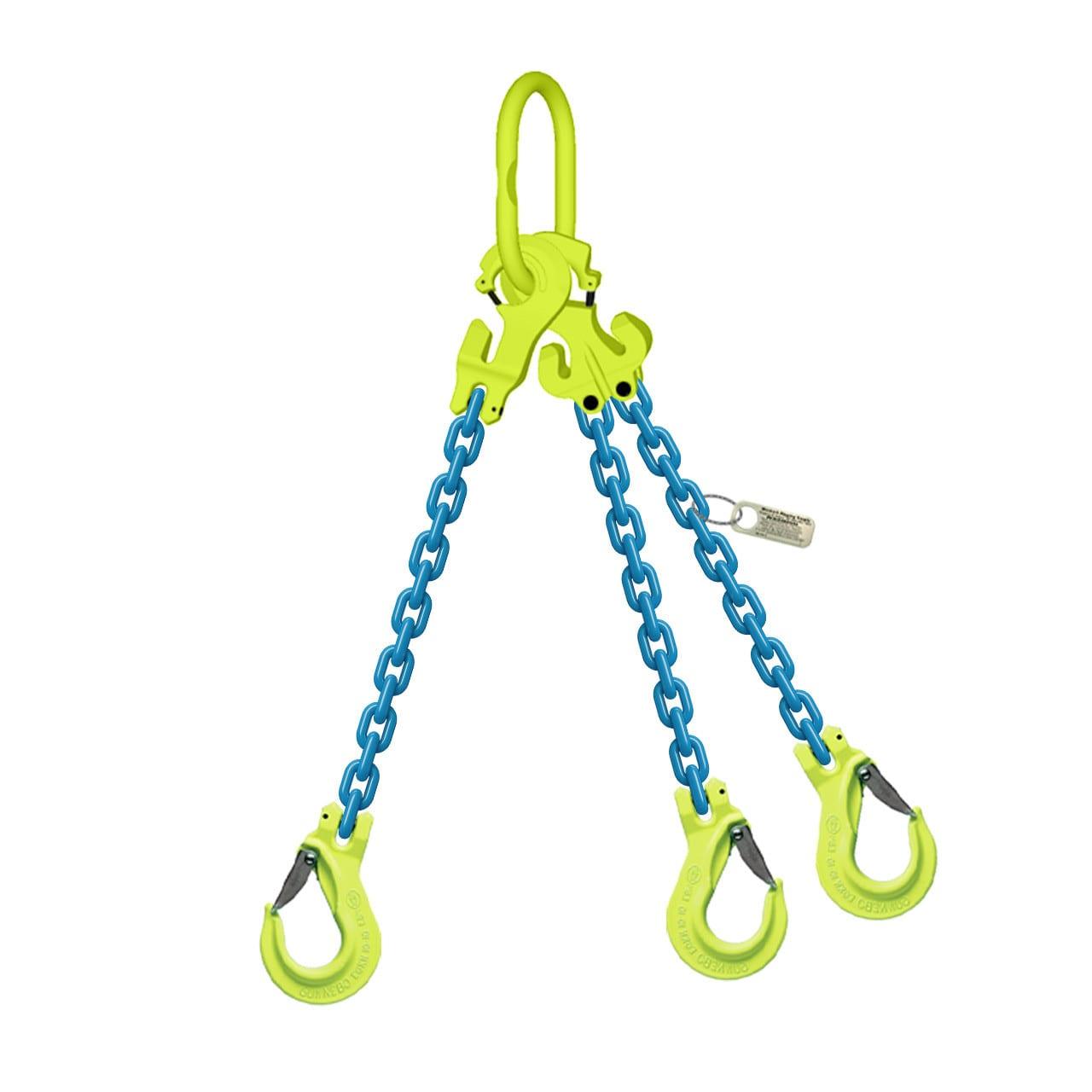
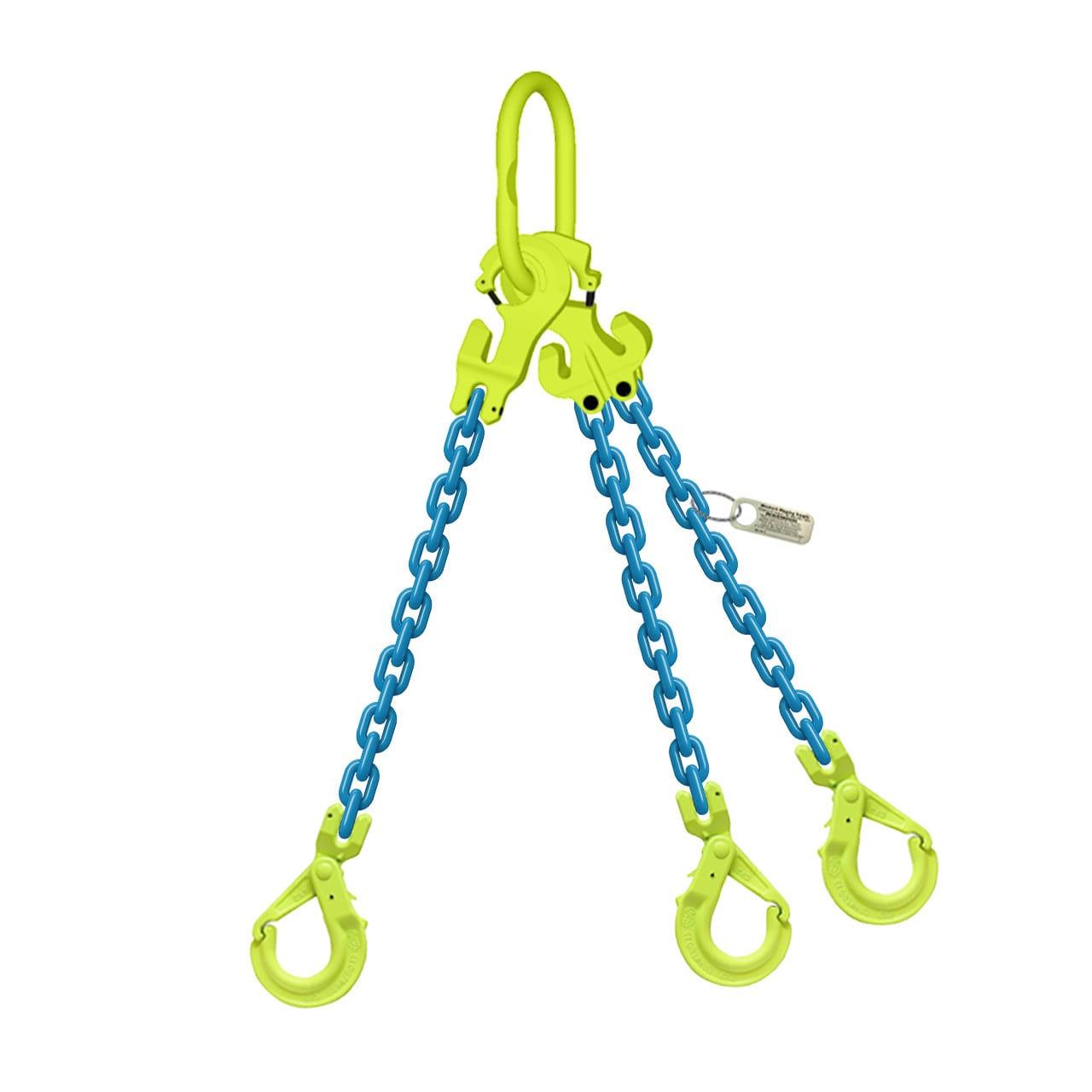
- Usha Martin wire rope slings from 16 mm to 42 mm, with SWLs up to 22 tonnes, in single and double-ferrule designs, including slings with thimbles at both ends.
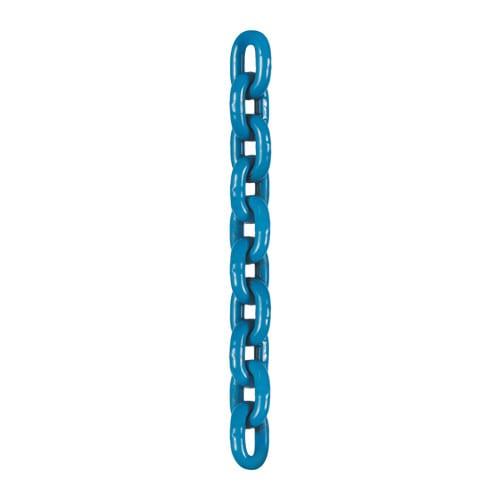
- Endless wire rope slings in 76 mm rope, made to a set circumference.
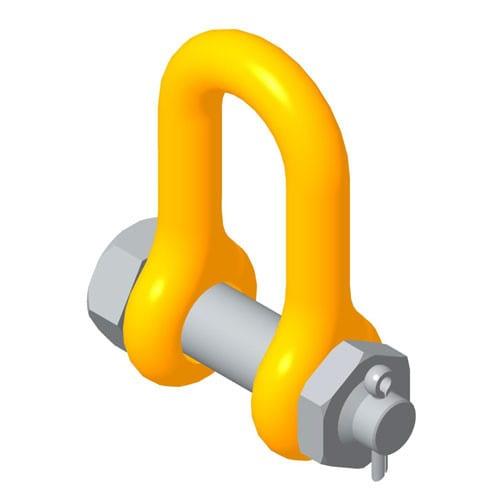
- Bolt-type shackles from 4.75 tonnes up to 85 tonnes, including the Crosby G-2130 bow shackle.
We supply against the contractor's list. Which lift each item served is set by Cemindia's own lift plans, and we do not describe them here.
What underground metro work asks of rigging
On a bored tunnel, the segment yard, the shaft and the tunnel run at the pace of the boring machine. With 6,993 rings of six pieces each on this project [3], segment handling is a lift repeated tens of thousands of times between the mould, the stack, the trailer and the shaft. Every set of slings and shackles in that chain wears in use, and a stoppage for want of a certified sling stops the ring build. Underground sites therefore keep spare sets of standard slings and shackles in their stores, alongside the heavy items held for special lifts.
Large-diameter rope and endless slings
Rope of 76 mm diameter is heavy-lift material. At that size, a sling is no longer a stock item: it is made to order, to a stated length or circumference, and proof-load tested before it leaves the works. An endless (grommet-style) sling has no eyes; the load can bear anywhere on the loop, so the sling can be turned between lifts to move the bend onto fresh rope. It also works in choke and basket hitches around compact, heavy items where headroom is short and a long eye-and-eye sling would not fit, which is common on an underground site. Our slings are made at our own works; see wire rope slings.
Rotation-resistant rope where a single fall hangs deep
A conventional six-strand rope tends to unlay and spin when it carries a load on a single fall, and the effect grows with the length of rope below the sheave. Rotation-resistant constructions such as 35x7 have inner and outer strands laid in opposite directions, so the torques largely cancel. That makes them the usual choice where a load hangs on a long single fall, for example when lowering into a deep excavation. A spliced eye with a solid thimble protects the rope at the termination, where it bears on a pin or shackle. Our wire rope construction guide explains the families.
Bolt-type shackles for heavy and long-standing rigs
A screw-pin shackle relies on the pin staying screwed home. In a rig that stays in place for a long time, or where the sling can rotate the pin, it can back out. A bolt-type shackle such as the Crosby G-2130 uses a bolt, nut and split pin, so the pin cannot unscrew. That is why heavy and semi-permanent rigging is usually specified with bolt-type shackles. At 85 tonnes, the shackle body and pin must also suit the hook, the master link or the lifting lug it connects to. Our shackle size selection guide covers pin diameter, jaw width and side-loading.
Lessons for buyers
- 1. Order heavy slings early. An endless sling in 76 mm rope or any large-diameter sling assembly is made to order and tested. Put it on the procurement plan with the lift it serves, not after the crane arrives.
- 2. Specify the make where the client requires it. State the brand and model on the purchase order (for example, Crosby G-2130) so the supply matches the approved-make list as written.
- 3. Use rotation-resistant rope on long single falls. State the construction (35x7, for example) and the termination on the order, not just the diameter.
- 4. Choose bolt-type shackles for long-standing rigs. Use screw-pin shackles where they are fitted and removed often, and bolt-type where the rig stays in place.
- 5. Keep certificates traceable. On a multi-year tunnel job, every sling and shackle should have its certificate and identification on file.
Frequently asked questions
What has Sealinkers supplied to Cemindia in Pune?
Since 2026 we have supplied Cemindia Projects' underground metro works in Pune with wire rope from 16 mm to 76 mm, wire rope slings up to 42 mm, endless slings in 76 mm rope, and shackles up to 85 tonnes including Crosby G-2130.
What is the difference between an endless sling and an eye-and-eye sling?
An eye-and-eye sling has a fixed eye at each end and fixed bearing points. An endless sling is a continuous loop, so it can be rotated between lifts to spread wear and used in choke or basket hitches around compact loads.
Do you test large slings before dispatch?
Yes. Slings are proof-load tested at our in-house test house on a 1,200 T proof-load test bed and dispatched with test certificates. Third-party and class-society inspection (IRS, ABS, LRS or BV) can be arranged. See proof-load testing.
Can Sealinkers deliver to sites in Pune and elsewhere?
Yes. Sealinkers has been based at Darukhana, Mumbai, since 1977 and delivers across India.
Planning an underground package?
Send us your lifting plan or tackle list for a launch shaft, segment yard or station box, and we will propose rope, slings and shackles to suit, with certificates. Contact Sealinkers.
Sources
- [1] Construction World, report on Cemindia winning the Pune metro underground extension contract, 15 October 2025 — constructionworld.in
- [2] Swarajya, "Major Relief For South Pune: Construction To Begin On Swargate–Katraj Metro Extension Next Week", 1 December 2025 — swarajyamag.com
- [3] Free Press Journal, "Casting Work Begins For Underground Metro Tunnel Segments On Swargate-Katraj Route", 13 May 2026 — freepressjournal.in
Related Guides
Ready to put this into practice?
Every item ships certified, and our in-house test house backs it with the paperwork.
Sealinkers Engineering
Rigging & Lifting Engineering Team
Sealinkers has supplied and certified rigging, lifting and mooring equipment from Darukhana, Mumbai since 1977. These guides are written and checked by the engineers who specify this gear and proof-load it on our own test bed.
- in-house test house — proof-load bed from 1 to 1,200 tonnes
- Proof-load testing and certification in-house since 1977, Darukhana, Mumbai
- Class-society interfaces: IRS, ABS, LRS and BV