Mumbai Metro Line 2B: a cable-stayed metro bridge, an elevated depot and a first phase in service
On 7 April 2026 the first phase of Mumbai Metro Line 2B, from Mandale to Diamond Garden in Chembur, was inaugurated, and regular passenger services began the next morning [1][2]. The 5.53 km stretch has five elevated stations, and its trains are maintained at the new Mandale depot, which is built on two levels and designed for 72 trains [1][5]. By August 2026 Chembur station had opened as well, taking the line to six working stations [6]. The rest of the corridor, west through Kurla and the Bandra Kurla Complex (BKC) to DN Nagar in Andheri, is still being built.
Behind those openings is a lot of difficult construction. The Mumbai Metropolitan Region Development Authority (MMRDA) is the owner. J. Kumar Infraprojects holds package C-101, the 12.8 km western section from DN Nagar to BKC with ten stations [3]. That package includes the Shunya bridge, a 130 m cable-stayed metro bridge over the Vakola Nala in BKC [4]. Between 2024 and 2026, Sealinkers and its sister company Zebra Weblift supplied lifting and rigging equipment to several of the contractors building the line. This case study covers the project, what we supplied, and what the line's casting yards and depot works ask of lifting gear.
The project: an elevated line across Mumbai's eastern and western suburbs
Line 2B runs from DN Nagar, where it meets the operating Line 2A, to Mandale in Mankhurd, through BKC, Kurla and Chembur [2][6]. The civil works have been split into packages. In 2020 MMRDA re-tendered the unfinished western and central sections after the earlier contracts were ended [3]. J. Kumar Infraprojects won C-101 and was awarded the contract in 2021 [3][4].
- C-101, DN Nagar to BKC. 12.824 km of elevated viaduct and ten stations, from ESIC Nagar to ILFS [3].
- The Shunya bridge. A cable-stayed span with one steel-composite pylon, an 80 m main span and a 50 m anchor span. The deck is built from 35 precast segments, each 12.9 m wide. Segment casting started in February 2024, and pylon erection began in October 2024 [4].
- Mandale depot. A 32-hectare elevated depot with a G+3 depot control centre, a 965 m test track and four shunting necks. Its engineers had to deal with coastal soil and build access roads for heavy machinery [5].
The Shunya bridge is unusual for an Indian metro. Most of the viaduct is standard precast spans on single piers. Here the deck had to cross a nala in one of the city's busiest business districts, so J. Kumar is carrying it on stay cables from a single pylon [4].
How Sealinkers supported the Line 2B contractors
Our supply to Line 2B went to four sites:
- J. Kumar Infraprojects: the C-101 casting yard at the MMRDA grounds in BKC, supplied from 2025 through 2026. Zebra Weblift webbing slings went to the same Line 2B site in 2026.
- VSL India: its casting yard on the Line 2B project.
- NCC Ltd: the Metro Bhavan works at the Mandale depot.
- Ahluwalia Contracts: the Mandale depot works, supplied in late 2024.
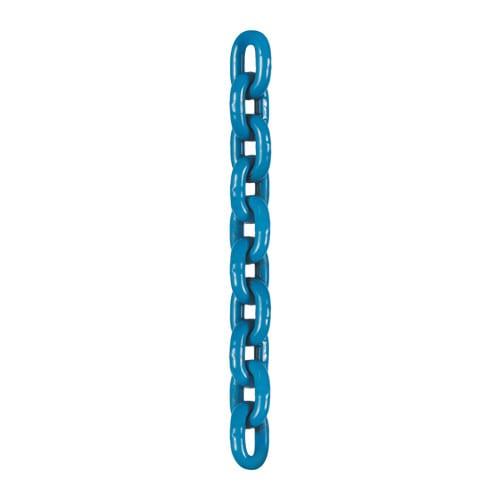
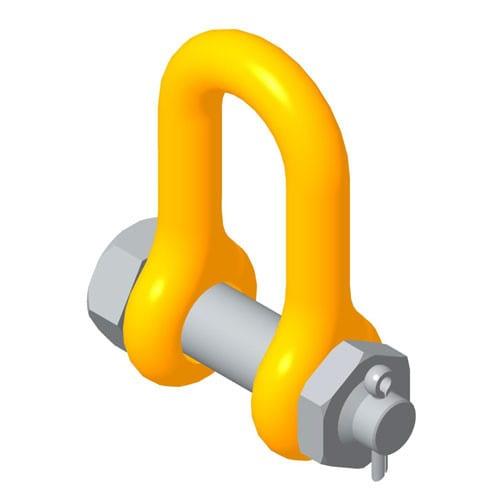
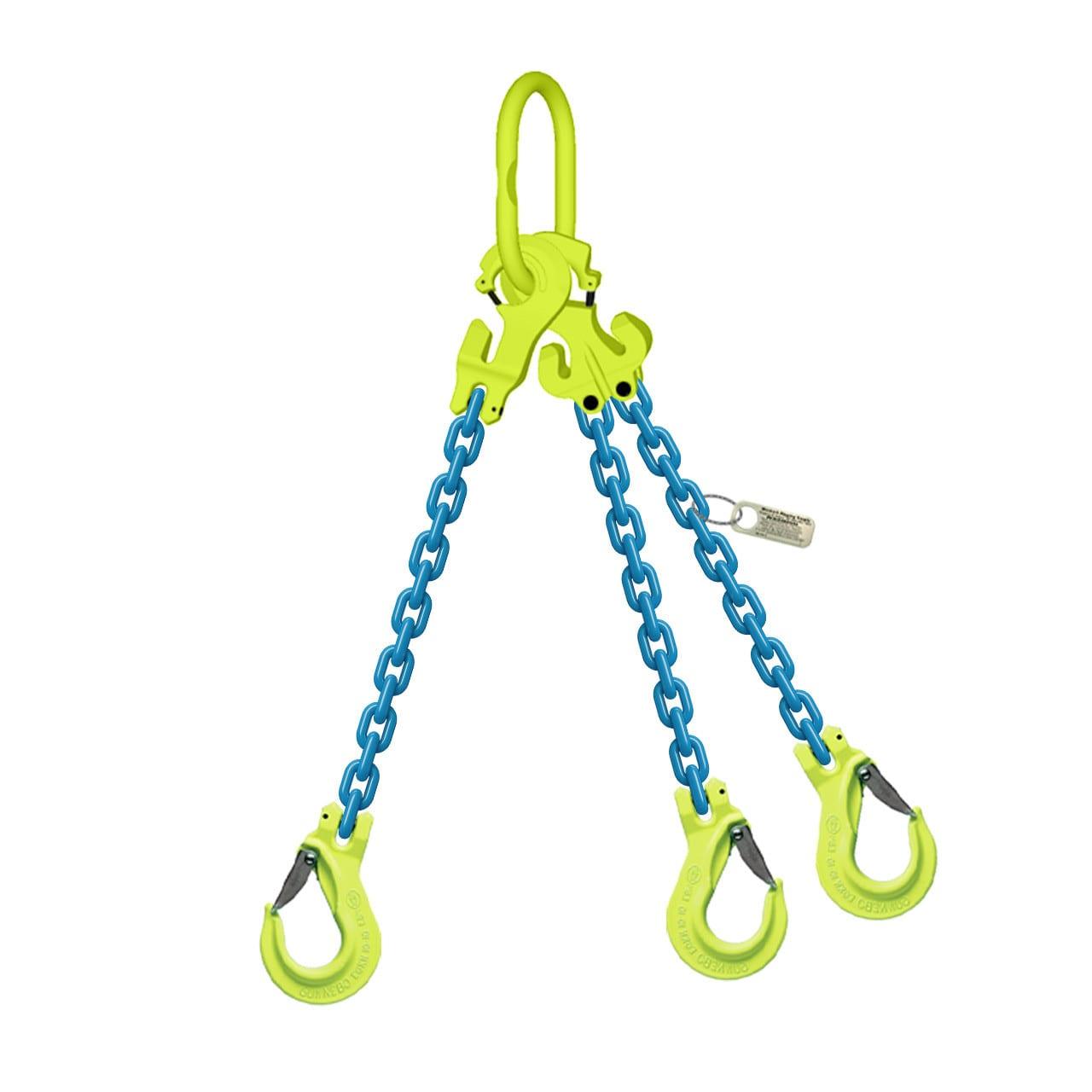
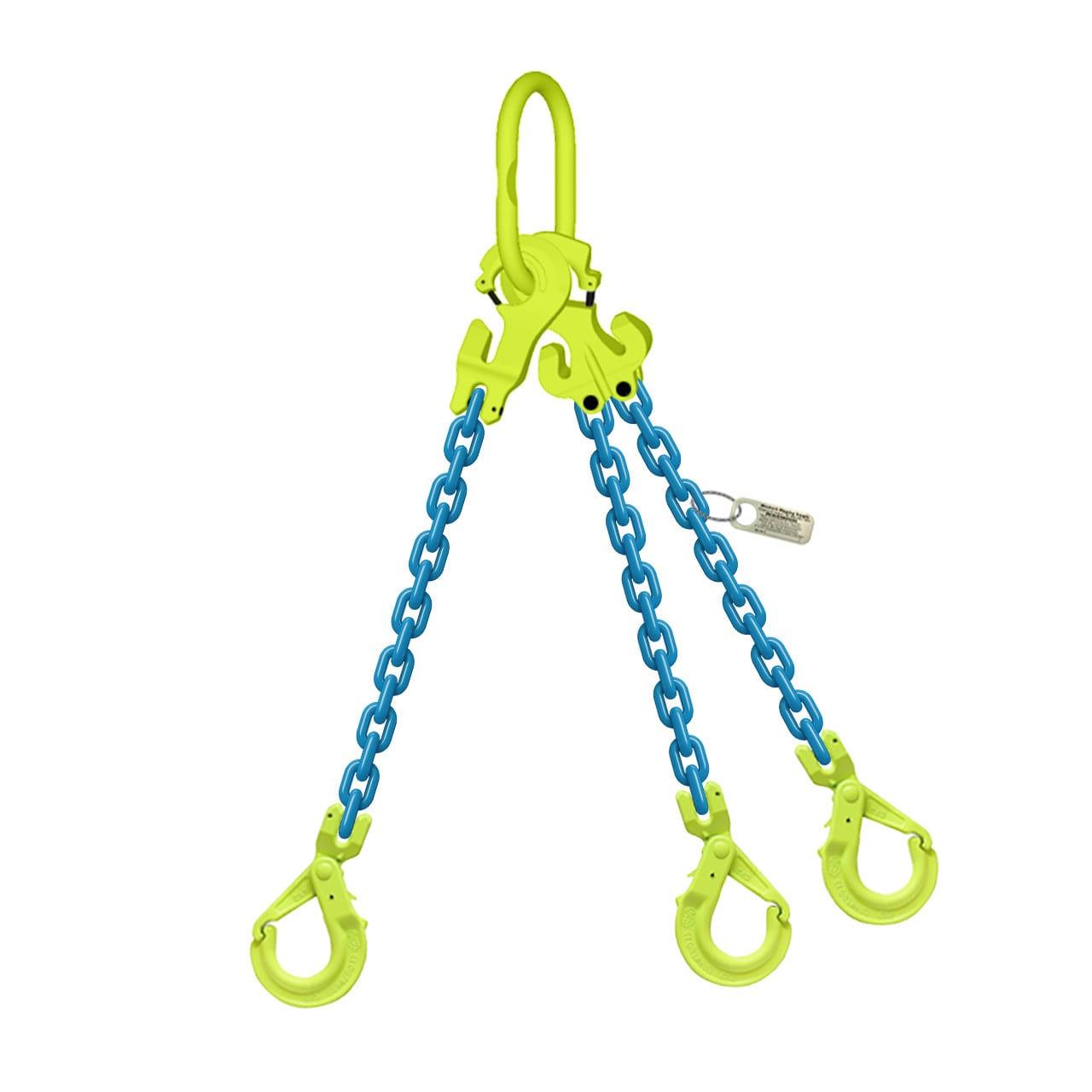
The equipment covered wire rope slings, alloy chain slings, shackles, steel wire rope and Zebra polyester webbing slings, along with lighter hoisting gear. Every sling is made at our own works and proof-load tested in our in-house test house before dispatch. We supply against each contractor's list. The contractor's own lift plans decide which item serves which lift, and we do not describe those plans here.
What Line 2B asks of its rigging
A casting yard in the middle of BKC
A metro casting yard works like a factory: cast, cure, strip, turn, stack, load out. Each precast element is lifted several times before it reaches a pier. The C-101 yard does this inside the MMRDA grounds in BKC, with an office district on every side, so space, traffic and working hours are all tight. For the rigging, that means three things:
- Matched sets, not single slings. Two- and four-leg lifts need legs of the same length and construction, or one leg ends up carrying most of the load. Order and replace slings as sets.
- Shackles sized for the lifting anchors. The shackle pin has to fit the cast-in anchor or lifting eye, and the bow has to sit without side-loading. Check both on the first casting, not when the first element is ready to lift.
- Planned replacement. Yard slings do the same lift many times a week. Kinks, broken wires and crushed eyes appear faster than on a site sling, so inspection intervals should match the actual number of lifts.
Precast segments for a cable-stayed span
Segments for a cable-stayed deck are cast to tight tolerances because each one must line up with its neighbour before the stays are stressed. The Shunya bridge segments are 12.9 m wide [4], which is wider than a typical metro box segment. In general practice, a wide segment is lifted through a spreader or lifting beam so the legs stay close to vertical and the sling angle does not cut into capacity. If legs are allowed to splay, the load on each leg rises quickly. See sling angle effects on SWL for the factors. Where a finished concrete edge or a coated surface must not be marked, polyester webbing slings with wear sleeves are the usual choice. Steel slings stay on the raw lifts.
Depot steelwork and fit-out at Mandale
An elevated depot is a steel and concrete structure carrying track, inspection pits, sheds and a control building, on ground that the depot's engineers describe as coastal soil [5]. In general practice, the steel and building works there use a different mix of rigging from a casting yard: lighter wire rope and chain slings in volume, shackles for temporary attachments, webbing slings for painted members and cladding, and lever hoists or chain blocks to pull members into line before bolting. Coastal air is hard on steel rigging. Ungalvanised slings stored in the open rust at the core and lose capacity, so the stores need covered storage and regular lubrication. Our notes on the lubrication of wire ropes apply.
Lessons for buyers on an elevated metro line
- 1. Split the order by duty. A casting yard, a launching site and a depot build need different sling sets. One combined order for "metro slings" leaves each site short of what it actually uses.
- 2. Keep the certificate with the sling. Each sling and shackle should arrive with its test certificate and an identification tag that matches it. Our guide on how to read a test certificate shows what to check on receipt.
- 3. Protect finished faces. Precast elements and painted steel are expensive to repair. Write webbing slings and sleeves into the lift plan wherever a surface must stay clean.
- 4. Budget for wear in a busy yard. Yard slings are consumables. Plan replacement sets from the expected number of lifts, not from breakdowns.
- 5. State the make on the purchase order. Where the client keeps an approved-make list, name the brand and construction on the PO so the supply matches it as written.
Frequently asked questions
Which Line 2B sites did Sealinkers supply?
J. Kumar Infraprojects' C-101 casting yard at the MMRDA grounds in BKC, VSL India's casting yard on the Line 2B project, NCC's Metro Bhavan works at Mandale, and Ahluwalia Contracts' Mandale depot works. Zebra Weblift also supplied webbing slings to J. Kumar's Line 2B site.
What lifting equipment does a metro casting yard need most?
Matched two- and four-leg wire rope or chain slings, shackles that fit the cast-in lifting anchors, wire rope for gantry hoists, and webbing slings for finished elements. Replacement sets matter because the same lift is repeated many times.
Are your slings tested before dispatch?
Yes. Our slings are made at our own works and proof-load tested in our in-house test house, which has a 1,200 T proof-load test bed. Each item ships with its test certificate. Class-society inspection by IRS, ABS, LRS or BV can be arranged where a client requires it.
Can you supply sites outside Mumbai?
Yes. Sealinkers has worked from Darukhana, Mumbai, since 1977 and delivers across India.
Planning a casting yard or depot package?
Send us your lift list or bill of quantities and we will propose slings, shackles and rope to suit, with certificates. Contact Sealinkers, or browse our wire rope slings and webbing slings.
Sources
- [1] PSU Watch, Maharashtra CM inaugurates Mumbai Metro Lines 9, 2B, 7 April 2026 — psuwatch.com
- [2] Indian Infrastructure, Partial stretches of Mumbai Metro Lines 2B and Line 9 inaugurated, 8 April 2026 — indianinfrastructure.com
- [3] The Metro Rail Guy, J Kumar and NCC win Mumbai Metro Line-2B's pending work, 24 November 2020 — themetrorailguy.com
- [4] The Metro Rail Guy, Mumbai Metro's Shunya Bridge starts taking shape at Vakola Nala, 6 October 2024 — themetrorailguy.com
- [5] NativePlanet, The Mandale depot: Mumbai's new 32-hectare hub for Metro Line 2B operations, 15 November 2025 — nativeplanet.com
- [6] Free Press Journal, SCLR Phase-II opens, Chembur metro station starts services, 13 August 2026 — freepressjournal.in
Related Guides
Ready to put this into practice?
Every item ships certified, and our in-house test house backs it with the paperwork.
Sealinkers Engineering
Rigging & Lifting Engineering Team
Sealinkers has supplied and certified rigging, lifting and mooring equipment from Darukhana, Mumbai since 1977. These guides are written and checked by the engineers who specify this gear and proof-load it on our own test bed.
- in-house test house — proof-load bed from 1 to 1,200 tonnes
- Proof-load testing and certification in-house since 1977, Darukhana, Mumbai
- Class-society interfaces: IRS, ABS, LRS and BV