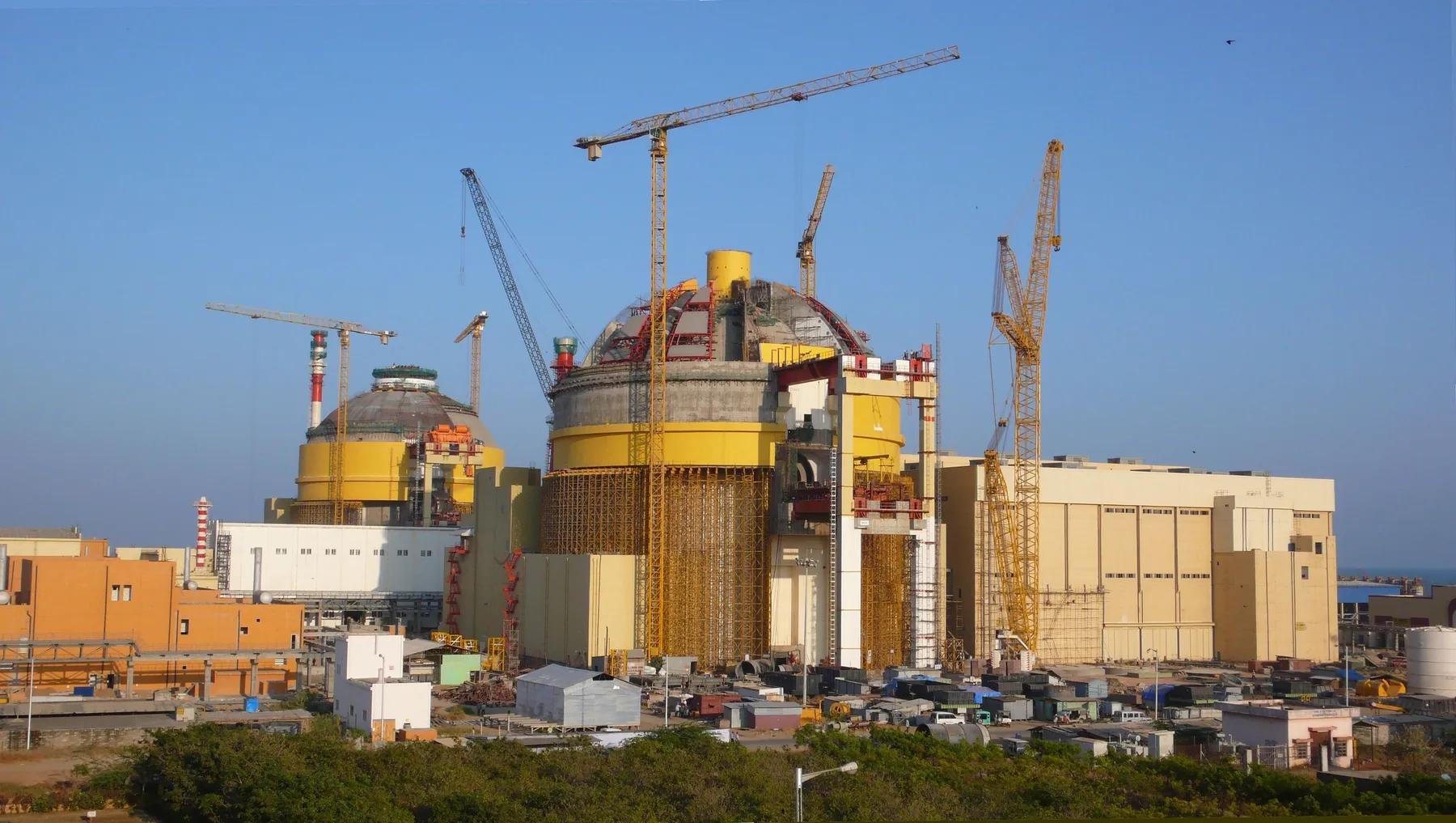
L&T builds the seafront works for Kudankulam's second phase
Kudankulam, on the southern tip of Tamil Nadu, is India's VVER nuclear site. Units 1 and 2, both 1,000 MWe VVERs, entered commercial operation in 2014 and 2017 [1]. Construction of Units 3 and 4 began with the first pour of structural concrete on 29 June 2017 [2]. On 25 April 2026, Unit 3 began its "spillage to open reactor" phase, which flushes the safety systems and main coolant pipelines ahead of later commissioning steps. Unit 4 is at an advanced stage of construction [3].
Larsen & Toubro has been one of the main builders of this second phase. Its packages at Units 3 and 4 include the hydro-technical structures, the main plant civil works and the main plant electrical package [4]. L&T has since won further work at Units 5 and 6 as well [1]. The hydro-technical structures are the marine side of a coastal plant: the works that bring seawater in to cool the plant and return it to the sea.
Since late 2024, Sealinkers has supplied L&T Construction's Hydro Technical Structures (HTS) package for Kudankulam Units 3 & 4. The supply covers U2-grade stud link anchor chain with swivels, 3x48 crane wire rope, shackles up to 85 t, Grade 80 alloy chain, webbing slings and a 15 t electric winch. We have supplied L&T at Kudankulam since 2019. This case study describes the project, what we supplied, and what marine and crane work at a seafront site asks of rigging. Supply details come from our own order and dispatch records. Project facts are cited to the public sources listed at the end.
The project: four more VVERs on the Tamil Nadu coast
- Owner and design. NPCIL owns the plant. The Russian ASE Group is the general designer and general contractor for the VVER units, which are a repeat of the Units 1 and 2 design with improvements [2].
- Units 3 and 4. Structural concrete was first poured on 29 June 2017 [2]. The Unit 3 reactor pressure vessel was installed in April 2022 [5].
- Commissioning. Unit 3 entered its "spillage to open reactor" phase on 25 April 2026, starting individual functional testing of the primary system [3].
- Units 5 and 6. Construction started in 2021. In September 2025, L&T won the mechanical package for these units, which includes seawater systems and the polar and trestle cranes [1].
- Site capacity. When all six units are complete, the site will have 6,000 MW of installed capacity [3].
What hydro-technical structures involve
On a coastal plant, hydro-technical structures typically cover the seawater intake, the pump house forebays, the channels and conduits that carry cooling water, the outfall and the marine protection works around them. Much of this is built at or below sea level, in water or against it. That means floating plant, marine moorings, heavy cranes working along the shore, and a steady programme of pulling, lowering and placing in a salt-laden environment.
How Sealinkers supported L&T
For L&T Construction's HTS package at Kudankulam Units 3 & 4, our supply since late 2024 has included:
- Marine chain. U2-grade stud link anchor chain in 40 mm and 58 mm, with swivel assemblies.
- Crane rope. Usha Martin 3x48 crane wire rope in 25.4 mm and 26 mm.
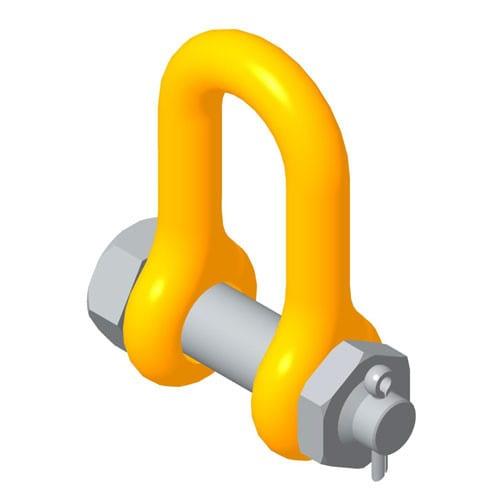
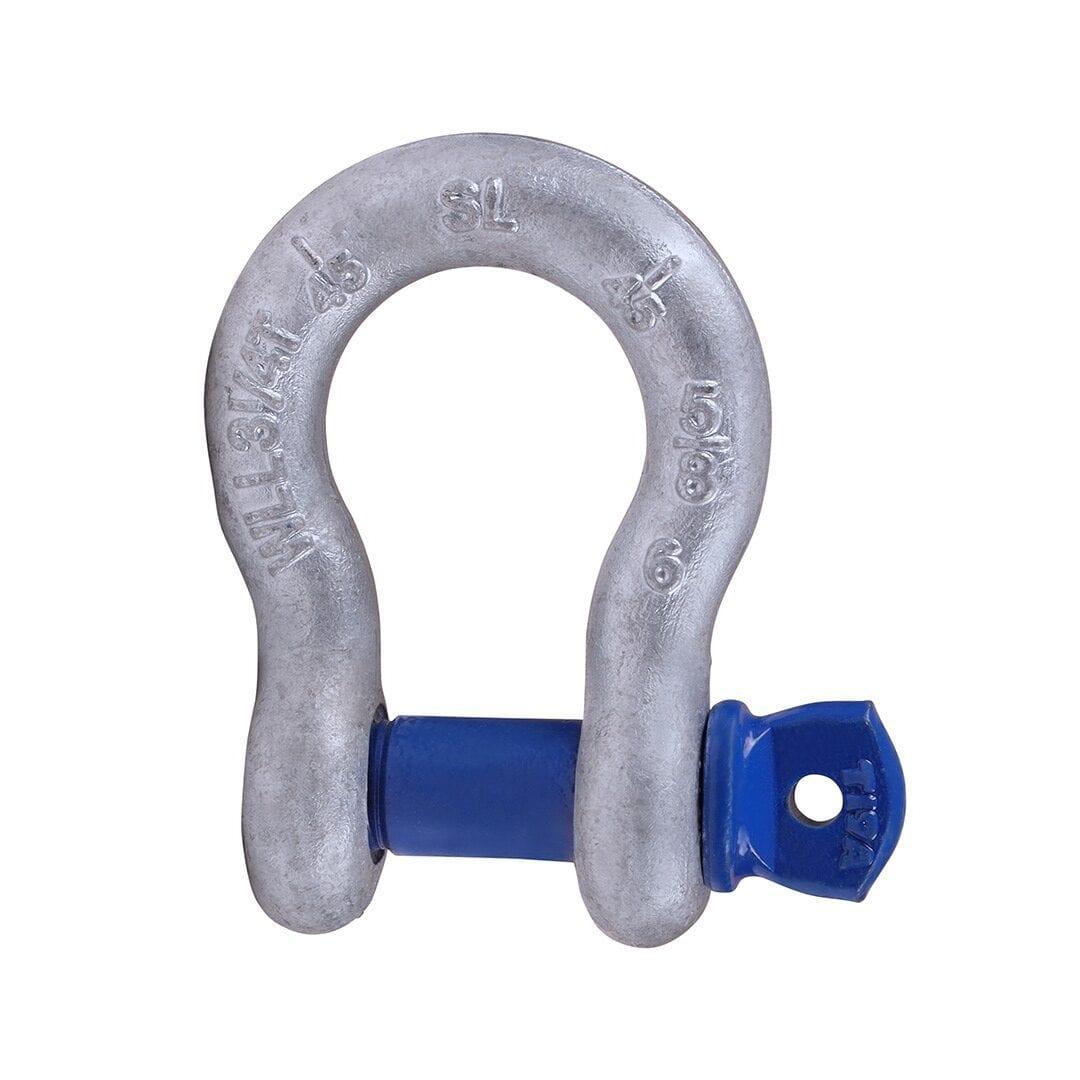
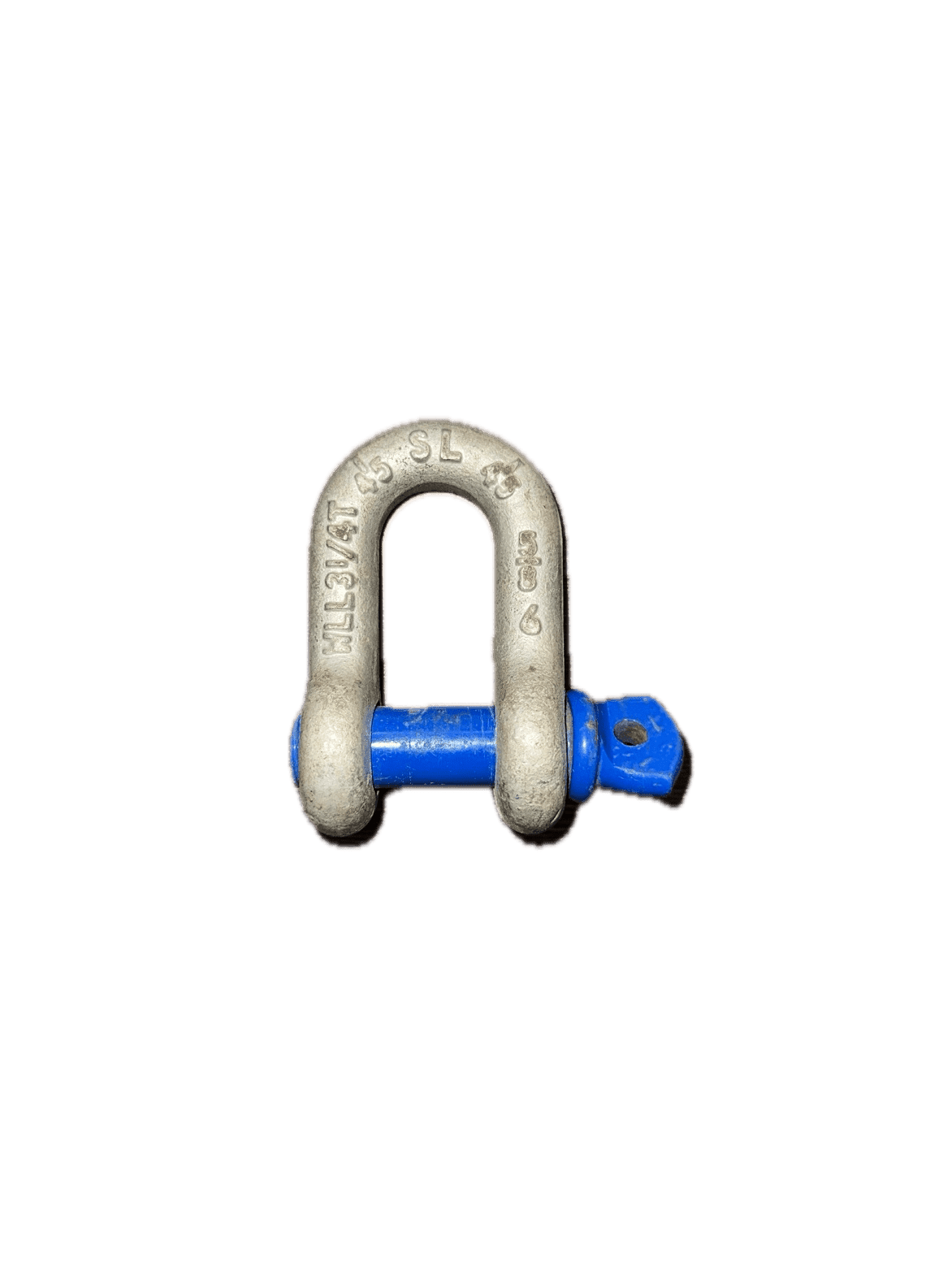
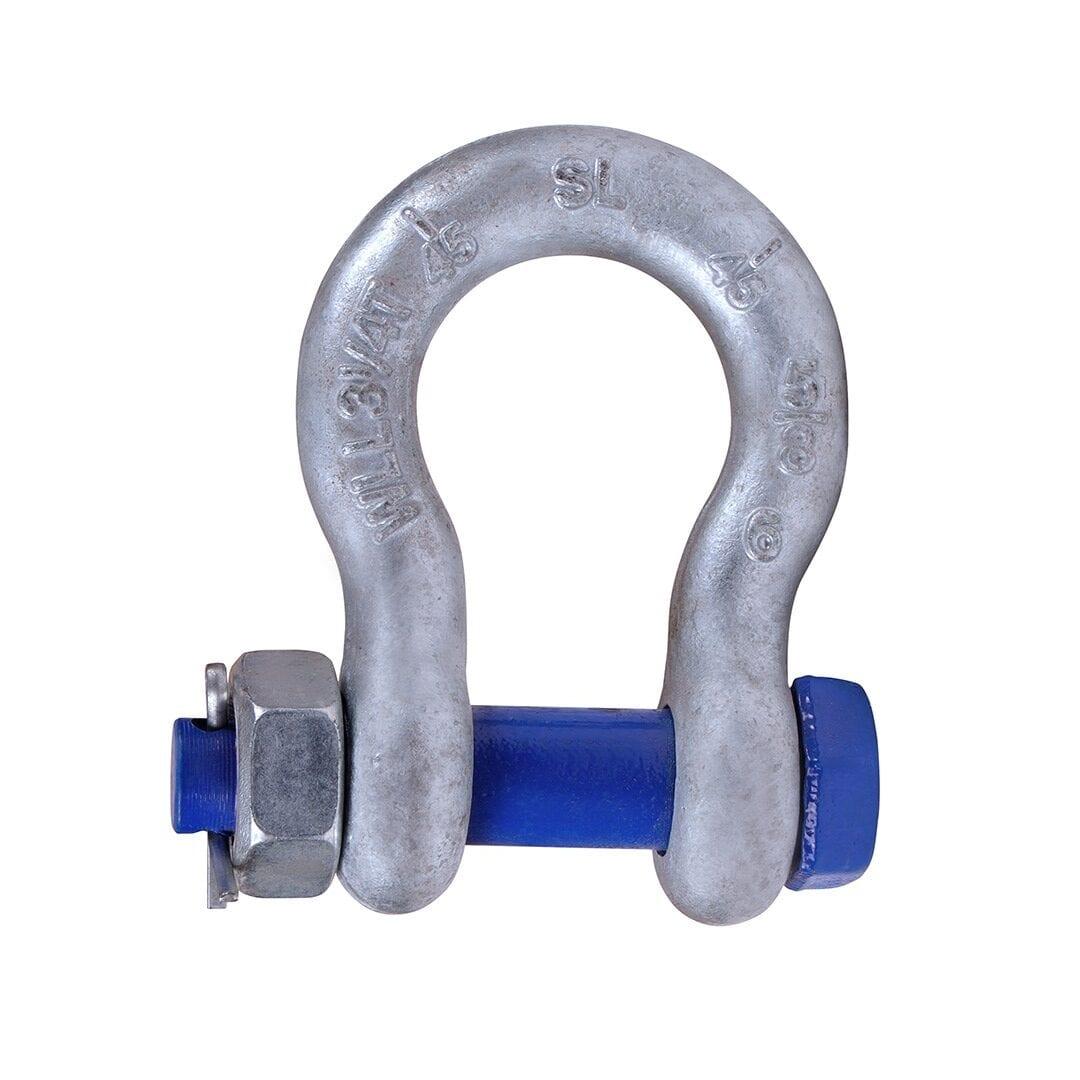
- Shackles and chain. Shackles up to 85 t, and Grade 80 alloy chain with connecting links.
- Slings and lashing. Polyester webbing slings and ratchet lashings.
- Pulling. A 15 t electric winch.
We supply against L&T's purchase orders for the package. Which task each item served is set by L&T's own work plans, and we do not describe them here.
What seafront construction asks of rigging
Stud link chain is a certified marine product
Stud link anchor chain carries a cast or welded stud across each link. The stud keeps the link from closing under load and stops the chain from kinking or knotting when it is paid out and hauled in. Chain is made in grades U1, U2 and U3, and U2 is a high-tensile grade widely used on work vessels and construction moorings. Every length is proof-loaded, and samples are break-tested, under the maker's or the class society's rules, so the buyer should get a certificate for every shot. A swivel lets the chain turn without building up twist, which matters when a mooring is laid, lifted and relaid many times. Joining shackles, end links and swivels must match the chain's size and grade. See our anchor chain selection guide.
Crane rope must match the crane maker's specification
A crawler crane's hoist and boom ropes are specified by the crane maker for diameter, construction, strength and lay direction. The drum grooves and sheaves are cut for that size. A 25.4 mm (1 inch) rope and a 26 mm rope look almost identical, but they are not interchangeable. A rope that is too large binds in the grooves. A rope that is too small flattens and wears early. When ordering replacement crane rope, quote the crane model, the drum position (main hoist, auxiliary or boom), the nominal diameter and the length, and ask for the rope maker's certificate with the delivery. New rope should be run in under light load before the crane goes back to full duty. Our wire rope construction guide explains the main constructions.
Salt air changes the inspection routine
Kudankulam sits on the sea, and salt spray reaches every piece of steel on site. Wire rope loses its lubricant faster near the sea and corrodes from the inside out, so crane rope needs a regular dressing schedule and close inspection at the drum and the end fittings. Grade 80 alloy chain is heat-treated and must never be hot-dip galvanised or electroplated on site, because the process can cause hydrogen embrittlement. Protect it with oil and covered storage instead. Polyester webbing slings resist seawater well, but sunlight weakens them over time. Store them in the shade, and remove any sling whose label can no longer be read. See lubrication of wire ropes.
Winches set up for pulling, not lifting
An electric winch on a marine site is usually a pulling tool: hauling a mooring, positioning a floating unit, or drawing a load along a prepared path. Its anchorage must take the full line pull plus a margin. The rope must spool evenly, which depends on the fleet angle between the drum and the first sheave. A winch rated for pulling must not be used for lifting unless its maker rates it for that duty.
Lessons for buyers
- 1. Specify chain by size, grade and certificate. State U2 (or the grade your design needs) and ask for a certificate for every shot and every accessory.
- 2. Order chain accessories with the chain. Swivels, joining shackles and end links must match the chain's size and grade.
- 3. Quote the crane model for rope. Give the crane model, rope position, diameter and length, not just "26 mm wire rope".
- 4. Plan for corrosion. Budget for rope dressing, covered storage and shorter inspection intervals at a seafront site.
- 5. Never galvanise alloy chain yourself. Protect Grade 80 chain with oil, not plating.
Frequently asked questions
What has Sealinkers supplied for Kudankulam Units 3 & 4?
Since late 2024 we have supplied L&T Construction's Hydro Technical Structures package with U2-grade stud link anchor chain (40 mm and 58 mm) with swivels, 3x48 crane wire rope (25.4–26 mm), shackles up to 85 t, Grade 80 alloy chain, webbing slings and a 15 t electric winch.
Who is Sealinkers' customer at Kudankulam?
Our customer is L&T Construction, for its HTS package at Units 3 and 4. We have supplied L&T at Kudankulam since 2019.
Do you supply U2-grade stud link anchor chain?
Yes. We supply U2-grade stud link chain with swivels, joining shackles and end fittings, with the maker's certificates. Class-society inspection by IRS, ABS, LRS or BV can be arranged.
Can you supply replacement crane rope?
Yes. Send us the crane model, the rope position, diameter and length, and we will supply rope to the crane maker's specification with a certificate.
Working on a marine or coastal package?
Send us your chain, rope or rigging requirement. We will match chain and accessories by grade, supply crane rope to specification, and deliver anywhere in India. Contact Sealinkers.
Sources
- [1] World Nuclear News, "L&T contracted for Kudankulam work", 18 September 2025 — world-nuclear-news.org
- [2] World Nuclear News, "Construction officially begins on Kudankulam 3 and 4", 30 June 2017 — world-nuclear-news.org
- [3] Business Today, "Kudankulam Nuclear Power Project Unit 3 reaches significant commissioning milestone", 25 April 2026 — businesstoday.in
- [4] Construction World, "L&T lowest bidder for Kudankulam plant construction", 15 December 2020 — constructionworld.in
- [5] DT Next, "Kundankulam N-plant 3, reactor pressure vessel installed", 30 April 2022 — dtnext.in
Cover photo: Kudankulam Units 1 and 2 under construction, January 2013, by Petr Pavlicek / IAEA Imagebank, Wikimedia Commons, CC BY-SA 2.0. The photo shows the first phase, not Units 3 and 4. It is resized and is not endorsed by its author.
Related Guides
Ready to put this into practice?
Every item ships certified, and our in-house test house backs it with the paperwork.
Sealinkers Engineering
Rigging & Lifting Engineering Team
Sealinkers has supplied and certified rigging, lifting and mooring equipment from Darukhana, Mumbai since 1977. These guides are written and checked by the engineers who specify this gear and proof-load it on our own test bed.
- in-house test house — proof-load bed from 1 to 1,200 tonnes
- Proof-load testing and certification in-house since 1977, Darukhana, Mumbai
- Class-society interfaces: IRS, ABS, LRS and BV