Gurugram's new metro takes shape: Dilip Buildcon's CC-01 package
Gurugram is building its own metro line from Millennium City Centre to Cyber City, run by Gurugram Metro Rail Limited (GMRL), and 2026 is the year it moved from piling to spans in the air. At the turn of August and September 2026 the project lifted its first U-girder, a 160-tonne precast beam about 28 m long, onto piers near Cyber Park with two hydraulic cranes of 400 t and 600 t working around midnight [1][2]. The girder was cast at the project's precast yard in Sector 33, and more than 1,600 are planned [1]. The civil work on the first package is in the hands of the joint venture of Dilip Buildcon and Ranjit Buildcon [3].
In 2026, Sealinkers supplied wire rope slings up to 64 mm and alloy chain slings to Dilip Buildcon's Gurugram Metro casting yard in Sector 33. This case study sets out the project, the scale of what we supplied, and what a metro precast yard asks of its rigging.
The project: an elevated line for Millennium City
- Owner. GMRL, formerly Haryana Mass Rapid Transport Corporation, implementing the Millennium City Centre–Cyber City line [3][1]. The line has 27 stations and was approved by the Union Cabinet in June 2023 [3].
- Package CC-01. Viaduct and 14 elevated stations from Millennium City Centre to Sector 9, a 1.85 km spur to the Dwarka Expressway, a ramp to the Sector 33 depot and a vehicular underpass at Bhaktawar Chowk. The main-line viaduct is about 13.2 km [3].
- Contract. The Dilip Buildcon–Ranjit Buildcon JV was declared the lowest bidder for CC-01 in August 2025, at about Rs 1,503.63 crore, from a field of eight bids [3].
- Casting yard. The Haryana urban development authority (HSVP) allotted 5.25 hectares in Sector 33 for the project's casting yard in 2025 [4].
From first pile to first girder
Construction began in September 2025 [5]. GMRL reported its first pile in February 2026, with about 3,000 piles and some 750 pillars to be built on the first section from Millennium City Centre to Sector 9 [6]. By September 2026 U-girders were going up: each is about 28 m long and 5.05 m wide, carries some 16 tonnes of reinforcement in 60 cubic metres of M60 concrete, and weighs about 160 tonnes [1]. That is a fast start for a new metro organisation and a new yard.
How Sealinkers supported Dilip Buildcon
Our supply to the Sector 33 casting yard has been in 2026. In terms of scale:
| Equipment | Scale supplied |
|---|---|
| Wire rope slings | 16 mm to 64 mm; up to 50 t SWL |
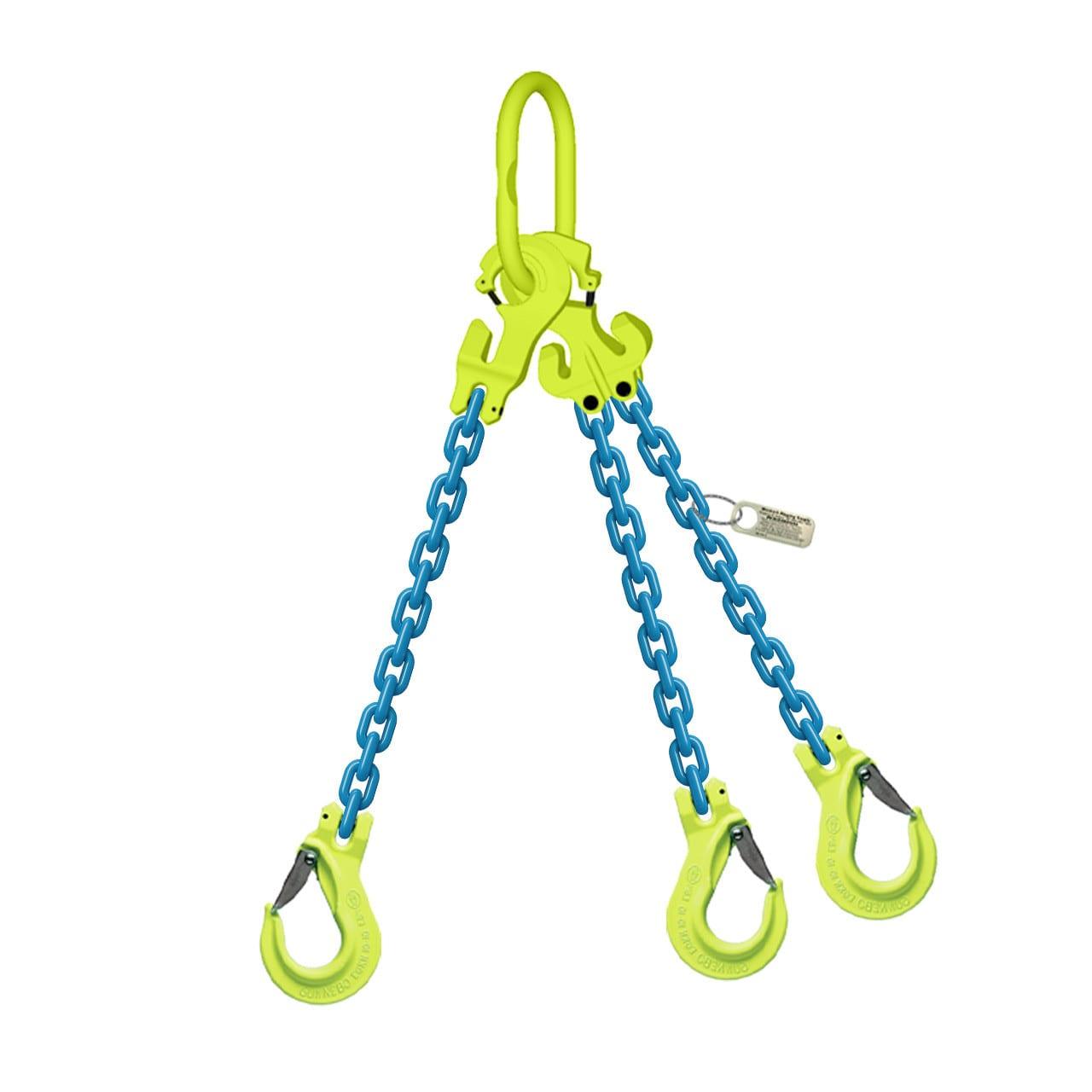
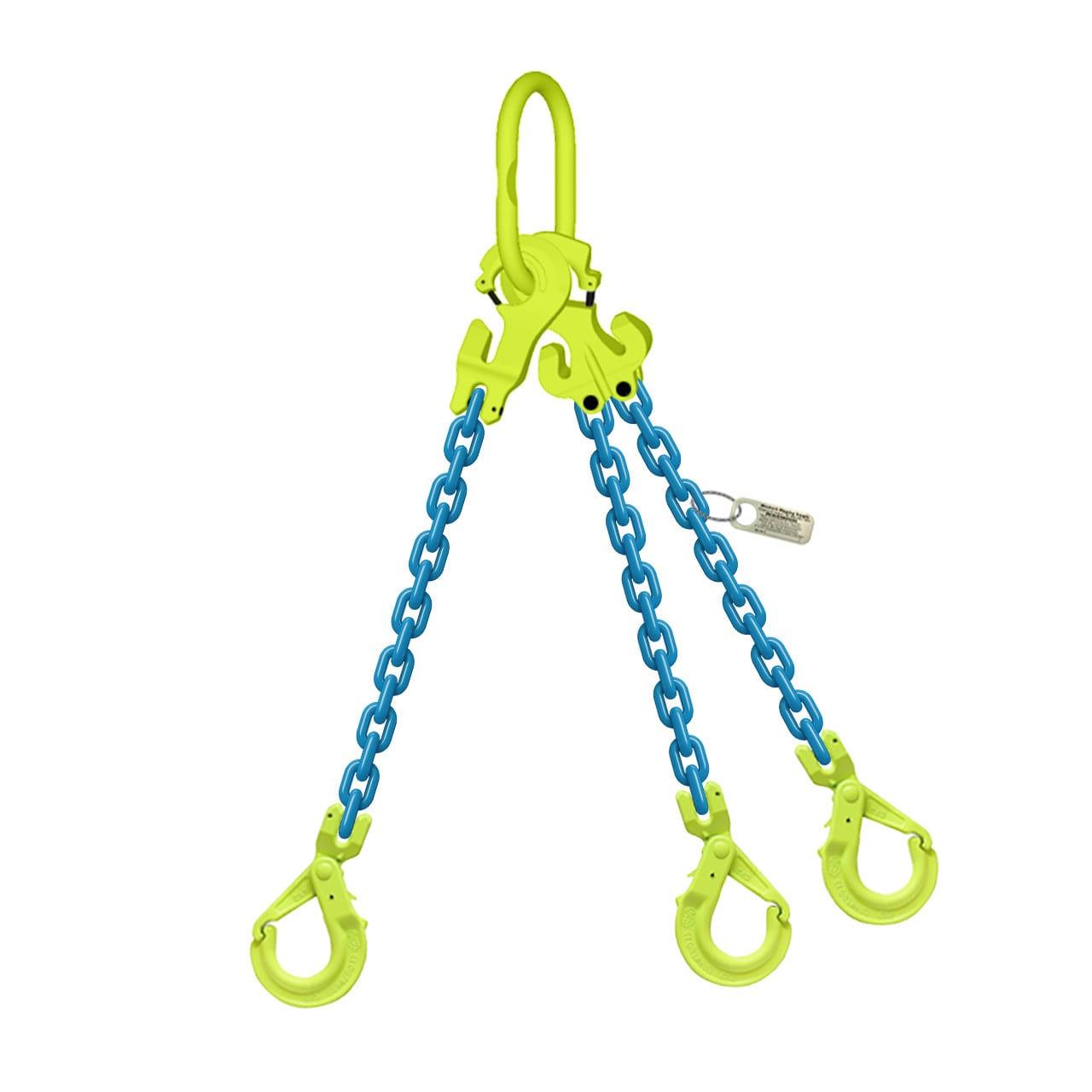
| Two-leg alloy chain slings | 16 mm; about 11 t |
We supply against Dilip Buildcon's orders. Which lift each sling serves is set by the contractor's own lift plans; we do not claim any part in the U-girder erection or any other specific lift. The sections below describe how this class of equipment is typically used in a metro precast yard.
What a metro precast yard asks of rigging
Heavy, repetitive lifts
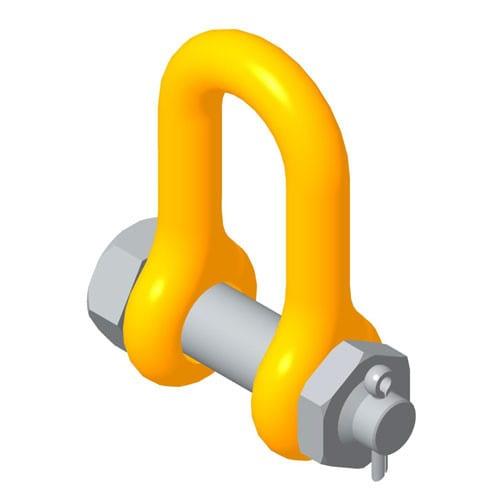
A yard casting U-girders, viaduct segments and pier caps makes the same lifts many times a day: stripping elements from moulds, moving them to curing and stacking areas, and loading them onto trailers. Elements of this size are usually handled by gantry cranes through cast-in lifting points, often with a spreader or lifting beam so the slings hang near vertical. The slings and shackles used are rated for the element's weight with a margin for dynamic effects and for any uneven share between legs, which is why a yard keeps heavy slings up to the 50 t class on hand. The work is repetitive, so wear accumulates quickly: crushed eyes, kinks from being dropped under a load, and broken wires at the hook all appear sooner in a yard than on a site that lifts occasionally.
Matched pairs and leg length
A precast girder must hang level when it leaves the mould. If one leg of a pair is longer than the other, the element tilts, the shorter leg takes more than its share, and the concrete can crack at a corner. Slings for paired or multi-leg lifts should be ordered as matched sets, made from the same rope and to a tight length tolerance, and replaced as sets. Leg angle matters as well: our guide to sling angles and SWL shows how capacity falls as the included angle opens.
Chain slings for cages and general handling
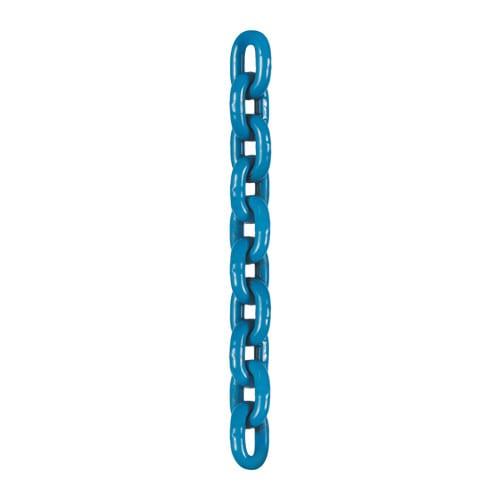
Reinforcement cages, mould parts and steel fixtures are rough on wire rope. Two-leg alloy chain slings are the usual choice for that general handling, because they tolerate abrasion and can be shortened to suit. A 16 mm two-leg alloy chain sling rated around 11 t is a typical yard size. Inspect the chain for stretch, nicks and gouges, and check hook latches daily. Our note on Grade 80 and Grade 100 chain covers grade selection, and our chain slings and fittings range lists assemblies.
Heat and dust
Gurugram's summer brings intense heat and dust to an open yard. Steel slings tolerate the heat, but dust packed into a dry rope wears it from the inside, so ropes should be kept lubricated and inspected internally at intervals. Store slings on racks in the shade, not on hot ground, and keep tags readable.
Lessons for buyers setting up a precast yard
- 1. Buy slings in matched sets. Paired and multi-leg lifts need legs of equal length from the same batch.
- 2. Plan for replacement. A yard lifting all day wears slings fast; budget for replacement sets, not single slings.
- 3. Size rigging to the heaviest element. Rate slings and shackles for the heaviest girder or segment with an allowance for uneven sharing.
- 4. Keep certificates with the yard register. Log every sling by tag number with its test certificate and inspection record.
- 5. Inspect daily. Repetitive yard work turns small damage into a discard condition quickly.
Frequently asked questions
What did Sealinkers supply to the Gurugram Metro?
In 2026 we supplied Dilip Buildcon's Gurugram Metro casting yard in Sector 33 with wire rope slings from 16 mm to 64 mm (up to 50 t SWL) and two-leg alloy chain slings.
What is a U-girder on a metro viaduct?
A U-girder is a precast concrete beam, usually prestressed, with a U-shaped cross-section that spans from pier to pier and carries the track inside the U. Each span is cast in one piece in the yard, which makes the element heavy — about 160 tonnes on the Gurugram line [1] — but fast to erect, typically with two cranes working in tandem.
Can you make matched sets of wire rope slings?
Yes. Our wire rope slings are made at our own works, including matched pairs and multi-leg sets, and proof-load tested on our 1,200 T test bed before dispatch with certificates.
Do you deliver to Haryana and the NCR?
Yes. We are based in Mumbai and deliver across India.
Setting up a casting yard?
Send us the element weights, lifting-point layout and crane hook sizes. We will propose sling sets, chain slings and shackles, with certificates. Contact Sealinkers.
Sources
- [1] Indian Infrastructure, U-girder installed near Cyber Park under Millennium City Centre–Cyber City Metro Rail Project, 1 September 2026 — indianinfrastructure.com
- [2] Construction World, Gurugram Metro lifts first U-girder, 2 September 2026 — constructionworld.in
- [3] The Metro Rail Guy, DBL–RBL JV wins Gurgaon Metro HUDA–Cyber City line's contract CC-01, 2 August 2025 — themetrorailguy.com
- [4] Construction World, Gurugram Metro Phase 1 clears land hurdle, 19 May 2025 — constructionworld.in
- [5] Construction World, Gurugram Metro work begins with Rs 12.77 billion phase one, 4 September 2025 — constructionworld.in
- [6] Indian Infrastructure, Gurugram Metro Rail Limited casts first pile under Millennium City Centre–Cyber City Metro Rail Project, 12 February 2026 — indianinfrastructure.com
Related Guides
Ready to put this into practice?
Every item ships certified, and our in-house test house backs it with the paperwork.
Sealinkers Engineering
Rigging & Lifting Engineering Team
Sealinkers has supplied and certified rigging, lifting and mooring equipment from Darukhana, Mumbai since 1977. These guides are written and checked by the engineers who specify this gear and proof-load it on our own test bed.
- in-house test house — proof-load bed from 1 to 1,200 tonnes
- Proof-load testing and certification in-house since 1977, Darukhana, Mumbai
- Class-society interfaces: IRS, ABS, LRS and BV