Renewing the pipelines of India's western offshore fields
In March 2026, Lamprell was appointed by ONGC for Pipeline Replacement Project PRP-IX, an integrated contract covering engineering, procurement, construction, transportation and installation [1]. The scope is the replacement and laying of about 285 km of subsea pipelines of various sizes across ONGC's western offshore fields, Mumbai High, Neelam and Heera, and Bassein and Satellite, with topside modification works on several offshore platforms [1]. Lamprell, which works from yards at Hamriyah and Jebel Ali in the UAE with support offices in India and Saudi Arabia, described the job as technically demanding [1].
These fields have been part of India's energy supply for half a century. Mumbai High was discovered in February 1974 by an Indo-Soviet team aboard the seismic vessel Academic Arkhangelsky, and production began on 21 May 1976 [2]. Its first subsea pipeline to Mumbai followed in 1978; before that, oil went ashore by tanker [2]. Replacing pipelines that have served for decades, while the platforms keep producing, is one of the more demanding kinds of offshore construction.
In 2026, Sealinkers supplied Lamprell with project rigging for PRP-IX. This case study describes the project, what we supplied, and what offshore pipeline and topside work asks of slings, shackles and hoists. Supply details come from our own order and dispatch records; project facts are cited to public sources listed at the end.
The project
- Owner: Oil and Natural Gas Corporation (ONGC) [1].
- Contractor: Lamprell, under an integrated EPCI-style contract announced on 5 March 2026 [1].
- Pipelines: about 285 km of subsea pipelines of various sizes, replaced and newly laid [1].
- Fields: Mumbai High, Neelam and Heera, and Bassein and Satellite, all in ONGC's western offshore [1].
- Platforms: topside modification works on multiple offshore platforms, so that the new lines can be tied in [1].
A pipeline replacement programme like this combines two kinds of work. At sea, pipe is laid from a pipelay vessel, and risers, clamps and spools are installed at the platforms. On the platforms themselves, modification crews cut in new pipework, supports and valves in space that was never designed for it.
How Sealinkers supported Lamprell
In the second half of 2026, Sealinkers supplied Lamprell with a package of project rigging for PRP-IX, delivered to the project's shore base near Uran:
- Wire rope slings up to 56 mm diameter in Usha Martin 6x19 and 6x36 rope, plus a 76 mm endless sling, all made at our own works. See wire rope slings.
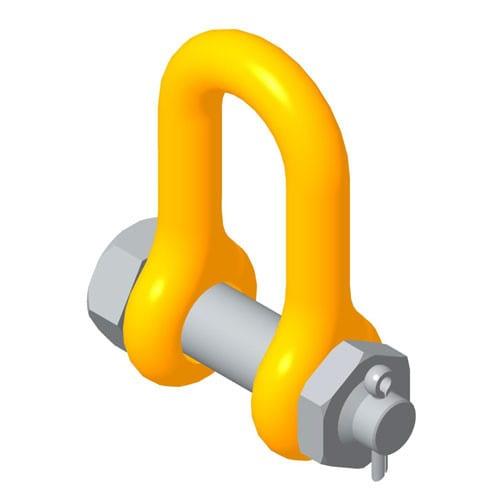
- Crosby shackles up to 85 t. See shackles.
- Snatch blocks, chain pulley blocks, lever hoists and I-beam clamps. See hoists, blocks and sheaves.
- Polyester webbing slings and round slings. See webbing slings.
Our slings are proof-load tested at our in-house test house, on a 1,200 T proof-load test bed, before dispatch. Offshore contractors can also ask for class-society inspection by IRS, ABS, LRS or BV, which we arrange.
What offshore pipeline and topside work asks of rigging
Lifts to and on a producing platform
Brownfield topside work is limited by the platform crane. Its capacity falls quickly with radius, and every item has to be lifted from a supply vessel that is moving in the swell. Offshore lift plans therefore allow for dynamic load as the vessel rises and falls, and for snatch loading if the load is lifted off the deck at the wrong moment. Three habits follow from that:
- 1. Use bolt-type shackles, with a nut and cotter pin, for any lift where the pin could turn. A screw pin can back out under the cyclic loading of an offshore lift.
- 2. Pre-sling loads ashore. Make up the rigging, tag it and record it at the shore base, so that crews at sea only hook on and off.
- 3. Control the load. Use tag lines from a safe position and never stand beneath a load being landed on a moving deck.
Fit-up with chain blocks, lever hoists and beam clamps
Once a spool, clamp or valve is on the platform, the final metres are moved by hand-operated hoists, not by the crane. A chain pulley block hung from a beam clamp on the platform steel lifts the spool to the flange. Lever hoists then pull it sideways into line, so the bolt holes can be matched. Before any of this, check that the beam clamp fits the flange width and thickness of the steel. Check that the beam can carry the load at that point, and that each hoist's hook latch works. When two hoists share a load, as they often do in spool fit-up, each must be rated for the share it can pick up as the load shifts, not for half the weight.
Large slings and the endless sling
Heavy items on a pipeline job, such as riser clamps, subsea structures and long spools, are often slung with several wire rope legs to a master link or a spreader. The angle between the legs adds tension, so a sling rated at 40 t carries less vertical load as its legs spread. Our guide to sling angle effects on SWL gives the factors. An endless wire rope sling, like the 76 mm sling in this supply, has no eyes. It can be used in a choke or basket hitch around a large item and rotated between lifts to spread wear. As with any wire rope, the diameter it bends around sets its working capacity: a sharp edge or a small pin cuts its strength, so edges are padded and pins or hooks sized to suit.
Synthetic slings for coated pipe and finished surfaces
Subsea line pipe and spools carry anti-corrosion coatings, and often concrete weight coating, that a wire rope or chain would damage. Polyester webbing slings and round slings spread the load and protect the coating. They need protection of their own at edges, and must be kept away from heat, cutting debris and chemicals. Check the label for capacity and material, and discard any synthetic sling with cuts, heat glazing or a missing label.
The marine environment and the weather window
On India's west coast, offshore construction normally pauses for the south-west monsoon, so work is packed into the fair-weather months. Rigging that fails inspection at sea cannot easily be replaced, so contractors hold spares at the shore base and inspect gear each time it comes back from offshore. Salt spray and wet storage call for regular lubrication of wire rope slings, and galvanised fittings where the client specifies them.
Lessons for offshore project buyers
- 1. Buy the rigging as a package: slings, shackles, hoists and clamps specified together for each lift, with certificates traceable to every item.
- 2. Specify bolt-type shackles for offshore lifts, and say so on the purchase order.
- 3. Order large slings early. Slings of 56 mm and above, and endless slings, are made to order and proof-load tested.
- 4. Plan inspection before dispatch. If the client needs class-society or third-party inspection, build it into the delivery date.
- 5. Stock spares ashore, because replacement at sea costs vessel time.
Frequently asked questions
What did Sealinkers supply to the ONGC PRP-IX project?
In 2026 we supplied Lamprell with project rigging for PRP-IX: wire rope slings up to 56 mm and a 76 mm endless sling, Crosby shackles up to 85 t, snatch blocks, chain pulley blocks, lever hoists, beam clamps, and polyester webbing and round slings.
Why are bolt-type shackles used offshore?
A bolt-type shackle has a pin held by a nut and a cotter pin, so it cannot unscrew if the load or sling makes the pin rotate. Offshore lifts see repeated motion, so most offshore lifting specifications ask for them.
Can you supply rigging with class-society inspection?
Yes. We can arrange inspection by IRS, ABS, LRS or BV before dispatch, and we proof-load test slings in our own test house.
What is an endless wire rope sling used for?
An endless sling is a continuous loop of wire rope with no eyes. It is used in choke or basket hitches around large or awkward items, and it can be turned between lifts so that wear is not always at one point.
Rigging an offshore project?
Send us your lift plans or rigging list. We will quote matched slings, shackles, hoists and clamps, with certificates and the inspection your client requires. Contact Sealinkers.
Sources
- [1] Lamprell, "Lamprell appointed for ONGC's Pipeline Replacement Project (PRP-IX)", 5 March 2026 — lamprell.com
- [2] PSU Watch, report on fifty years of ONGC's Mumbai High field, 19 February 2024 — psuwatch.com
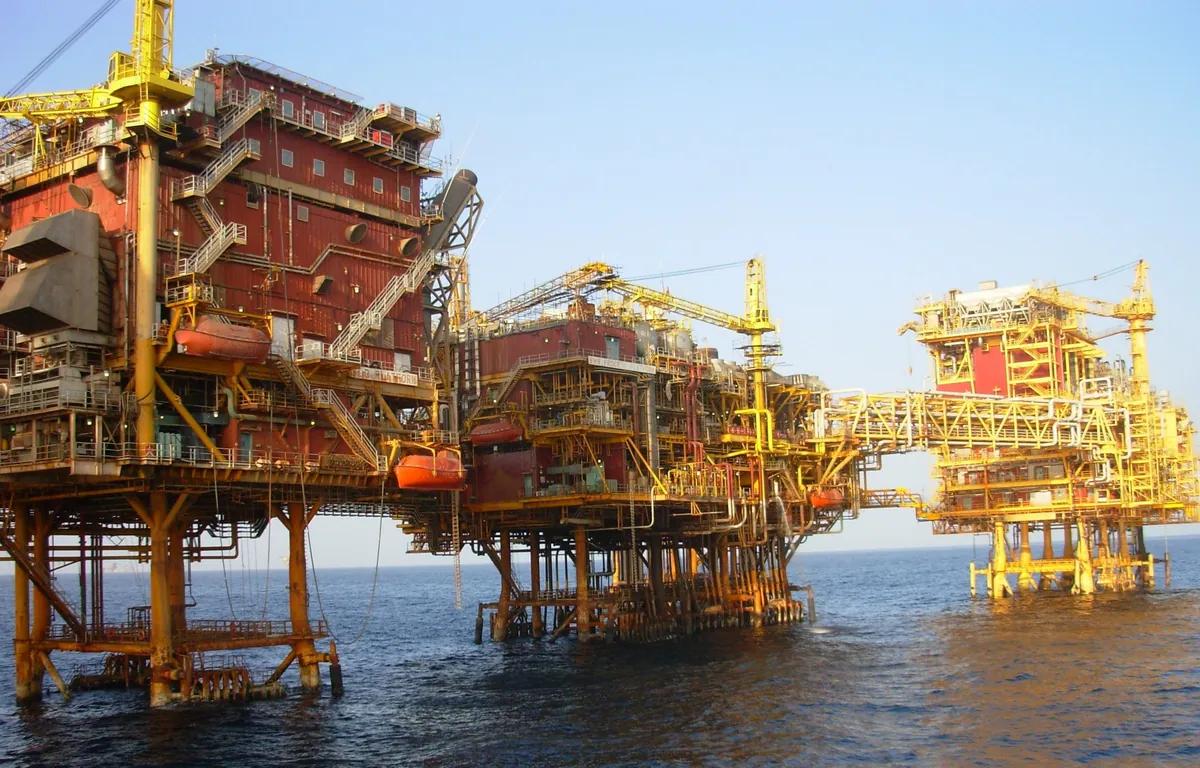
Cover photo: ONGC processing platform at Bombay High South, one of the fields PRP-IX serves, 2009, by Nandu Chitnis, Wikimedia Commons, CC BY 2.0. Photos are resized and are not endorsed by their authors.
Related Guides
Ready to put this into practice?
Every item ships certified, and our in-house test house backs it with the paperwork.
Sealinkers Engineering
Rigging & Lifting Engineering Team
Sealinkers has supplied and certified rigging, lifting and mooring equipment from Darukhana, Mumbai since 1977. These guides are written and checked by the engineers who specify this gear and proof-load it on our own test bed.
- in-house test house — proof-load bed from 1 to 1,200 tonnes
- Proof-load testing and certification in-house since 1977, Darukhana, Mumbai
- Class-society interfaces: IRS, ABS, LRS and BV