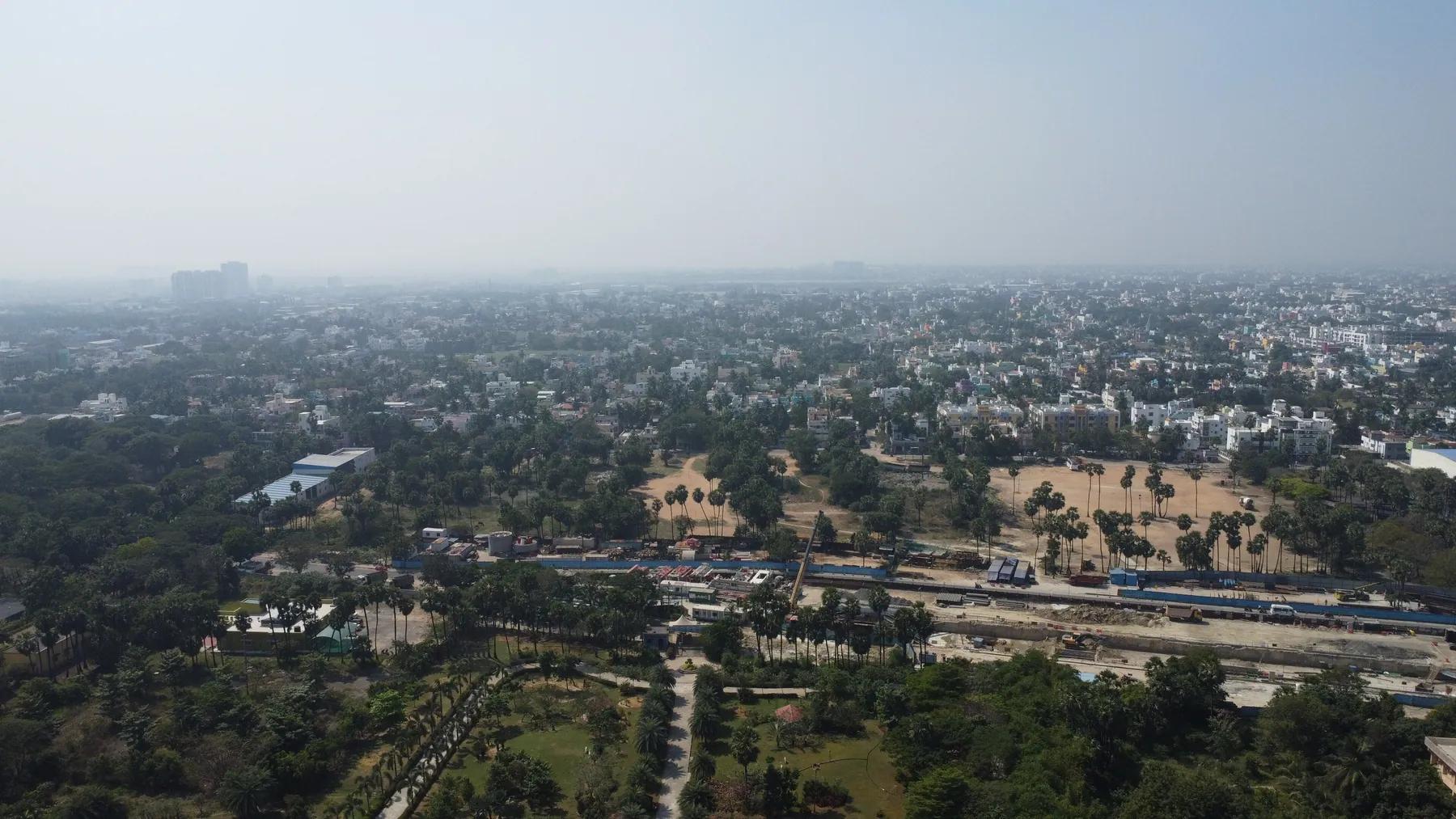
Seven TBMs under north Chennai: Tata Projects' TU01 package
Chennai Metro Phase II is a city-scale build: three new corridors totalling 118.9 km and 128 stations, most of it underground [1]. Its first underground contract on Corridor 3, package TU01, went to Tata Projects in May 2021, and the company mobilised seven tunnel boring machines to drive about 9 km of twin tunnels between Madhavaram Milk Colony and Kellys [1][2]. By August 2026 Tata Projects had recorded its eleventh breakthrough on the package, after drives that took its machines beneath the Buckingham Canal and a live road near Moolakadai [5][2].
Since 2024, Sealinkers supplied Tata Projects' TU01 project site at Madhavaram with webbing slings, wire rope and chain slings, wire rope, shackles and master links. This case study sets out the package, the scale of what we supplied, and what a multi-TBM, multi-shaft tunnel package asks of its lifting gear.
The project: Corridor 3's first underground section
- Owner. Chennai Metro Rail Limited (CMRL), which awarded TU01 to Tata Projects in May 2021 for about Rs 1,999 crore with a 42-month term [3].
- Tunnels. About 9 km of twin bored tunnels, from a TBM retrieval shaft near Venugopal Nagar to Kellys station [1].
- Stations and shafts. Diaphragm walls for station boxes and entry/exit structures at Madhavaram Milk Colony, Murari Hospital, Ayanavaram and Purasaiwakkam High Road, with launching and retrieval shafts at stations as required [1].
- Machines. Seven TBMs, including Terratec earth pressure balance machines of 6.61 m diameter [3][2].
- Programme. Phase II covers Corridors 3, 4 and 5, with an estimated cost of Rs 63,246 crore [1].
From the Madhavaram shaft to Moolakadai
TU01's tunnelling began at Madhavaram. In September 2022 Tata Projects lowered the shields of TBM S96 into a shaft there for its initial drive, with the back-up gantries to follow for the main drive [3]. The machines then worked through a sequence of drives between station boxes. TBM S81B, commissioned at Ayanavaram in July 2023, bored 903 m to Otteri, a breakthrough reported in September 2024 [4]. In May 2026 TBM Servarayan (S99) completed an 824 m drive from Madhavaram High Road to Moolakadai, passing beneath the Buckingham Canal and a live road [2]; in August 2026 TBM Nilagiri (S96) completed an 819 m up-line drive on the same stretch, Tata Projects' eleventh breakthrough on TU01 and the 24th on Phase II [5].
How Sealinkers supported Tata Projects
Our supply to the TU01 project site at Madhavaram has continued since 2024 as repeat supply rather than a single consignment. In terms of scale:
| Equipment | Scale supplied |
|---|---|
| Polyester webbing slings (Zebra Weblift) | 1 t to about 17 t |
| Wire rope slings, two- and four-leg | Up to 32 mm, about 17 t SWL |
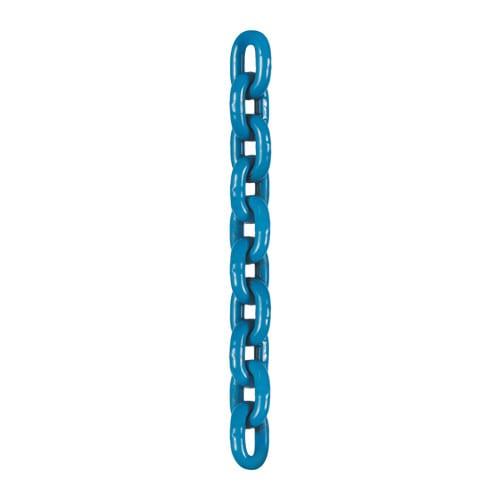
| Alloy chain slings | Up to 22 mm, about 22 t |
| Steel wire rope | 12 mm to 28 mm |
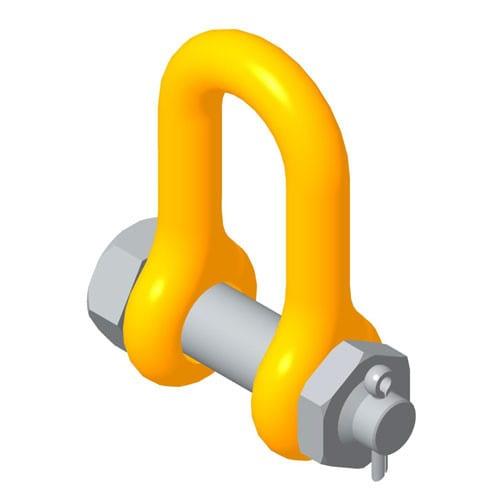
| Shackles | Up to 25 t |
| Forged master links | Up to 51 mm |
We supply against the contractor's orders; which lift each item served is decided by Tata Projects' own lift plans, and we do not describe end uses. The sections below describe how this class of equipment is typically used on a tunnel package like TU01.
What a multi-TBM tunnel package asks of rigging
Many shafts, many machine moves
A package with seven TBMs and short drives between stations is a package of repeated launches and retrievals. Each time a machine breaks into a station box it is typically dismantled, lifted out or moved through the box, and set up again for the next drive, with its shield sections, cutterhead and back-up gantries handled in turn. That work is planned lift by lift by the contractor's engineers, but it shapes what a stores department keeps on its shelves: a spread of multi-leg slings, shackles and master links in several ratings, in good condition and with certificates on file, so that each move is not held up waiting for gear.
Master links and multi-leg assemblies
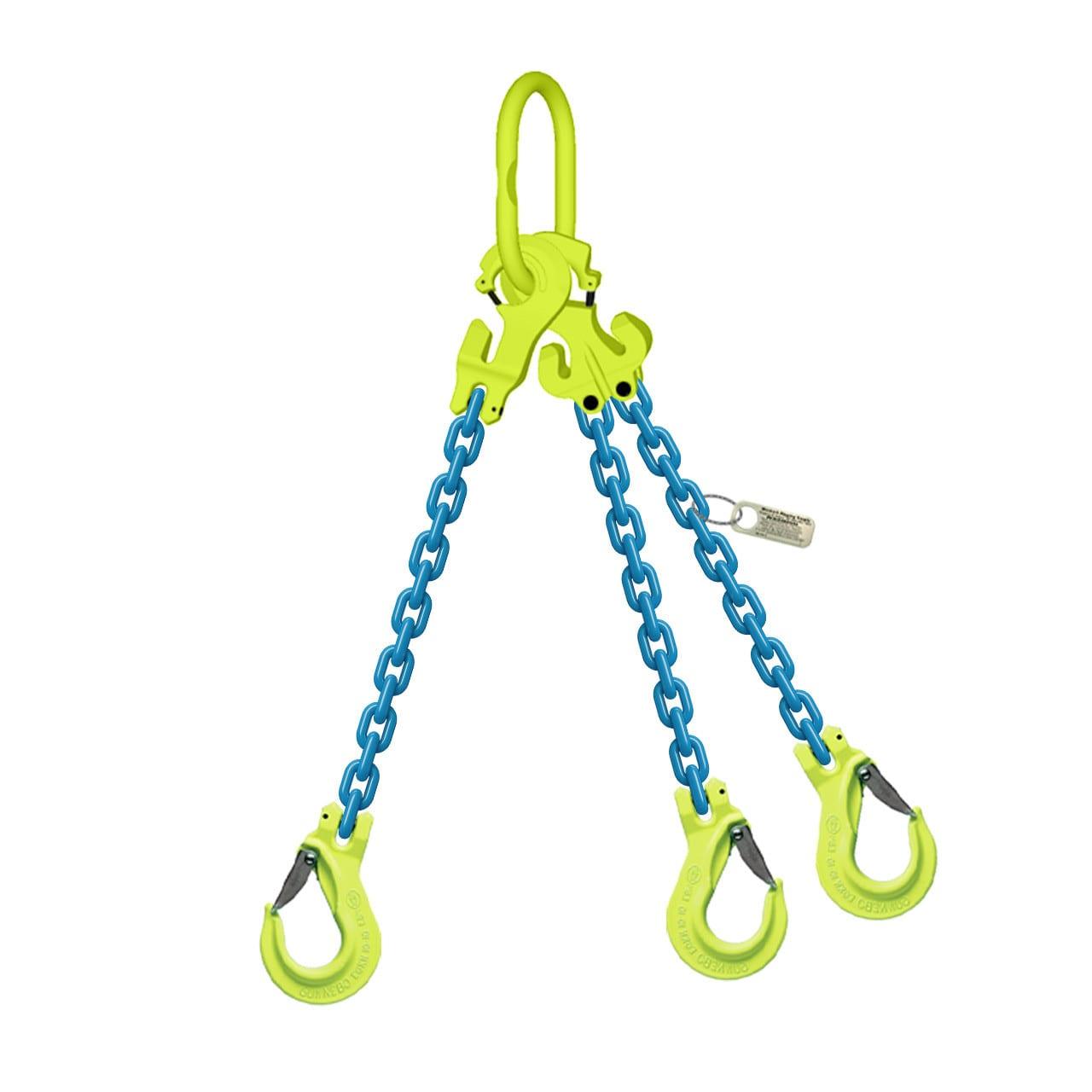
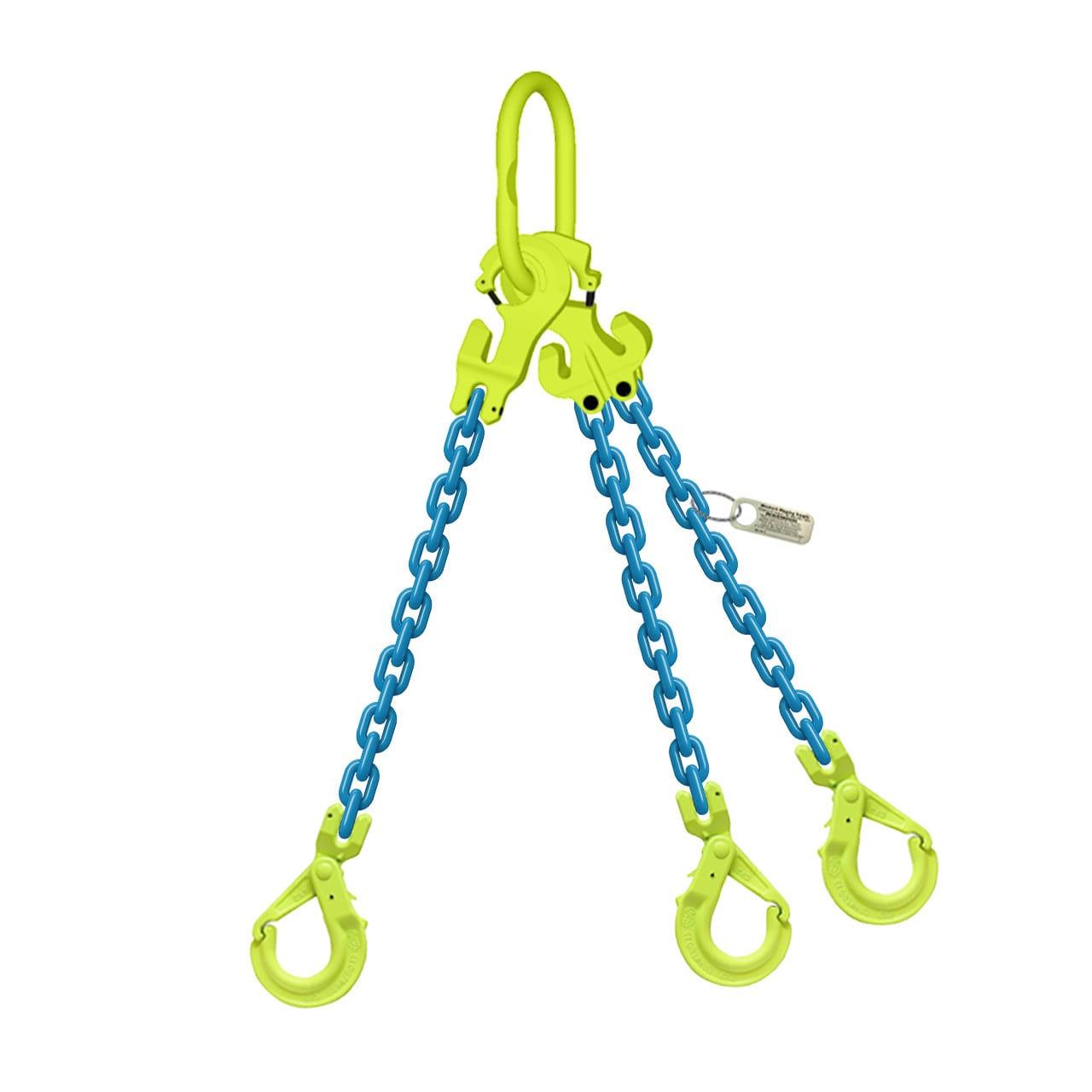
Two- and four-leg slings hang from a single master link, which must carry the combined leg loads at the working angle and also seat properly in the crane hook. A large forged master link such as a 51 mm size is chosen with both in mind. When ordering, state the number of legs, the leg length, the hook the assembly will hang from and the maximum included angle, because the safe working load of a multi-leg sling falls as the angle opens. Our guide to sling angle and SWL sets out the factors, and our chain slings and fittings range covers master links and assemblies.
Coastal ground, canals and humidity
Chennai is a coastal city, and TU01's drives cross under the Buckingham Canal [2]. Shafts and station boxes in such ground are typically wet, and the city's humid, salty air is hard on bare steel. For rigging this means three habits: specify galvanised shackles and fittings where they will live in a shaft, keep wire rope and wire rope slings lubricated and stored off the ground, and inspect for corrosion at the ferrule and inside the rope, not just on the surface. See our notes on wire rope lubrication.
A wide range of webbing slings
Webbing slings from 1 t to about 17 t cover everything from small fittings to heavy precast or coated items that a steel sling would mark. The colour code tells a rigger the rating at a glance, which matters when one store serves several work fronts. Edge protection and a regular check of the label and cover are the two disciplines that keep them in service.
Lessons for buyers on tunnel packages
- 1. Stock for the TBM sequence. Plan the sling and shackle inventory around the number of launches and retrievals, not around a single lift.
- 2. Order multi-leg assemblies complete. Buy master link, legs and hooks as one tested assembly with one certificate, rather than assembling odd parts on site.
- 3. Galvanise for wet shafts. Coastal tunnelling sites are wet and humid; bare fittings corrode quickly.
- 4. Keep certificates with the store record. On a long package, gear moves between work fronts; the certificate should travel with the tag number.
- 5. Re-inspect after a long idle period. Slings and rope left in a damp store between drives should be inspected before they are used again.
Frequently asked questions
What did Sealinkers supply to Chennai Metro Phase II?
Since 2024 we supplied Tata Projects' TU01 site at Madhavaram with Zebra polyester webbing slings, two- and four-leg wire rope slings, alloy chain slings, wire rope from 12 to 28 mm, shackles up to 25 t and forged master links.
What is package TU01 of Chennai Metro Phase II?
TU01 is the first underground section of Corridor 3, about 9 km of twin tunnels between Madhavaram Milk Colony and Kellys, built by Tata Projects with seven TBMs [2][1].
Do your slings come with test certificates?
Yes. Our slings are made at our own works and proof-load tested at our in-house test house on a 1,200 T proof-load test bed before dispatch with certificates. See proof-load testing. Class-society inspection by IRS, ABS, LRS or BV can be arranged when a client asks for it.
Can you supply sites in Tamil Nadu?
Yes. We are based in Mumbai and deliver across India.
Planning a tunnel or station package?
Send us your rigging list or lift schedule for the shafts and station boxes. We will propose slings, master links, shackles and rope, with certificates. Contact Sealinkers.
Sources
- [1] Indian Infrastructure, TBM S99 achieves breakthrough under Chennai Metro Rail Phase II project, 20 May 2026 — indianinfrastructure.com
- [2] DT Next, CMRL finishes tunnelling at Moolakadai, 20 May 2026 — dtnext.in
- [3] The Metro Rail Guy, Tata's Chennai Metro TBM S96 lowered at Madhavaram shaft, 22 September 2022 — themetrorailguy.com
- [4] Indian Infrastructure, TBM S81B achieves first tunnel breakthrough for package TU-01, 4 September 2024 — indianinfrastructure.com
- [5] Indian Infrastructure, TBM Nilagiri achieves breakthrough under Chennai Metro Rail Phase II project, 7 August 2026 — indianinfrastructure.com
Cover photo: Chennai Metro Phase II construction at Madhavaram, February 2025, by Saiphani02, Wikimedia Commons, CC BY-SA 4.0. Photos are resized and are not endorsed by their authors.
Related Guides
Ready to put this into practice?
Every item ships certified, and our in-house test house backs it with the paperwork.
Sealinkers Engineering
Rigging & Lifting Engineering Team
Sealinkers has supplied and certified rigging, lifting and mooring equipment from Darukhana, Mumbai since 1977. These guides are written and checked by the engineers who specify this gear and proof-load it on our own test bed.
- in-house test house — proof-load bed from 1 to 1,200 tonnes
- Proof-load testing and certification in-house since 1977, Darukhana, Mumbai
- Class-society interfaces: IRS, ABS, LRS and BV