How to Take Care and Maintain Zebra Polyester Slings
Polyester slings last when three habits hold: inspect before every use for cuts, abrasion and heat or chemical damage; protect the webbing from sharp edges with sleeves or guards; and store slings clean, dry and out of sunlight. Discard immediately on cover cuts, damaged stitching, burns, or a missing label.
Polyester webbing and round slings, such as those manufactured by Zebra Weblift (a sister company of Sealinkers), are renowned for their strength, flexibility, and resistance to many chemicals. However, to ensure their longevity and safety, proper maintenance and care are essential. These products are manufactured to EN 1492 standards, which build in a 7:1 safety factor between breaking load and rated Working Load Limit (WLL) — the highest safety margin of any common sling material. That generous factor is not spare capacity: it exists precisely because synthetic fibre is more vulnerable to cuts, abrasion, heat and UV than steel, and it is maintenance and inspection that keep the margin real.
Reading the Colour Code
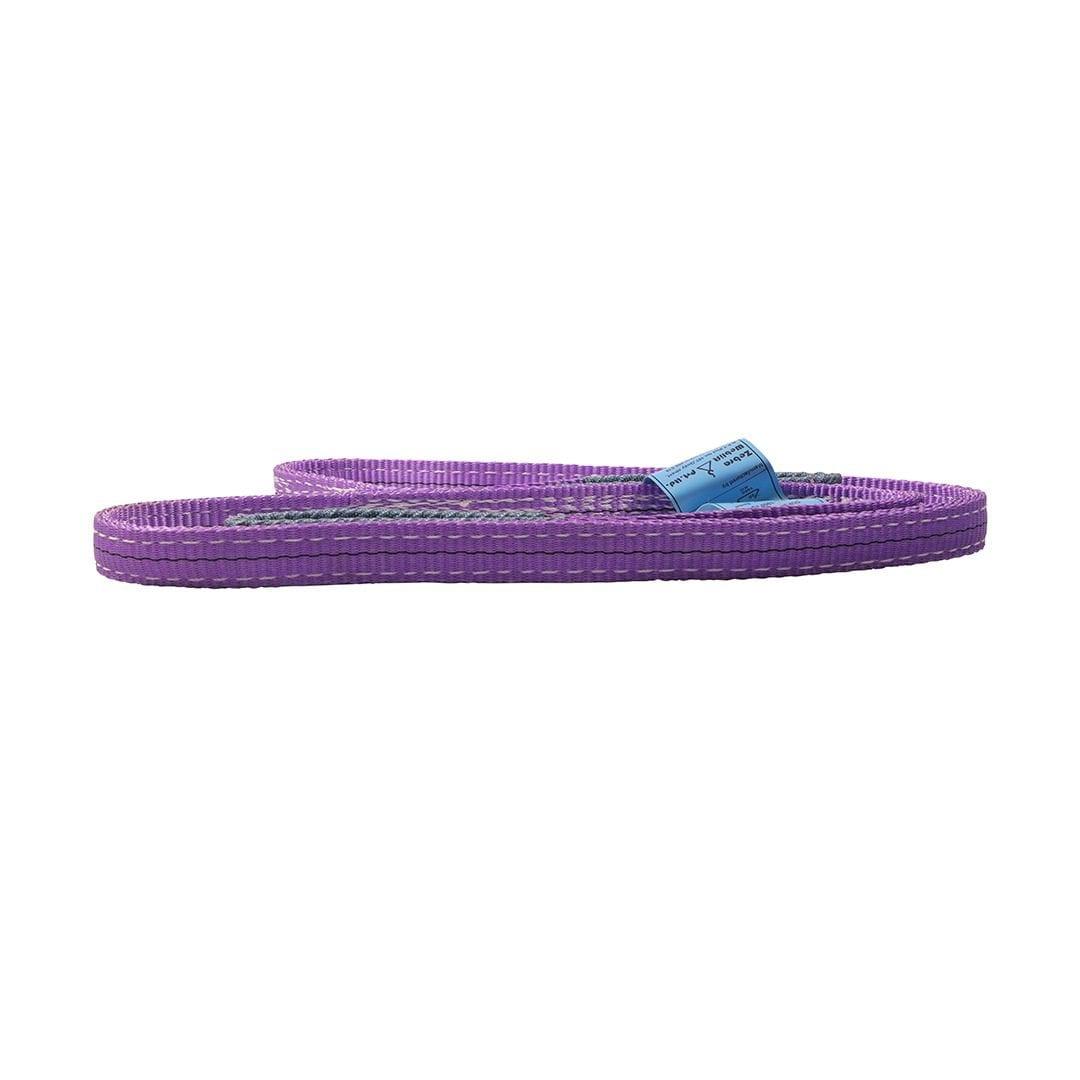
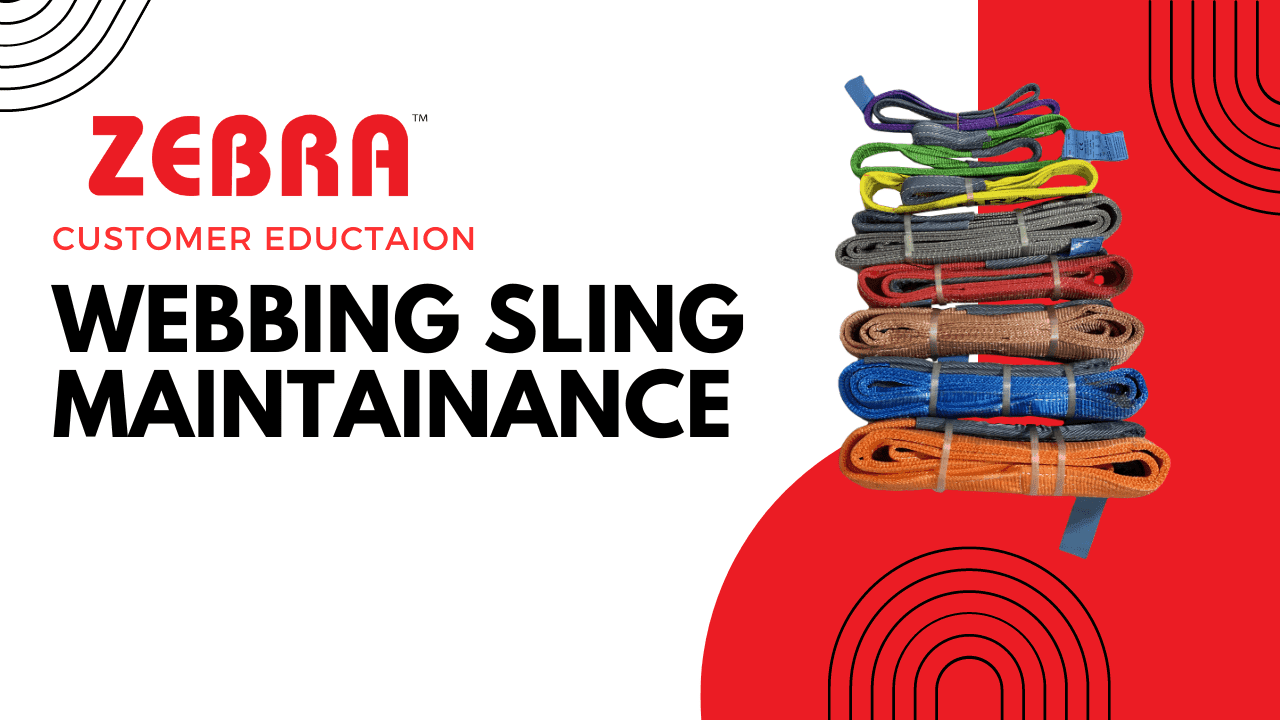
EN 1492-2 round slings use a colour-coded cover, and EN 1492-1 flat webbing slings the same colours on the label, so the rated capacity is identifiable at a glance:
| Colour | WLL (single-leg, vertical) |
|---|---|
| Violet | 1 tonne |
| Green | 2 tonnes |
| Yellow | 3 tonnes |
| Grey | 4 tonnes |
| Red | 5 tonnes |
| Brown | 6 tonnes |
| Blue | 8 tonnes |
| Orange | 10 tonnes and above |
From 10 tonnes up every sling is orange, so the WLL printed on the label is what tells them apart. Never rely on colour alone if the label is missing or unreadable — treat the sling as unidentified and remove it from service. Remember also that the colour gives the vertical single-leg rating only; choked, basket and angled configurations carry different factors, covered in our webbing sling selection guide and sling angle guide.
Inspection Before Use
Every sling must be inspected before each use. Look for cuts, abrasion, punctures, or any signs of heat damage. Heat can weaken polyester fibres, so avoid contact with hot surfaces or molten metal — glazed, stiffened or shiny patches on the webbing are the signature of frictional or radiant heat and are grounds for withdrawal. Chemical damage may not always be visible; if exposure to harsh chemicals is suspected, remove the sling from service and consult the manufacturer's guidelines. On roundslings, pay particular attention to the cover: the cover carries no load itself, but any cut through it exposes the load-bearing core yarns to the damage the cover exists to prevent, and the sling must be withdrawn.
Pre-use checks by the user are the first layer; the second is periodic thorough examination by a competent person, recorded against the sling's identification number. A sling that cannot be matched to its examination record should be treated the same way as one with a missing label — out of service until its status is established.
Protection from Sharp Edges
Polyester slings are vulnerable to sharp edges, which can cut or abrade the fibres — edge damage is the most common single reason polyester slings reach us for premature replacement. Always use edge protectors or sleeves when rigging around sharp corners, and remember that "sharp" is relative to tension: under multi-tonne load, even a painted steel corner or a rough concrete arris cuts webbing. This simple step significantly extends the life of the sling and maintains its load-bearing capacity. Never drag a sling out from under a landed load; lower onto timbers so the sling can be recovered freely.
Storage and UV Protection
When not in use, store slings in a cool, dry, and well-ventilated area, away from direct sunlight. Ultraviolet (UV) radiation degrades polyester fibres over time — a sling left permanently rigged outdoors will lose strength years before an identical sling stored indoors between jobs. The warning signs of UV attack are fading, a dry or powdery surface feel, and surface fibre breakage, but meaningful strength loss can precede obvious visual change. Avoid storing slings near heat sources or in damp conditions, which can promote mould growth. A wet sling should be hung to dry naturally before storage — never dried against a heater. Racked, tagged storage off the floor keeps slings clear of oil, grit and forklift traffic, and makes the pre-use check faster because each sling starts the day clean and visible.
Cleaning and Discard Criteria
Clean slings with mild soap and water. Avoid harsh detergents or high-pressure washing, which can damage the fibres. Grit worked into the weave acts as an internal abrasive, so rinsing after use in sandy or dusty environments genuinely extends service life. Discard the sling immediately if you notice cuts through the outer cover, broken or pulled stitching, melting, charring, or chemical burns, or if the identification label is no longer legible — the rated capacity can no longer be verified without it. Always keep the identification label and certificate of conformity attached and legible.
No Repairs — Ever
A damaged webbing or round sling is never repaired on site. Stitching is the load-bearing structure of a webbing sling, engineered and tested at manufacture; no field stitch, patch, tape wrap or knot restores capacity, and a knot in any sling drastically reduces its strength. Repairs, where the manufacturer offers them at all, are factory operations followed by re-testing and re-certification. The working rule for everyone else is simple: damaged means destroyed. Cut the sling so it cannot be quietly returned to service, and replace it — against a 7:1 design margin, an improvised repair is the one defect that removes the margin entirely.
Indian Standards, Ports and the Test-House View
In India, flat woven webbing slings of man-made fibre are covered by IS 15041, with EN 1492-1 (flat webbing slings) and EN 1492-2 (roundslings) as the international equivalents most often marked on the product; ASME B30.9 is the corresponding American slings standard cited on some client specifications. Under the Dock Workers (Safety, Health and Welfare) Act 1986 and its 1990 Regulations, synthetic slings used at ports count as loose gear: they require periodic examination by a competent person — for dock work, one recognised by DGFASLI as Chief Inspector of Dock Safety — and entries in the statutory register; in a factory the same sling is lifting tackle under section 29 of the Factories Act 1948, thoroughly examined at least once in every twelve months by a competent person recognised by the state Chief Inspector of Factories. Port environments — salt air, sun-exposed lay-down areas, steel edges everywhere — are close to a worst case for the damage modes described above.
Sealinkers has operated from Darukhana, Mumbai since 1977, with an in-house test house and its 1,200 T proof-load test bed, and Zebra Weblift slings are made and certified within that ecosystem. What the examination bench teaches us, year after year: polyester slings almost never wear out — they are cut, burnt or sunned out. The slings that come back healthy after years of hard use invariably belong to sites with a rack, a rag, and an edge-protector habit; the early failures come from slings stored on the ground in the sun and rigged bare over steel.
Polyester Sling Care Checklist
- Inspect before every use: cuts, abrasion, pulled stitching, heat glazing, chemical staining, label legibility.
- Match the sling to its periodic examination record via its identification number.
- Fit edge protection wherever webbing crosses a corner — treat every corner as sharp under load.
- Never drag slings from under loads; land loads on timbers.
- Rinse off grit and chemicals with mild soap and water; dry naturally, never against heat.
- Store racked, dry, ventilated and out of direct sunlight.
- Withdraw and destroy any sling with cover cuts, damaged stitching, burns, knots or a missing label — never repair.
Never use a polyester sling that shows cuts through the cover, broken stitching, melting, charring, chemical burns or an illegible label — and never attempt a field repair or tie a knot in a sling to shorten it. A damaged synthetic sling can fail suddenly and completely; withdraw it, cut it up, and replace it.
Frequently asked questions
How long does a polyester sling last?
There is no fixed calendar life in the governing standards — service life is condition-based. A sling used indoors with edge protection can serve for years; the same sling left rigged in the sun over bare steel can be scrap in a season. Pre-use inspection plus periodic competent-person examination, not age alone, decides when a sling retires.
Can a cut or fraying sling be repaired?
Not outside the factory. Stitching and webbing are engineered as a tested system, and no site-level patch, stitch or wrap restores rated capacity. Any repair route runs through the manufacturer with re-testing and re-certification; for everything else, the rule is discard and destroy.
Does sunlight really weaken a sling that looks fine?
Yes. UV degradation begins at the surface — fading and a powdery feel are late signs — but strength loss can precede clear visual evidence. That is why storage out of sunlight matters as much as inspection, and why a sling permanently rigged outdoors should be on a short examination interval and an early replacement plan.
What chemicals attack polyester?
Polyester resists many common chemicals, which is one reason it dominates general lifting, but it is not immune — and chemical attack is often invisible from the outside. If a sling has been splashed or soaked with unknown or aggressive substances, withdraw it and consult the manufacturer's compatibility guidance rather than judging by appearance.
Is the colour code enough to identify a sling's capacity?
No. The colour gives a quick visual cross-check, but the sewn-in label is the legal identity of the sling — capacity, standard, manufacturer and the serial that ties it to its certificate. No legible label means no verifiable rating, whatever the colour, and the sling comes out of service.
Can I machine-wash slings or pressure-wash a batch at once?
No — high-pressure water and harsh detergents drive grit deeper into the weave and can damage fibres and stitching. Hand-clean with mild soap and water, rinse, and dry naturally in the shade. If a sling is too contaminated to clean that way, it is a candidate for withdrawal, not for stronger chemicals.
Well-kept slings earn their keep many times over. Browse the full Zebra polyester webbing and round sling range, or contact Sealinkers for advice on inspection, certification, or replacing slings that have reached the end of the road.
Related Guides
Ready to put this into practice?
Every item ships certified, and our in-house test house backs it with the paperwork.
Sealinkers Engineering
Rigging & Lifting Engineering Team
Sealinkers has supplied and certified rigging, lifting and mooring equipment from Darukhana, Mumbai since 1977. These guides are written and checked by the engineers who specify this gear and proof-load it on our own test bed.
- in-house test house — proof-load bed from 1 to 1,200 tonnes
- Proof-load testing and certification in-house since 1977, Darukhana, Mumbai
- Class-society interfaces: IRS, ABS, LRS and BV