Understanding EN 1677 and EN 818 Standards
EN 818 governs the short-link chain in a lifting sling; EN 1677 governs the forged components — hooks, master links, connectors — assembled onto it. A compliant chain sling needs both: chain to EN 818, components to EN 1677, all of matching grade, with markings that agree with the test certificate.
Why Two Standards Exist
European standards play a central role in ensuring the safety and quality of lifting equipment, and they are widely used as reference standards across the Indian rigging industry alongside IS specifications. EN 818 and EN 1677 are the two key standards governing the design, manufacture and testing of chain slings and their components — alongside EN 13414 for wire rope slings and EN 1492 for webbing slings. The split is deliberate: chain and forged components are made by different processes, fail in different ways, and are tested differently, so each gets its own standard. Understanding what each one covers is essential for buying safe, compliant, certifiable lifting gear.
| Aspect | EN 818 | EN 1677 |
|---|---|---|
| Scope | Short-link chain for lifting purposes | Components for slings — hooks, master links, connectors (forged steel; Grade 8 in parts 1–4, Grade 4 in parts 5–6) |
| Structure | Published in seven parts (EN 818-1 to 818-7) | Published in six parts (EN 1677-1 to 1677-6) |
| What it fixes | Chain material, strength, ductility, fatigue resistance, testing and marking | Component material properties, dimensional tolerances, testing methods and marking |
| Grades covered | Grade 8 and Grade 4 sling chain, and Grade T hoist chain — not Grade 100, which is made to PAS 1061 / the maker's specification | Grade 8 and Grade 4 components |
| Indian counterparts | IS 6215 for Grade T(8)/80 chain (IS 3109 (Part 1) is Grade M(4)/40) | BIS has adopted the ISO component standards ISO 7593 and ISO 8539 for grade T(8); IS 2760 covers the finished steel chain sling |
| What it does NOT cover | Hooks, links and fittings | The chain itself; shackles sit under EN 13889, not EN 1677 |
EN 818: Short-Link Chain for Lifting
EN 818 specifies the requirements for short-link chain used in lifting applications, in seven parts: EN 818-1 general conditions of acceptance; EN 818-2 medium tolerance chain for chain slings, Grade 8; EN 818-3 medium tolerance chain for chain slings, Grade 4; EN 818-4 chain slings, Grade 8; EN 818-5 chain slings, Grade 4; EN 818-6 information for use and maintenance; and EN 818-7 fine tolerance hoist chain, Grade T. The sling chain it covers is Grade 8 (Grade 80) or Grade 4; Grade 100 chain is outside the series and is supplied to PAS 1061 or the maker's specification. Compliance with EN 818 ensures the chain has the necessary strength, ductility and resistance to fatigue, and the standard also sets out testing procedures and marking requirements to guarantee traceability. See our dedicated Grade 80 vs Grade 100 comparison for the working load figures grade by grade.
EN 1677: Components for Slings
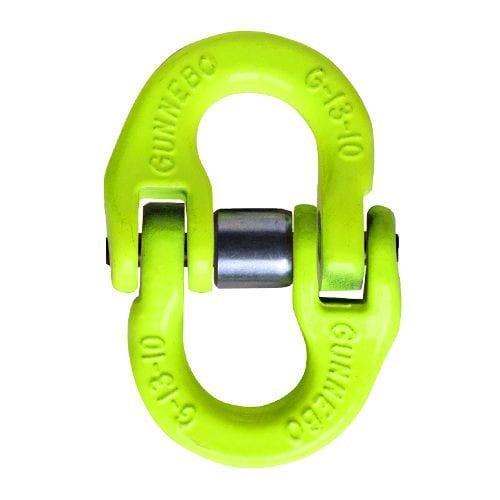
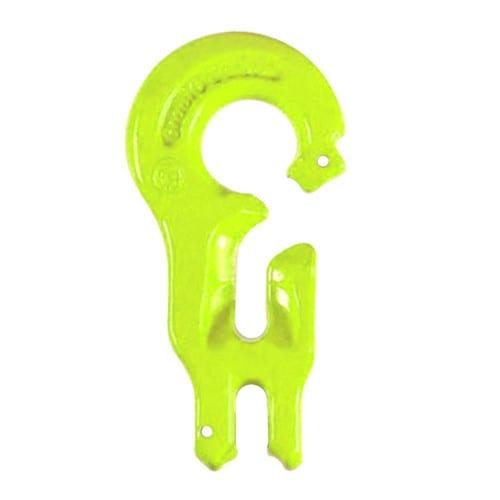
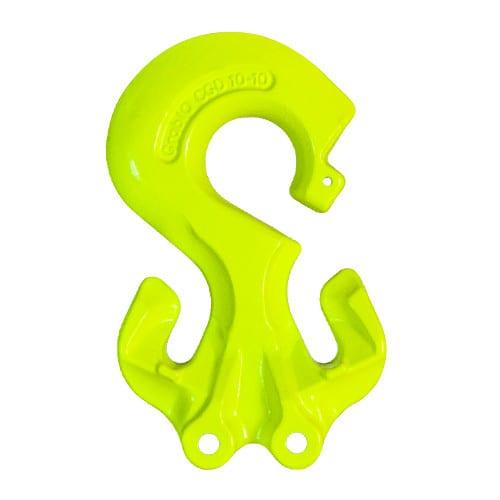
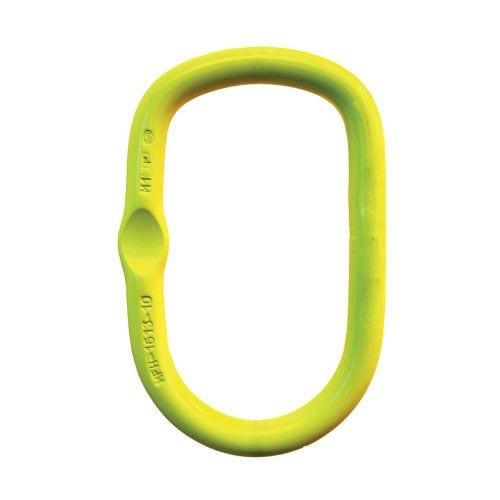
EN 1677 focuses on the forged components used in slings across its six parts: EN 1677-1 forged steel components, Grade 8; EN 1677-2 forged steel lifting hooks with latch, Grade 8; EN 1677-3 forged steel self-locking hooks, Grade 8; EN 1677-4 links, Grade 8; EN 1677-5 forged steel lifting hooks with latch, Grade 4; and EN 1677-6 links, Grade 4. It ensures these components are designed and manufactured to withstand the loads they will see in lifting service, covering material properties, dimensional tolerances and testing methods. Compliance with EN 1677 is critical for the integrity of the whole assembly: a chain that meets EN 818 is only as strong as the master link and hooks it is assembled with. Note the boundary of its scope — shackles are governed by EN 13889 (forged steel shackles), not EN 1677, which is why a shackle certificate cites a different standard from the hook certificate in the same rigging kit.
Grades and Compliance
Lifting chains are commonly available in Grade 80 and Grade 100. Grade 80 chain has a minimum tensile strength of 800 N/mm² and is widely used for general lifting, while Grade 100 chain (minimum tensile strength 1000 N/mm²) offers a higher working load for the same chain diameter — useful where headroom or weight is limited. Grade 80 chain is made to EN 818; Grade 100 chain to PAS 1061 or the maker's specification, with EN 1677 components. Neither can simply be substituted for the other on an existing sling's rated tag: the WLL stamped on the sling is specific to its grade, and the components must match the chain's grade for the assembly rating to hold.
Traceability and Marking
Proper marking and traceability are essential for identifying the grade, manufacturer and test history of lifting equipment. EN standards require clear, durable markings — typically stamped into the chain links and forged components, and printed on a durable tag on the finished sling. When verifying compliance, check that the link markings, component markings, tag and certificate all agree on grade, size and WLL. Our guide on how to read a test certificate walks through matching paperwork to hardware item by item.
EN 818 and EN 1677 in the Indian Context
India's own standards cover the same ground by grade: IS 6215 for Grade T(8) chain — the Indian counterpart of EN 818 Grade 8 — with IS 3109 (Part 1) for Grade M(4)/40 chain, the ISO component standards ISO 7593 and ISO 8539 adopted by BIS for grade T(8) fittings, and IS 2760 for steel chain slings as finished assemblies. There is no Indian Standard for Grade 100. In practice the two families coexist — imported Gunnebo or Kito Crosby componentry arrives certified to EN 818/EN 1677, Indian tender documents may specify the IS numbers, and test houses reference whichever standard the equipment was built to on the certificate. There is no conflict in day-to-day use: an inspector wants to see a certificate from a competent person, markings that match it, and an in-date examination — the standards framework behind the certificate can be EN, IS or both.
Statutory compliance is a separate layer on top of product standards. Under section 29 of the Factories Act, 1948, every chain and lifting tackle must be thoroughly examined by a competent person at least once in every period of twelve months, with that competent person recognised by the state Chief Inspector of Factories; at ports the Dock Workers (Safety, Health and Welfare) Regulations 1990 apply, with the competent person recognised by DGFASLI as Chief Inspector of Dock Safety. Our DGFASLI compliance guide covers who may issue those certificates and what the forms mean.
From our own test floor in Darukhana, Mumbai — where Sealinkers has operated an in-house test house since 1977, with a proof-load bed from 1 to 1,200 tonnes — the most common standards problem we see is not fake chain but mismatched paperwork: a genuine EN 818 chain assembled with unmarked or lower-grade components, or a certificate that names the chain standard but is silent on the components. Either way the assembly cannot be certified at the chain's rating, and the fix is almost always cheaper at purchase time than at re-test time.
- Chain marked and certified to EN 818 (or IS 6215 for Grade T(8)) — grade mark visible on the links.
- Every hook, master link and connector marked and certified to EN 1677 (or covered by the IS 2760 sling certificate) at the same grade as the chain.
- Shackles in the same kit certified separately to EN 13889 — do not accept an EN 1677 claim for a shackle.
- Durable tag on the sling stating WLL, grade and identification that matches the certificate.
- Certificate issued by the manufacturer or a competent person, naming the standard, the grade and the assembly WLL.
- Thorough examination by a competent person in date before the sling enters service in India.
Unmarked chain has no grade, no standard and no certifiable WLL — it must never be used for lifting, whatever its apparent condition. Equally, a standard number on a certificate is not a substitute for matching marks on the hardware: if links or components carry no legible markings, or the markings disagree with the paperwork, withdraw the sling and refer it to a competent person before further use.
Frequently asked questions
What is the difference between EN 818 and EN 1677 in one sentence?
EN 818 is the standard for the short-link lifting chain itself; EN 1677 is the standard for the forged components — hooks, master links, connectors — assembled onto that chain to make a sling.
Are EN standards legally required in India?
The legal requirement in an Indian factory is examination and certification by a competent person under the Factories Act — the law does not mandate one product-standard family. In practice, gear built and certified to EN 818/EN 1677 or to the corresponding IS standards is what a test house can confidently certify, and tender specifications commonly cite either or both.
If my chain complies with EN 818, is my sling compliant?
Not by itself. The finished sling is only compliant when the components also meet EN 1677 at a matching grade, the assembly is proof-tested, and the tag and certificate reflect the assembly — not just the chain. The weakest-graded item in the assembly sets the rating.
Does EN 1677 cover shackles?
No. Shackles are covered by EN 13889 (forged steel shackles) internationally and IS/ISO 2415:2004 (superseding IS 6132:2003) in the Indian series. EN 1677 is limited to sling components such as hooks, master links and connectors.
What are the Indian equivalents of EN 818 and EN 1677?
For Grade 8 chain the Indian counterpart is IS 6215 (Grade T(8)/80); IS 3109 (Part 1) is the Grade M(4)/40 chain standard, not a Grade 80 one. For components, BIS has adopted the ISO standards ISO 7593 and ISO 8539 for grade T(8) fittings, and the finished assembly is covered by IS 2760 for steel chain slings. Our IS standards guide maps the wider families.
For certified EN 818 and EN 1677 compliant lifting gear — including the Gunnebo components we supply and our chain slings and fittings — or for expert advice on standard compliance and testing, contact Sealinkers for a quote.
Related Guides
Ready to put this into practice?
Every item ships certified, and our in-house test house backs it with the paperwork.
Sealinkers Engineering
Rigging & Lifting Engineering Team
Sealinkers has supplied and certified rigging, lifting and mooring equipment from Darukhana, Mumbai since 1977. These guides are written and checked by the engineers who specify this gear and proof-load it on our own test bed.
- in-house test house — proof-load bed from 1 to 1,200 tonnes
- Proof-load testing and certification in-house since 1977, Darukhana, Mumbai
- Class-society interfaces: IRS, ABS, LRS and BV