Load Testing of Lifting Equipment: Proof Load, Break Load and Periodic Testing
Load testing is the mechanical proof that a piece of lifting equipment can carry its rated capacity — and, in a proof load test, a controlled load above it — without permanent deformation or other defect. It is one of the core quality and safety controls in the life of lifting gear, from manufacture through every re-examination. In India the test and the thorough examination that follows it are carried out by a competent person recognised under the regime the site falls under: the state Chief Inspector of Factories for factory work, DGFASLI for dock work, the Central Government for construction sites.
Proof Load Test vs Break Load Test
These are two fundamentally different tests with different purposes:
| Property | Proof Load Test | Break Load Test |
|---|---|---|
| Purpose | Show the individual item carries a load above its rating without permanent deformation | Establish the actual breaking force of a material, design or batch |
| Load applied | A stated multiple of the rated load, set by the product standard or the maker's specification | Increased steadily until the specimen breaks |
| Equipment survives? | Yes — the item goes into or back into service | No — the specimen is destroyed by design |
| Who gets one | The individual item, before first use and where the rules or the examiner call for a retest | Samples, during design qualification or batch acceptance |
| Record | A certificate for that item | A test report for the design or batch |
How a Proof Load Test Works
A proof load test applies the specified load to the item, holds it, releases it, and then examines the item for any permanent change:
- Loading: the load is applied gradually and smoothly, never as a shock or snatch, on a test machine whose load measurement is calibrated and carries a current calibration certificate.
- Hold: the proof load is held for the period the applicable standard specifies, long enough to observe whether the item yields under sustained load.
- Examination: once the load is removed, the item is examined for permanent deformation, elongation, cracking or other damage. Chain links and hook openings are measured against their dimensions before the test.
- Non-destructive testing: for forged components such as shackles, hooks and master links, magnetic particle or dye-penetrant inspection can reveal surface cracks that are invisible to the eye.
Proof Load Factor by Equipment Type
There is no single proof load multiple for all lifting gear — it is set by the standard the item was built to. Where an Indian standard states the factor plainly, it is given below; for the rest, the test is taken from the product standard named on the item's certificate or from the maker's specification.
| Equipment | Proof load basis | Standard |
|---|---|---|
| Steel chain slings | Twice the safe working load | IS 2760 (EN-built slings follow EN 818-4) |
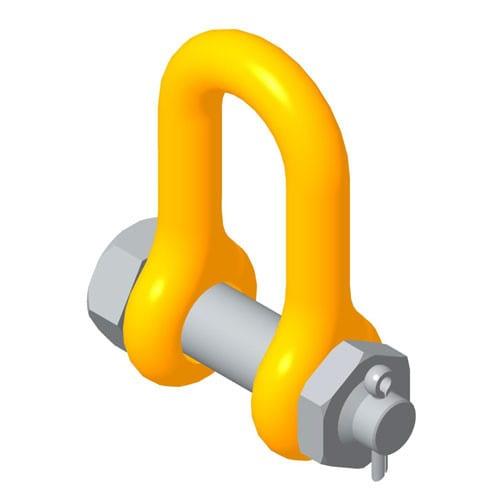
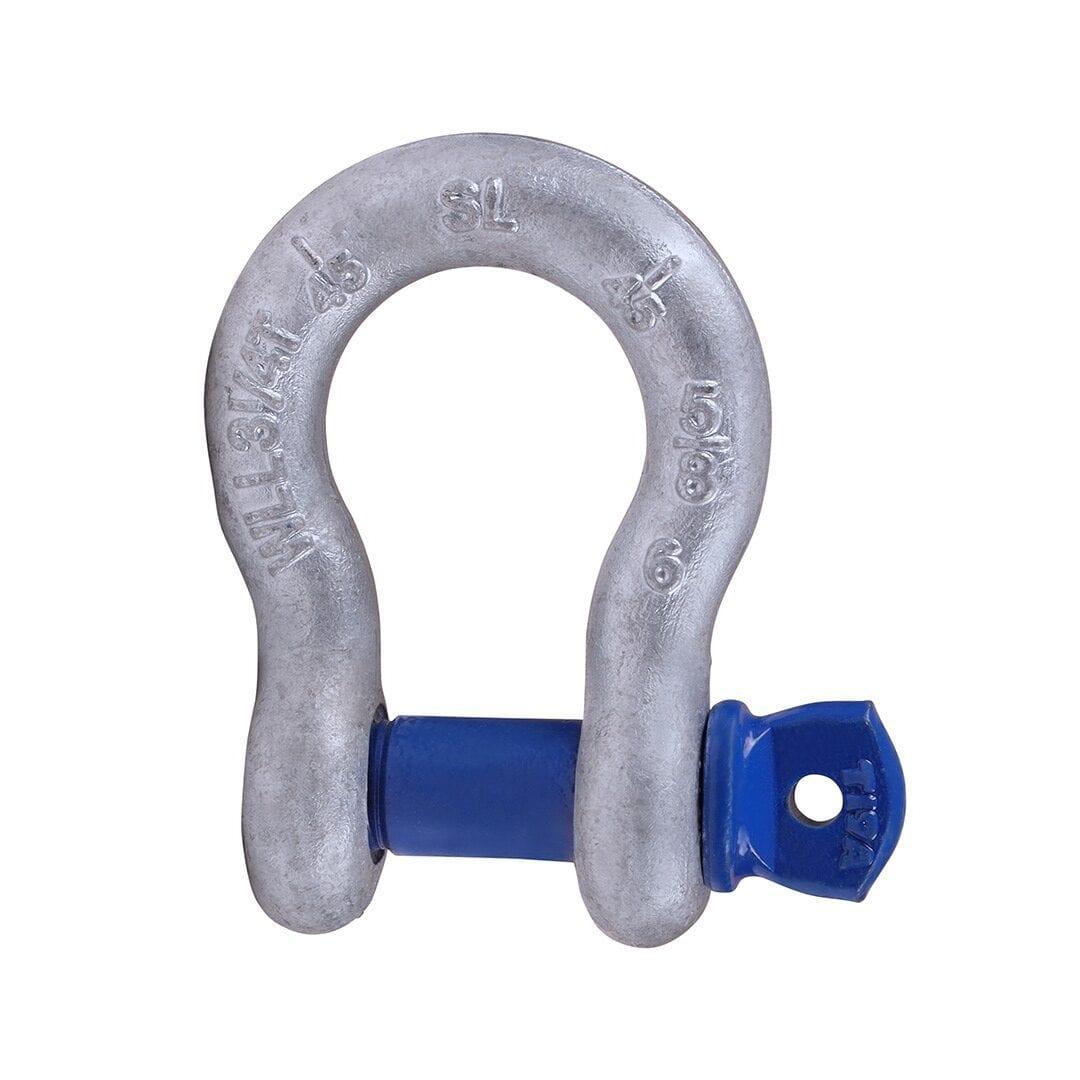
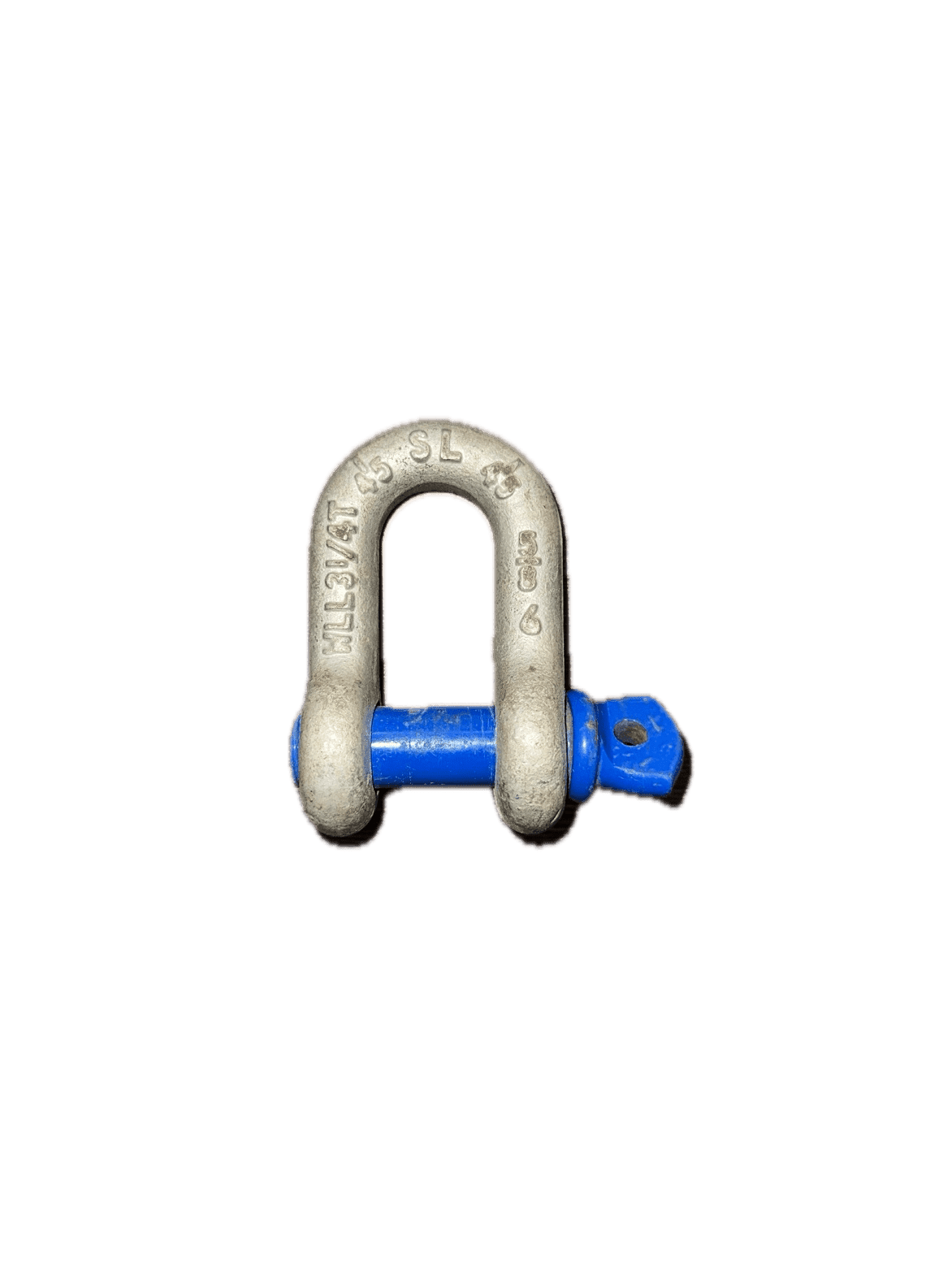
| Forged dee and bow shackles | Twice the working load limit | IS/ISO 2415 (EN-built shackles follow EN 13889) |
| Wire rope slings | Per the product standard | IS 2762; EN 13414 |
| Hand chain blocks | Per the product standard | IS 3832 |
| Ratchet lever hoists | Per the product standard | IS 11340 |
| Electric hoists | Per the maker's specification | Manufacturer's documentation |
| Webbing and round slings | Per the product standard and maker | EN 1492; IS 15041 for flat woven webbing |
The proof load is not the working load and not the breaking force. A shackle built to IS/ISO 2415 is proof-tested at twice its WLL and designed on a minimum breaking force of four times its WLL; other specifications use other ratios, which is why the standard must be named alongside the number every time.
Our 1,200 T Proof-Load Test Bed
Sealinkers operates an in-house test house in Darukhana, Mumbai, with a 1,200 T proof-load test bed. The bed applies load hydraulically, in a controlled and steady manner, and records the applied load through calibrated load measurement. It takes shackles, slings, chain, hooks, wire rope assemblies, hoists and other lifting gear, and we provide DGFASLI testing, proof-load testing, thorough examination and NDT for gear we supply and for third-party equipment alike.
A proof-load test needs three things: a controlled loading system, calibrated load measurement, and a competent person who knows the test method of the standard the item was built to. Ask any test house for all three — the calibration certificate is the easiest to check.
Periodic Examination and Retesting
The statutory duty is examination, with testing where the rules or the examiner call for it. Under the Factories Act, 1948 every lifting machine and every chain, rope and lifting tackle must be thoroughly examined by a competent person at least once in every period of twelve months, or at such intervals as the Chief Inspector may specify in writing (s.29(1)(a)(iii)); hoists and lifts at least once in every six months (s.28(1)(a)(iv)). At ports, under the Dock Workers (Safety, Health and Welfare) Regulations, 1990, lifting appliances and loose gear are tested before first use, retested at least once every five years and thoroughly examined at least once every twelve months (regulations 41 and 47). Each state's Factories Rules prescribe the register and its forms, and the pre-use test.
Before first use: proof load test and thorough examination, with a certificate stating the rating, the load applied and its basis.
At every periodic examination: thorough examination by a competent person at the statutory interval, with a proof-load retest where the rules or the examiner require one.
After any incident: if the item has been dropped, overloaded, shock-loaded or involved in an accident, withdraw it and have it examined — and retested where the examiner requires — before it returns to service, whenever its last examination was.
After repair or alteration: any repair, welding or change to the original design sends the item back through test and examination before it can be re-certified.
What Happens After Testing
When an item passes, a certificate is issued that records its identification, the rated capacity, the proof load actually applied and the standard it was taken from, the condition found on examination, the date and the next due date, and the name and signature of the competent person with the test house's details. The certificate belongs in your register against that item, available to an inspector or auditor. Sealinkers issues Form 5 and Form 11 certificates for initial and periodic examination, and certifies to the form your inspector asks for where it differs — see our Form 5 and Form 11 guide, our guide to reading a test certificate and our DGFASLI and Factories Act compliance guide for the full picture.
An item that fails a proof load test — permanent deformation, a crack, elongation beyond what the standard or the maker allows — is withdrawn from service. A failed item is not "re-tested until it passes"; whether a component can be repaired and requalified is the maker's and the examiner's decision, and for most forged lifting components the answer is to scrap and replace.
Choosing a Test House
- Ask which regime its examiners are recognised under, and check it matches your site.
- Ask for the calibration certificate of the test machine's load measurement.
- Check its certificates name the standard the proof load was taken from.
- Check it can test to the capacity you need — a large sling or grommet needs a bed rated above its proof load.
- Where your client needs class-society witnessing, ask whether IRS, ABS, LRS or BV surveyors attend its tests.
Frequently asked questions
Is every item proof-load tested every year?
Not necessarily. The annual statutory duty under section 29 of the Factories Act, 1948 is a thorough examination by a competent person; a proof-load retest is required where the applicable rules or the examiner call for it, and always after repair or alteration. At ports the Dock Workers Regulations set a retest at least every five years alongside annual examination.
Why do different products have different proof load factors?
Because each product standard sets its own. IS 2760 sets twice the safe working load for chain slings and IS/ISO 2415 twice the WLL for shackles; hoists, wire rope assemblies and synthetic slings follow their own standards or the maker's specification. The certificate should always name which.
Does a proof load test weaken the item?
A correctly specified proof load is set below the point at which a sound item would yield, so it does not damage good gear — that is the point of the test. It is the examination afterwards that shows whether the item was sound.
Can you test gear larger than a standard bed?
Our 1,200 T proof-load test bed takes most rigging assemblies; for site work we also offer on-site load testing. Send the item description and WLL and we will confirm how it can be tested.
Related Guides
Ready to put this into practice?
Every item ships certified, and our in-house test house backs it with the paperwork.
Sealinkers Engineering
Rigging & Lifting Engineering Team
Sealinkers has supplied and certified rigging, lifting and mooring equipment from Darukhana, Mumbai since 1977. These guides are written and checked by the engineers who specify this gear and proof-load it on our own test bed.
- in-house test house — proof-load bed from 1 to 1,200 tonnes
- Proof-load testing and certification in-house since 1977, Darukhana, Mumbai
- Class-society interfaces: IRS, ABS, LRS and BV